Heart ripped out of Marseille

Moody StuNetflix’s Marseille promised to be a treat – a French political drama series with big stars and big production values.

Could this be, I wondered, an experience to parallel the superb police/legal drama series Spiral? Settled into couch with drink in hand, I press the button: Big opening, Gerard Depardieu enters a vast stadium, thousands of fans yell in excitement  I’m in Marseille.

The actors deliver their opening lines. What comes out?

American English. Dubbed. Voices that don’t fit bodies. Sentences that don’t go with lips. Ventilated corpses. The essence of Frenchness eliminated.

What was Netflix thinking? That its audiences  might get tired lips from reading subtitles?

I am thankful that my late friend Raymond Saucisson did not live to see this day.


You can find out about my novels here and sign up for my newsletter here.


New scholarly book evokes warm memories

New-Insights-into-Arabic-Translation-and-InterpretingI took time out from writing fiction last year to contribute the introduction to this new book, edited by Associate Professor Mustafa Taibi from Western Sydney University. In writing the introduction I took the opportunity to honour the memory of the Iraqi scholar Dr. Safa Khulusi, whose  Arabic classes I attended at the Polytechnic of Central London in the seventies.

The invitation to write the introduction evoked warm memories of academic colleagues, teachers, and students from the Arab World.

You can read a sample of the book by clicking the  Look Inside button here.

###

Learn about Stuart Campbell’s novels here.

Great read from Kerry J Donovan even with the American coffee

On Lucky Shores - Cover

What does a Sydneysider do when they get back from the US? Get a cup of decent coffee, what else? No, I shouldn’t be so cruel – I’ve had espresso in New York and San Francisco that approaches the refined drop we enjoy in Sydney, city of a million coffee snobs. But spare me the  warmed-up filtered stuff they serve in US diners! Kerry J Donovan serves gallons of it in this lively novel about Chet Walker, a young itinerant musician whose past is tantalisingly hinted at. Finding himself in the lakeside town of Lucky Shores, he is quickly embroiled in a festering scandal and instantly attracted to Josie, the minx in the diner with the coffee pot and an interesting past of her own. I loved the whole thing, even the sweet ending (I would have preferred a bit of angst, but that’s the kind of writer I am). Chet’s music and lyrics  are woven into the plot, but because they are original I couldn’t play them in my head: Hey, Kerry, what’s the chance of getting them recorded on Youtube and embedding the links in the e-book?

I had some questions for Kerry:

Q – I think that On Lucky Shores was your first novel set in the US. What sort of reaction have you had, especially from American readers? After all, you’re an Irishman living in France!

Kerry_J_Donovan
Kerry J Donovan

A – Agreed, OLS is my first US-set novel and will come as a bit of a change of pace for my readers. I mostly write UK-based police procedurals, although in one of my books, I did send my hero, DCI David Jones to France to catch a paedophile killer.

Setting OLS in the Colorado Rockies was a bit of a gamble for me and required a heck of a lot of research. Although the resort town of Lucky Shores is totally fictitious, I did want the setting to feel authentic. As for dialogue, narration, and ‘feel’, that was equally as tricky. I considered making my leading man, traveling musician Chet Walker, a British ex-pat, a sort of Crocodile Dundee character, but that would have been a bit of a cheat and I didn’t want to write a ‘fish out of water’ comedy. Instead, I tried hard to find a realistic American voice for the narrator and the characters, and hired an editor from Colorado, PC Zick, to help me with the settings, US grammar, and colloquialisms. She did a wonderful job and so far, reader responses have been incredibly supportive.

Basically, no one’s called me out on my misuse of the lingo. Not yet, anyway.

Q – If you found yourself in the diner in Lucky Shores, who would you most want to have lunch with?

A – Great question and a difficult one. The easy answer would be Chet, or Josephine (the diner’s owner and female lead character), but they’d be pretty much lost in each other and I wouldn’t have much of a chance in the conversation. Young love, eh?

Apart from the two leads, my favourite character is ‘The Ghost’, Sheriff Casper Boyd. He has his own agenda and, like Chet, is a recent addition to the Lucky Shores community. As an outsider, he has a different perspective from Lucky Shores’ other residents. Apart from everything else, he’s more my age than the youngsters, and we’d have slightly more in common. One question I’d like to ask him is why he’s being so tough on Chet. After all, the poor guy only wants to find a gig, earn some money, and move on with his life. Yeah. “What’s your game, Sheriff? Why are you being such a hard-ass?”

Q – People drink an awful lot of coffee in Lucky Shores. Are you willing to share your true feelings about the coffee they serve in US diners?

A – Couldn’t possibly comment. I don’t drink coffee. Never have, never will. I’m old school, a tea drinker through and through. I’m sure all US diners serve delicious coffee all the time, but I’m not an expert and will leave that discussion to others. And by the way, in Chet’s defense, he’d been out in the cold and the rain most of the night and needed the coffee as much for its warmth as its caffeine.  And anyway, he’s a big guy and the coffee cups are small. Give the guy a break, will ya?

###

Find out about Stuart Campbell’s novels here.

Author Ann Massey – deft touch, deep concerns

ann
Ann Massey

I came across Australian indie author Ann Massey last year when I picked up her novel The White Amah. Looking at her diverse output, I’m tempted to ask ‘what’s her angle?’ And where does her latest novel The Little Dog Laughed fit into her body of work? In fact, Ann Massey is a conviction novelist, producing work that barracks for the powerless. If this sounds like the work of a humourless ideologue, it isn’t.

Her latest work The Little Dog Cover of The Little Dog LaughedLaughed is a sparkling time-travel fantasy that showcases her wit, her deep knowledge of Britain in Roman times, and for good measure her love of dogs. And woven into the whole nutty tale is a deeper theme about the travails of people caring for sick or disabled relatives. I never realised what hilarity could be found in a  mobility scooter!

Here’s Ann Massey answering a few searching questions I put to her:

Q – The Little Dog Laughed is impossible to place in a genre. Is this a help or a hindrance in finding readers?
A – I’ve been a square-peg all my life and this is reflected in my writing. I know smart marketeers stick to one genre and write series, but I can’t change who I am. I like hopping all over the place, and writing in many very different genres. The reader I’d like to attract is someone like me who reads everything by authors on my shortlist of favourites, and impatiently wishes they would increase their productivity.

Q – Like me, you’re a Pom who has spent the larger part of your life in Australia. Do you think that having a foot in each culture has influenced your writing?

A – I was born in Bolton and grew up in the tough environment of a council estate in post-war Britain. Both my parents left school at fourteen but I was I was fortunate enough to win a scholarship to a Grammar school. The majority of my contemporaries were first generation grammar school pupils, most of them with parents who by economic circumstance had been deprived of an academic education. I believe the justice for all themes that run through my books sprang from the opportunity to receive an education that had previously been restricted to a privileged minority. The plots and their backgrounds, however, are the offspring of a lifetime spent in Australia
None of my books are autobiographical, but in each I have used my personal knowledge of its unique world to give the story a genuine authenticity. For instance, I was marketing manager of the Daily News when Perth’s afternoon newspaper went the way of afternoon newspapers worldwide. Uncertain what I wanted to do, I applied for the position of governess on Minilya, a sheep and cattle station in the Australian outback. The station was located close to the Carnarvon Tracking Station built for the Gemini Space Program. To entertain my pupils, I invented a story about the International Space Station crash landing on a station very like Minilya. Mo, tbedhe jackeroo who found the wreckage in my debut novel, The Biocide Conspiracy, slept on a bed very like the one that was provided for me, pictured here


Q – A Little Dog Laughed and Salvation Jane have strong social justice themes but you manage this with a light touch. What’s the trick?

A – Several readers categorised Salvation Jane as chick lit albeit with a message. This was exactly the reaction I was after.  I  confess that when I began the tone was darker and more serious. But as the story progressed I thought about my readers. I wanted my book to be read by the masses and if they’re anything like me they don’t want to be preached at. So how do you get readers to read a serious commentary on homelessness in Australia? Take it from me it’s very tricky. In the end, I wrote a plot driven story— funny, a bit sad, a little deep and (I hope) inspiring. The ‘up in the air’ ending I considered—the type that always disappoints me— was dropped in favour of a much more satisfying one.

When it comes to the light touch, I might have succeeded too well  in The Little Dog Laughed because all its reviews mention that its unique, refreshing, funny, and wildly creative, none mention its dark theme of carer abuse.

###

Being British in Australia: No joking matter

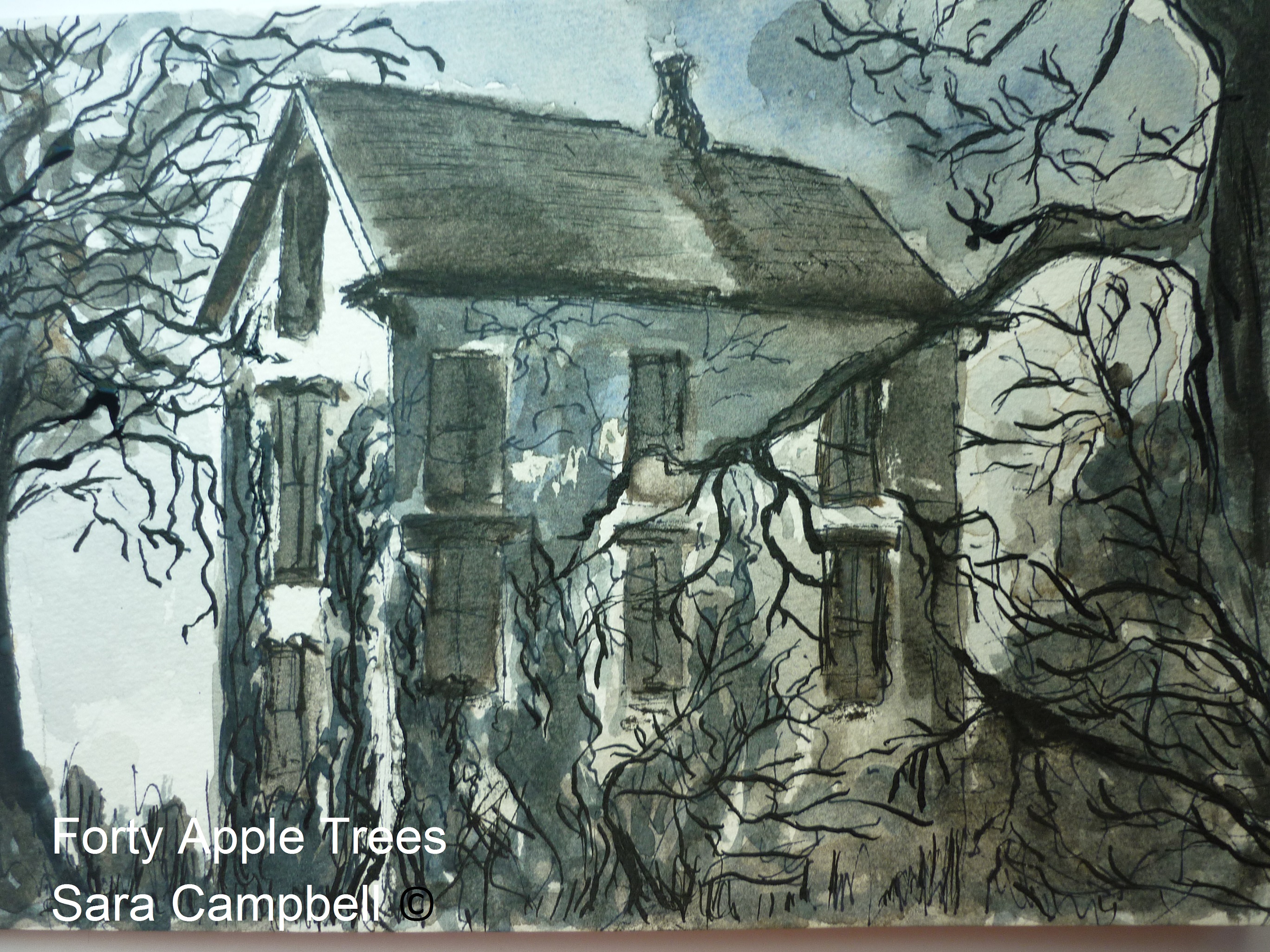
Arthur or Martha? © Sara Campbell 2015
Arthur or Martha?
© Sara Campbell 2015

What happens when a planeload of Poms lands at Sydney airport? What I’ve always found intriguing about this Australian joke is that it only seems to have one punch line: When the engines stop, you can still hear the whining. It’s a model joke: Concise, based on a neat double meaning, and it delivers an ethnic slur with devastatingly effective understatement. Even better, it isn’t offensive. You can quickly test this proposition at your next dinner party: Replace ‘Pom’ with ‘ Chinese’ and watch the eyebrows shoot up in alarm and confusion.

I was prompted to think about this by a Guardian article[1] that proposes that British jokes about Australians are more to do with the Poms’ attitudes towards their own class system than about Australia itself. But back to my airport joke: The reason that this potentially productive joke stem only has one ending may be that British Australians (as opposed to British visitors) occupy an indistinct zone in the Australian ethnic spectrum, and putting aside the standard stereotypes about whinging and personal hygiene, aren’t particularly joke worthy.

I felt a twinge of doubt when I threw in the term ‘ethnic slur’ just now. I’ve lived permanently in Australia since 1977, or for more than half of my life, and I’ve never been described as belonging to an ethnic group in the way that Armenians, Thais and Somalis might be categorised. So, what kind of insult is it that the Poms are supposed to suffer if the airport joke isn’t an ethnic one? I’ll come back to that in a moment, but I’ll firstly make some remarks on the nature of being a British Australian … or is it an Australian Brit?

The essence of being British in Britain is the negotiation of social diversity along class and geographical lines. Like exotic beetles, the Brits develop – metaphorically speaking – huge antennae, which they wave around when they meet a new acquaintance, sniffing for clues about where this person was born, where they are in the pecking order, and what they are worth. To complicate things, the class signalling system has been subverted over the decades, so that the British are happy to accept the irony of concert pianists who sound like scrap metal dealers. Britain revels in all of this, egged on by a comedy industry that is supercharged by the exploitation of class differences.

Fresh Poms arrive in Australia with antennae flapping, but can’t tune into the signals. The huge things are as much use as an extra pair of nipples, and they soon shrivel. Adrift, the recent arrivals resort to crude judgments linked to their memories of Britain; when I arrived in 1977 I soon decided that Australians were very much like people from British council estates – just about the most damning class slur available to someone whose childhood was spent in such places. Homesick and disoriented, I immersed myself in the novels of Thomas Hardy for a few months, bathing my violated sensibilities in the bucolic balm of an invented rural England. I was saved by Australian literature; authors like David Ireland, Hal Porter and Patrick White helped me draw the social blueprint of my new home. At the same time I was writing the grammar of an Aboriginal language for a Masters thesis at the Australian National University, getting the first real clues about another way of seeing Australia. Like my fellow migrants I was gradually absorbed into the land of Arthur and Martha that is Australian Britishness.

So back to that joke. It’s obvious that a British ethnicity in Australia is difficult to pin down: A common language softens the definitional edges; millions of Australians have British forebears just a  generation or two away; the UK is still on the pilgrimage route for Australian travellers; and the ABC often seems to function as a southern branch office of the UK TV drama industry. There isn’t really a clear ethnic target at all, so there’s no incentive to make jokes.

I’m inclined to think that the airport joke survives simply because it’s very well-constructed and therefore worth retelling. I spent some time trying to create some alternative punch lines such as ‘The soap factory goes onto overtime’ and  ‘Australia’s average IQ goes down ten points’.

You’re right – they are lame, and you might also agree that they look much more like ethnic slurs than the original, because of course they could be applied to any ethnic group. There’s a fondness about the whining joke, a self-deprecating acceptance of British cultural roots, an irony in the joke’s lack of sting.

Now I wonder what colour socks go with these sandals?

[1] http://www.theguardian.com/commentisfree/2013/jul/08/what-british-jokes-australians-mean . Downloaded 29 May 2014.

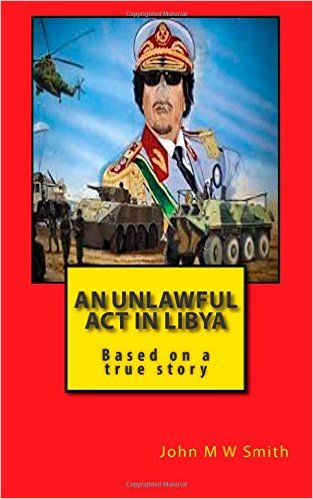
John M W Smith: A writer who bothers

libya coverI’ve thought a lot about the reasons that John M.W. Smith’s short novel An Unlawful Act in Libya lingers in the mind. It isn’t just the poignant dilemma of the hapless Egyptian bookseller or the horrible fate of the Libyan taxi manager. Nor is it the deft telling storytelling of a born raconteur, or the nimble economy of style. What I think draws me to Smith is that this little book leaves the reader a little closer to understanding their own humanity: What if I had been Gamal? What if I had been Hamid?

Isn’t this the hallmark of enduring writing? In the days when we all read books made from paper, there was a simple test: When you finished a paperback on a train, you had two choices: Slip it between the seats, or put it in your bag. An Unlawful Act in Libya is the sort of book that you wouldn’t leave on the train. Read it and you’ll come away just a little changed.

Self new 1I put some questions to Smith, and he was generous enough to provide these very insightful responses:

 Stuart – Your main characters in An Unlawful Act in Libya are more complex and more sympathetically drawn than the standard ‘bad Arabs’ that we see in a lot of fiction and movies these days. How did this come about?

John – Our perceptions are determined entirely by the source through which they are channelled. Depending on a particular time in history when incomprehensible events have taken place, the public mood is suggestible and therefore willing to accept the most uncomplicated answer; there is a lot of fighting and killing that is going on in the Middle East where the Arabs live, so much so that it is spilling over to the West, and this obviously means that the Arabs are bad people, even primitive and bloodthirsty, right? Wrong! You cannot condemn an entire people for the misdeeds of a minority within them. Secondly, people will believe what they want to believe. Sadly, that is human nature. Blame has to be placed at a location which is convenient and will not be a constant and niggling irritation to our conscience. And also sadly, we happily accept the views of the media of our own country, which in turn reflect the needs and demands of the society in which we live. So how are we expected to arrive at the real truth about anything, let alone the truth about the nature of an entire people? Simple. We go and take a look for ourselves.

I worked for a big American publisher as an expatriate in Cairo for over a year. I met taxi drivers, and I met university professors, and just about everyone in between. I visited their homes and witnessed them at ease, with their guards down after a few drinks. I had their children crawling all over me and I had their smiling wives force food on me until I could barely struggle to my feet. I listened to their family problems. Their ambitions, hopes and aspirations. Saw the love in their family units. The thoughts and prejudices that shaped their attitudes. And what did I do? I yawned! There were no surprises. These people were no different from all the people I was used to back home. They were utterly and boringly the same. They wanted the same things, they laughed and cried at the same things…… and surprise, surprise, their set of moral principles were the same as ours. This was my experience. How could I then, in all conscience, portray these people whom I had lived with for over a year as caricatures of the devil so frequently found in certain sections of the Western media?

Stuart – You’ve mastered the art of the novella form, and I’m jealous! What’s the secret ingredient?

John – The secret ingredients are meticulous research and a lot of planning. Also the ability to be ruthless–to abandon a project even if a lot of work has already gone into it, simply because it doesn’t “feel” right. Because it fails to find that magical eureka moment similar to that experienced by Professor Higgins when Eliza Doolittle perfectly enunciated “the rain in Spain stays mainly in the plains!”

I do not consciously set out to write a novella. I am unmindful of how many words are produced in the end. I just try my best to sound interesting and simply come to a stop and I’m exhausted from the effort of doing so. There has to be a remarkable central event, the kind a reader would be unlikely to encounter in his or her 9-to-5 job and visiting the in-laws at the weekend. The ways in which each character in the story responds to that central event have to be very different. I need to focus keenly and make every sentence count, because in that lies the secret of a page-turner. I often do not know how the story will end. I only know that the end has to be utterly convincing. Perfectly reasonable. Wholly possible without too great a leap of faith being demanded of the reader. All I ever need is utter silence. A comfortable room. No interruption by a living creature. Yes, all of this in doses of 6 to 8 hours at a time.

Stuart – What are the cultural influences behind your writing? I can spot traces of Spike Milligan.

John – As for the cultural influences behind my writing, I am flattered to be even remotely compared to Spike Milligan. Even if his heyday was a bit before my time, I still remember being transfixed to the TV during the rare interview he gave in later life. I didn’t want to miss a word of what he was saying because every word came from his heart. He did not care what people would think of him after what he had said. Image-conscious? Forget it! He would not know what you were talking about.

Writers observe closely and often struggle to keep a sense of balance and proportion when arriving at their conclusions. In the end many find it so difficult that they simply home in on prevailing views and anxieties in society and end up saying what they think the readers would like to hear. What the reader can easily identify with, and quickly decide whether they love or hate it. But there are also many writers who observe closely and form their very own “take” based on what they have seen, and they do not care if the conclusions they have come to are in harmony with the prevailing zeitgeist. They are obsessed with telling it as they see it. They do not care who hates it or who loves it. They have not consciously set out to be commercial. They only want you to listen, and they do not want your attention to wander for even a second. Most of all, while you are listening they want you to be entertained and intrigued, for if you are not then how can you be expected to keep listening? My advice to any writer would be to forget trying to cater to a huge market. Concentrate on the market which is most in tune with your thoughts. It may not turn out to be a huge market but you will find it to be a fiercely loyal one…and it may well grow of its own accord if you are good at communicating what you have in your heart. I have been fortunate enough to have travelled a lot, which has given me more than a passing familiarity with many cultures. I really couldn’t ask for anything more. I would like to think that Spike Milligan would have been proud of me.

#

Read a free sample of An Englishman’s Guide to Infidelity  here. Buy Stuart Campbell’s books in paperback and ebook on Amazon by clicking on these title links:An Englishman’s Guide to Infidelity and The Play’s the Thing . Stuart Campbell’s covers are designed by Rachel Ainge .
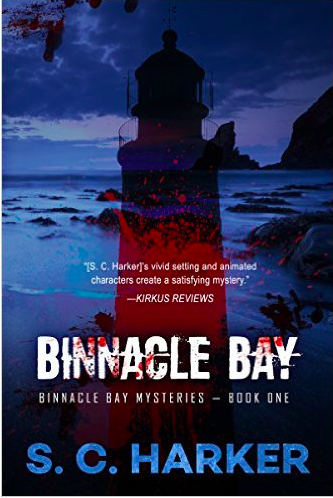
S.C. Harker’s ‘Binnacle Bay’: Hard cop, soft cop.

Screen Shot 2016-03-10 at 11.57.45 AMConfession #1: I’m a big city boy, and I’m generally sympathetic to the view – expressed to me by a drunken philosopher many years ago – that the countryside should be closed down and left to the fauna.

Confession #2: I’m obsessed by the USA and its vast kaleidoscope of landscapes. My imagination is gripped by its splendours and its ugliness, its coziness and its brutality. There is a standing joke in my house that one day we will visit New Iberia in Louisiana, where Tabasco Sauce is made. ‘Over my dead body’ is the punchline. Of course New Iberia is the home of James Lee Burke’s Dave Robichaux, the archetype southern deputy sheriff and hardboiled ex-alcoholic. How different can S.C. Harker’s Pat Fitzlaff be from Robichaux? The landscape is part of the explanation: Harker’s Binnacle Bay is in the coastal NorthWest; setting shapes a character, and there’s a whole continent between sweaty Lousiana and the bracing winds of coastal Oregon.

But Fitzlaff fascinated me from the outset; under the tough guy is an almost feminine sensibility. Harker’s competence as a writer gives him the requisite three dimensions, but I kept coming back to the small touches – his orderly house, his courtesy, his eye for detail in jewelry and clothing; there’s an extra dimension to this guy.

And of course there’s the immersive experience of Binnacle Bay: Nautical, cosy and small-town, with a cast of eccentrics you’d expect and some you wouldn’t. I said I was a big city boy: I feel more comfortable in Sydney or Paris or Manhattan, but there’s nothing like a vicarious vacation in Binnacle Bay or even New Iberia! You can find more details of Binnacle Bay and S.C. Harker’s other novels here.

My colleague Lesley Latte happened to be in Seattle recently and offered to track down the elusive S.C. Harker to pose a few searching questions. Here’s what Lesley learned:

Latte.  I felt that Pat Fitzlaff had a softer side than the standard hard-bitten cop. How did he get this way?

Harker.  That’s easy.  A violent death in the family.  Pat was born in a small town in central Nevada and spent much of his young life there.   As the only boy, he was particularly close to his father, an avid sportsman who loved hunting and fishing and never failed to take Pat with him on his rambles through the remote desert landscape. Pat was an expert in survival at an early age.

His two younger sisters idolized their brother, and their sibling relationships were normal for an average, small-town family.  In other words, the older brother mostly ignored the two girls, considering himself above what he considered their silly, juvenile behavior.

Then, when he was fifteen, Pat’s world was turned upside down.  The older of Pat’s sisters was brutally murdered, and the case was never solved.  This tragic incident was devastating to the family and had a profound impact on Pat, ultimately leading to his passion to become a homicide detective.  Conversely, rather than becoming bitter and hard-bitten, Pat is rather more sympathetic than most, especially toward the victims of crime.  It is one of his strengths.

Latte.  You create a great sense of place in the Binnacle Bay community. How did you invent this setting?

Harker.  I lived for a prolonged period of time on the Oregon coast in a house overlooking the sea.  We had a boat and fished the ocean for Salmon, Albacore, Halibut—you name it.  We had close encounters with whales and dolphin, and more than once had to rely on our GPS to find our way home in the fog.  Many times at low tide we walked down our hill and dug for clams.  We also crabbed whenever we got the chance and bought fresh oysters from the local farm.

Almost every day we took long walks on the beach with our two Brittany Spaniels.  By the way, though Murphy is a giant hound*, he is simply a dog at heart, and I learned about the true heart of a dog from my Spaniels.  Everything I write about Binnacle Bay is from experience and colored by my love of the ocean, dogs, small towns, and the people who inhabit them.

Latte.   Stuart Campbell tells me he likes to imagine having a drink with his characters, but is there anybody in Binnacle Bay who you’d avoid if they walked into a bar?

Harker.  There are always a couple of pains in the neck in every town.  Alba Enstadt is definitely someone I would avoid.  She appears in “The Bloody Lighthouse,” as does Beezer Arthur.  To have a drink with them I would have to go to Pirate’s Cove.  It’s not that I object to a low-class saloon every now and then, but Alba is a mean drunk who gets more and more combative as the night goes on.  And Beezer has the kind of unrelenting, smart-ass attitude that, as time goes on, makes you want to either get up and leave or, depending on how many drinks, to smash his face.

One person with whom I would never share a drink is the cold-hearted being who appears in “The Bloody Lighthouse” and again in “An Echo of Murder” (to be released later this year).

#

*Murphy is a canine character in the book – SC

Read a free sample of An Englishman’s Guide to Infidelity  here. Buy Stuart Campbell’s books in paperback and ebook on Amazon by clicking on these title links:An Englishman’s Guide to Infidelity and The Play’s the Thing . Stuart Campbell’s covers are designed by Rachel Ainge .

My tribute to author Pat Conroy, 1945-2016

When I heard this weekend that author Pat Conroy had passed away, I remembered something I wrote in 2013 when I had just finished reading The Prince of Tides. The piece was originally called Unimagining Literature with Google Maps. I was inspired to write it after reading the last pages of The Prince of Tides when Tom is sailing out of Charleston Harbour. Here it is:

———————————————–

One of my pleasures in reading is to meander through a genre and see where serendipity leads me. I’m an unashamed fan of James Lee Burke, the veteran novelist whose books lay bare the seamy and steamy underside of the southern states of the US through his flawed anti-heroes – Dave Robicheaux, Clete Purcell, Hackberry Holland and the rest of the sweating, gun toting, self-doubting crew. Even the women in Burke’s novels seem to have hairy chests. The landscape of the Dave Robicheaux novels is the worn-out, waterlogged settlements of New Iberia in Louisiana. I’ve never visited this region, and so I conjured up from Burke’s rich prose my personal imagined picture of Robicheaux’s world. It looked a bit like Bali. I was hooked and began to plan my literary tour of the Deep South.

Reality intruded when I looked up New Iberia on Google Maps. The images showed something quite different: Dead straight roads passing through an utterly flat green landscape, grey skies. Suddenly I didn’t want to go there anymore.

Despite the let-down, Burke piqued my curiosity and I began to follow leads to other writers of the South. I discovered a great deal of collateral detail: Tabasco Sauce is made in Avery Island, Louisiana; there is something called cracker culture, and it’s got nothing to do with biscuits; Mofro is a really interesting band. Moving up to Oklahoma, I found Glenn Ford in the 1960 movie Cimarron.

The two highlights of my Deep South reading were Thomas Wolfe’s Look Homeward, Angel and Pat Conroy’s The Prince of Tides (which most people probably know as the film version). Look Homeward, Angel is a great rambling, untidy, deeply moving mess of a book, which follows the rise and fall of the desperately alcoholic Oliver Gant, his sons, and his calculating wife. It took me months to read it in fits and starts, but at the end I felt the same feeling of emotional exhaustion that I had from Patrick White’s Riders in the Chariot.

Pat Conroy’s novel continues the despair and unresolved angst that seems to pervade the literature of the South: The terribly damaged Tom Wingo struggles to come to terms with his equally damaged sister Savannah and his brother Luke. He finds some resolution at the end of the book, and this state of mind is conveyed metaphorically as he sails through the South Carolina islands following the course he had taken many times with his father. Now here’s where it gets weird: I’m reading this on my Kindle and my hand is twitching to open Google maps. I weaken and open the laptop, and for the next half an hour I drift through the sea coast of South Carolina sitting behind Wingo on his boat while I watch with Google Maps from the shore. It was a very serene and beautiful – if peculiar – reading experience.

So are our imagined visions somehow violated when technology virtually (and I mean it in both senses) places us in almost any street in the world? I’m not sure: It’s an experience that we already know from film versions of books, but of course these films are themselves artistic interpretations, and not in the same realm as photographs. I tried making a quick scorecard of film or TV versions of novels that have (a) complemented and (b) violated my imagining of the novel: Pride and Prejudice: I can’t think of a film version that comes remotely close to affecting my enjoyment of the novel; McEwan’s Atonement: Hmm, it nibbled at the edges; The BBC series of Sebastian Faulks’ Birdsong: Oh dear.

The one that kept popping into my head, however was the 1969 movie Justine, based on part of Lawrence Durrell’s The Alexandria Quartet, which I drooled over in the early eighties. I read the Quartet before discovering the movie, but once I’d watched Justine, the character of Pursewarden was defined retrospectively and for all time thence by Dirk Bogarde. In fact, the movie Justine caused me to reimagine at least part of the book.

I’m reading James Lee Burke’s Feast Day of Fools right now. It’s his most gaunt and spare novel, set in a desert landscape on the Southwest Texas border with Mexico. I’m using a tablet now, so the Maps app is just a twitching finger away.


Read a free sample of An Englishman’s Guide to Infidelity  here. Buy Stuart Campbell’s books in paperback and ebook on Amazon by clicking on these title links:An Englishman’s Guide to Infidelity and The Play’s the Thing . Stuart Campbell’s covers are designed by Rachel Ainge .

Pamela Crane looks inside a murder victim’s heart.

Pamela Crane with Tinkerbell_author picIndie novelist Pamela Crane’s A Secondhand Life found its way into my Kindle this year. I needed a rest in my project to re-read all of William Faulkner’s main works, and Pamela’s book fell between As I Lay Dying and Soldier’s Pay. Did I need a rest! Did I need a crisp, refreshing read!

A Secondhand Life is based on a clever plot premise: Could the recipient of a transplanted organ experience the thoughts and feelings of the donor? Pamela Crane delves into the implications of the premise:  How would a donor recipient reconcile her own and the donor’s mind? Would it be possible to explore the details of memories evoked by the donor organ?

On top of this foundation, the author erects a thriller plot that makes for some highly original characterisations and twists. By the time I got to the ending, I had sticky fingers from counting red herrings. My five star review can be found here.

It has to be said, however, that the plot premise does have an antecedent. I did some checking and found that a 1971 UK comedy movie Percy runs a similar line; you don’t even need to click the link to guess which organ seventies comic actor Hywell Bennett received. The Kinks did the soundtrack, by the way.

My protégé Lesley Latte was unavailable to interview Crane, so I popped these questions over the email:

Q- What compels you to write?

A- Four little kids clambering for my focus all day, combined with no adult time, compels me to write. Writing is my break from reality…and it’s scary to say that living in the mind of a serial killer is much more exciting than changing diapers and housekeeping!

A- What would you (as author, not narrator) say to Brad if you met him in a bar?

Q- R.U.N. Run away from Mia Germaine as fast as you possibly can, Brad. A chick who chases serial killers–you don’t need that drama. Romantic relationships are tough enough without your significant other bringing a murderer into the mix.

A- When I write, my characters often take over the plot, and I am sometimes surprised at where they take the book. Does that happen to you?

Q- Even though I believe I create my characters, you’re right–they somehow live outside of my imagination and evolve independent of my will. As my characters develop through the story-writing phase, the plot needs to stay in line with who they are. In my thriller A Secondhand Life, Mia Germaine is stubborn (uh, nothing like me…but don’t ask my husband about this!), which causes her to nearly lose the love of her life, Brad. I hadn’t planned for that relationship tension, but it happened because of who she is (certainly not based on myself–did I say that already?).


Read a free sample of An Englishman’s Guide to Infidelity  here. Buy Stuart Campbell’s books in paperback and ebook on Amazon by clicking on these title links:An Englishman’s Guide to Infidelity and The Play’s the Thing . Stuart Campbell’s covers are designed by Rachel Ainge .

A villainous brew

Stuart Campbell's avatarStuart Campbell author

I ordered a cappuccino for my Mum on a recent visit to England, and she was presented with this baby’s potty of suds. It wasn’t unlike the coffee that Francis ordered in the following extract from An Englishman’s Guide to Infidelity. The narrator is Thea.

megachhino

I pointed to a coffee shop and we went in. He ordered what looked to be a litre of coffee foam, a supermegaccino I think it was called. I had Earl Grey. I waited for him to speak.

“I never forgot you Thea.”

“Why did you pick on me all those years ago? You did target me, didn’t you? It wasn’t just random?”

“I did. I picked on you on purpose. I wanted what Jack had. What they owed me.”

“You wanted me as part of his chattels?”

“No, it wasn’t like that. First of all I just wanted a life like his, wife, children…

View original post 191 more words