Generative AI snapping at my heels

When a slick email arrived congratulating me on my ‘literary achievements’, some pleasure centre in my brain briefly glowed. Reading on, I found the standard list of offerings: Enhanced SEO, exposure on Goodreads, engagement with influencers, etc. I’m sure most fiction authors endure a similar blizzard of unsolicited offers to help sell books; in fact I suspect that more money is made in the author support business than the author business.

When a second email arrived the next day, I took a good look at both communications: They both referenced a number of my titles, threw in key plot motifs, mentioned main characters, and wrapped up the whole piece with lavish praise.  ‘Wow’, I (momentarily) thought, ‘someone’s put some effort into writing this’.

The someone was apparently an opaque email address and bland name – no other details. The actual someone was clearly a Generative AI setup that has scraped my book blurbs off the internet and tipped them into a copywriting blender. A similar non-human email arrived two days later, this time from a company with a website and the street address of a seedy premises on the fringes of a major US city that looked as if it might double up as a swingers club.

These emails could have been the reason the term ‘bottom feeding’ was coined: Fiction writing is so poorly remunerated that – from the author’s point of view – the writing industry barely deserves the term ‘industry’ at all. It staggers me that somebody can find a business niche that depends on scraping thousands and thousands of book blurbs in the hope of hitting authors willing to cough up good money for services that in my experience yield a negative ROI.

My other Generative AI encounter arose from a professional postgraduate course I recently enrolled in – fourteen years after I retired as a Pro Vice Chancellor and forty years since I was last a uni student. I was intrigued to learn that the university’s obligatory unit on academic integrity was much preoccupied with the hazards of dealing with AI in academic writing

So far, so good. Except that my second study unit entailed (a) researching a topic using a Generative AI tool, (b) researching it with my human brain, and (c) comparing the results. A quick check showed that this assessment item fulfilled a graduate attribute on understanding AI.

My human brain research wiped the floor with the GenAI version, and I managed to gleefully use the term ‘stochastic parrot’ (properly referenced) in the closing paragraph of the paper.

I remain in support of the proposal that  ‘the role of the university is to resist AI, that is, to apply rigorous questioning to the idea that AI is inevitable’.
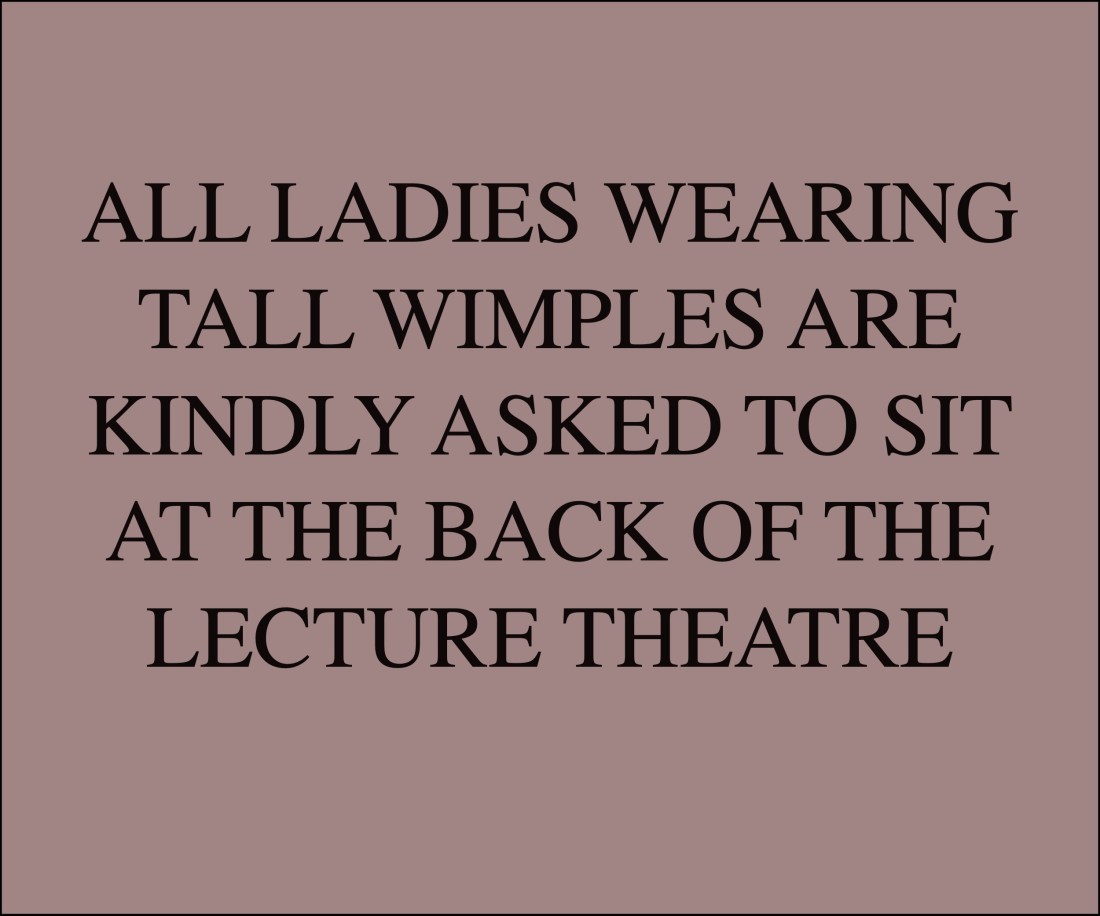
My nightmare (satirical) projection for the future of the university

In his Guardian article on the encroachment of artificial intelligence into university essay writing, Jeff Sparrow suggests—with faint hope—that tackling the AI challenge might ‘spur us to recognise genuine knowledge’.

As I leave higher education this month after a forty-year run, I despair of the kind of scenario mentioned by Sparrow, where an AI-generated essay could be marked by an AI assessment program, bypassing learning and knowledge altogether. This scenario fails at least two of the five challenges that Luciano Floridi poses for AI in his Full-on robot writing’: the artificial intelligence challenge facing universities (1), i.e. that ‘we should make AI’s stupidity work for human intelligence’ and that ‘we should make AI make us more human’.

I fervently hope that scholars like Floridi and Professor Dagmar Monett (2) will help avert the potential damage to higher education by a misplaced faith in the ‘I’ part of AI.

My way of blowing off intellectual steam is through writing fiction, and it’s no coincidence that my latest novel The True History of Jude includes a satirical swipe at an industry that I am about to exit. I leave with deep worries for the future—the role of AI in academic writing being one of them.

The book combines a coming-of-age-tale, a time-shifting love story, and a reimagining of a Thomas Hardy novel—all embedded in a dystopian setting. And as a fantasy, it gave me the power to project a set of contemporary themes to their potential extremes: I predicted a climate-ravaged and depopulated Australia leased to the world community for uranium mining, a corporatised global authoritarian system controlled by an Australian royal dynasty, and the destruction of artistic creativity under the crushing conformity of an information monopoly. And of course there’s a university.

Could it happen?

When I was studying Russian in the USSR in 1974, could I have imagined the fall of the Soviet empire? When we basked in the Australian summer of 2019, could we have imagined a pandemic that would upend the world?

In my version of the future, the Australian monarchy is the world’s first virtual state, having excised itself from its own territory(3). The Palace operates from leased premises at Oxford University. Across the city is the exiled campus of an Australian university (you’ll have to buy the book to find which one). It’s from here that the elderly Professor Susan Bridehead writes fawning hagiographies of the Australian royals, and teaches history to their offspring and aristocratic cronies whose royal stipends make it unnecessary for them to get jobs. The students return year after year to take the same courses, some even passing away from old age during lectures. Cosplay is a campus obsession: This year’s theme is Medieval, and Susan has to ask all the ladies wearing tall wimples to sit at the back to avoid blocking the lecture hall sightlines.

And last but definitely not least, under the ‘Standardised Study for Success Strategy’, students are obliged to produce their essays with the university’s in-house AI text generator. All grades are randomly generated.

It’s satire of course, but I’m certain that many academics will identify the threads I’ve pulled to weave scenarios such as: The banning of paper and handwriting; proscription of works of fiction; the training of professionals not at the university but in online polytechnics run by a consortium of three global consulting companies.

Could it happen? Could our current students imagine the kind of degree I took in the UK in the seventies? No internet, no credit point system, no fees, no assignment mills, no student surveys.

And all run by humans.

Notes

1. Floridi, Luciano, Ultraintelligent Machines, Singularity, and Other Sci-fi Distractions about AI (September 18, 2022). Lavoro, Diritti, Europa – https://www.lavorodirittieuropa.it/, Available at SSRN: https://ssrn.com/abstract=4222347

2. Prof Monett tweets at @dmonett a well-informed commentary on the hype surrounding AI.

3. The Australian Parliament excised the mainland from Australia’s migration zone in 2013.

© 2022 Stuart Campbell