The Afternoon of the Jackal

©2023Stuart Campbell

This short story was written for my Free Shorts project, which culminated in a twelve-story collection , which is itself entitled The Afternoon of the Jackal. In 2025, I’m releasing one of the stories each month free on my website. Happy reading, and please leave a comment to let me know if you enjoy my work.

***

“Those jeans look bloomin’ ridiculous,” Dad said. This from an overweight middle-aged man in a Santa hat and a yellow T-shirt with PROUDLY MADE IN THE UK on it. Okay, so maybe that extra rip around the butt was a bit too revealing. I offered to carry the wine when we got out of the Kluger, and let the two-bottle cooler hang over the gash in the denim. Mum went ahead bearing the bowl of home-made tabbouleh she brought every year, great-granny’s special Armenian recipe of course.

“And don’t curl that lip, Missy,” Mum said without even looking back to see my expression. Sure, I’d made a slight fuss about going to Uncle Gary’s Boxing Day barbecue. I mean, I’m sixteen next month, I’ve got a life of my own, things to do, stuff Mum and Dad wouldn’t have a clue about. And it’s so far, way up on the Northern Beaches on the other side of Sydney.

We go to our uncle’s place every Boxing Day. He’s actually called Garo, but Dad is genetically incapable of pronouncing foreign names, so he relabelled Mum and her brother years ago. Mum’s really called Serpouhi, which isn’t exactly hard to say, but Dad can only manage Sophie.

Anyway, every December 26, me and my cousins have to sit around the patio table in the heat drinking soft drinks while the adults get jolly and bang on about mortgages and TV programs and real estate prices and cholesterol and Jimmy Barnes. I’d planned to go to a party with my friends, but Dad said Uncle Gary would be hurt if I didn’t come this year, especially since his partner Derek had passed away last January.

So I did come after all, which was why I didn’t appreciate Mum’s comment because I was definitely not curling my lip. What changed my mind was the news that Uncle Gary had got married to a guy from Scotland.

Yes, married.

My cousin Ruby phoned me the week before and told me about it and how the husband was young and hot. But Uncle Gary’s old and fat, I said. Yeah, weird, Ruby said, but can we just say he’s got a larger build, you know, not f-a-t. Ruby’s studying psych at uni, and she’s always banging on about triggering words as if I’ve never heard of it.

I asked Mum and Dad about Uncle Gary over breakfast, and they said oh didn’t we mention it? No, I said with maximum offended dignity. Anyway, I said, curiosity winning over dignity, what do you guys think about it? Then they went all ‘each to his own,’ and ‘it’s not for us to judge’ but I knew they were busting to see the new crush.

Uncle Gary and Derek had been a family fixture since before I was born, and the story behind the Boxing Day barbecue (also a fixture since before I was born) was that since Mum’s brother was a bachelor and didn’t have any kids to spend the day with, we were ‘good company’ for him. Mum said ‘bachelor’ as if it was a box with a ghastly secret inside, like when people say ‘cancer’ and you have the horrors imagining tumours on their eyeballs or wherever. I remember Dad talking to a friend about Uncle Gary and them both sniggering when the friend asked if he was a confirmed bachelor. As the years went on, it gradually dawned on us kids that Gary and Derek were more than bachelors, but woe betide anyone who mentioned the ‘gay’ word to Mum. One year, my cousin Jackson – he would have been eight – asked out loud if Uncle Gary was a poof, and everyone suddenly found something loud to say: More of that lamb? Pass the Cab Sav. Goodness, it’s thirty-two degrees, usually rains over Christmas.

So this Boxing Day barbecue doubled up as the regular gathering plus the Scottish husband’s debut, not that anyone actually said that he’d be presented to the family; we just all knew. The honeymoon, we heard, had been in Goa, which was doubly weird since Uncle Gary and Derek used to drive to Noosa for their holidays, although Derek travelled overseas a lot for his work.

As we walked up the path to the front door, Mum was all fake brightness and Dad had huge armpit sweat stains. It struck me that the garden looked a bit tatty. Uncle Gary’s place was nestled in a subtropical suntrap on a cliff overlooking the beach. Derek used to keep the lush plants immaculately pruned, but now there were fat spiders hanging on webs between the yellowing leaves and gone-to-seed blooms.

The rest of the clan were there – about fifteen now that we three had arrived. I spotted Ruby chugging a beer on the back patio. She waved and nodded at the beer bottle; she’d sneak one out for me later. A stranger was turning kebabs on the barbecue – it must be a caterer, although Uncle Gary usually did the cooking himself on Boxing Day. When the guy turned and waved, I realised it was my uncle, not in his usual billowing kaftan, but shorts and a T-shirt. He must have lost thirty kilos.

Everyone seemed to be busy setting the table and avoiding looking at Uncle Gary or the back garden. So where was the Scottish hottie? Uncle Gary gave me a skinny hug while I did a recce over his shoulder – no sign.

“You’ve grown, let me see you, so beautiful.”

I did a cute pose. “And you, Uncle Gary, you’ve …”

“Shrunk,” he said, and we both laughed.

“That lamb smells good,” I said.

“I’ve done some of those English pork sausages for your dad.” We laughed again.

Ruby popped out from behind a gazebo. She flipped the tops off two beers and beckoned me onto the terrace leading to the pool on the next level.

“Look.”

We sat under the palms to watch the man sunning himself prone by the pool.

“That’s Romeo,” Ruby whispered.

“Is that his name, Romeo?”

“No, you dill. He’s Edward. Romeo’s like in Shakespeare.”

“Right, so Uncle Gary’s Juliet?”

“Shut up. He can hear us.”

The man was in perfect shape – muscular but not pumped, smooth golden skin, close, wiry black hair. He wore tiny red bathing shorts – hardly more than a G-string.

“Oh my God. What a waste.” Ruby swigged on the beer. I’d drunk half of mine too fast and was feeling slightly woozy on an empty stomach.

“Fuck, yeah,” I said, and then felt a bit stupid because Ruby had a thing about not using the f-word casually: It’s a weapon. Use it sparingly. Make it fucking count.

Uncle Gary’s Chinese lunch gong rang – another annual fixture.

Romeo stirred, turned on his back. He was brutally handsome, in his late twenties maybe.

“Don’t stare,” I whispered.

“I’m appraising.”

He looked at us both with a glassy expression and slipped into the pool, swimming rapid laps, smoothly and effortlessly like a dolphin.

We ran up the steps to the long table on the vine-covered terrace. A sea breeze took the edge off the noon heat. Mum was freshening up the tabbouleh, which was looking limp after an hour and a half on the back seat of the car.

An empty chair highlighted the new husband’s absence.

“Will I fetch Edward from the pool?” Mum asked. “I expect he’s hungry.”

Uncle Gary looked up from serving the kebabs. “He’ll be up in a minute. Just getting dressed I should say.” Ruby frowned at me. I shrugged my shoulders.

But Romeo didn’t come. The atmosphere was fragile. Mum kept looking towards the pool area. Dad attacked his British sausages and launched into a long story about the warranty on his new mower.

Gone was the jocular banter of past years. Uncle Gary used to be an architect and Derek had been a professional violinist, and they would entertain us with a ping-pong of affectionate digs and well-rehearsed anecdotes throughout the meal, with Dad trying to outdo them with lead balloon rejoinders that were so bad you wouldn’t waste breath groaning at them. The couple had been complete opposites: Derek small and dapper in crisply pressed whites and tinted glasses, Uncle Gary portly and dishevelled. They used to play really cool old school music over the outdoor sound system – jazz, I suppose. But this year it was just the clink of cutlery mixed up with people saying jeez and wow at Dad’s mower warranty story.

 On the way home last year, Mum, a bit relaxed after too much prosecco, had said to Dad, “Do you think they, you know, do it?” Dad laughed: “I doubt if Gary can locate the wherewithal.” I just pretended I hadn’t heard. It’s so embarrassing when they talk about that kind of stuff. What I did know was that Derek and Uncle Gary loved each other, not like Mum and Dad, who just seem to put up with each other.

Dad’s story ended at last, and everyone stared at their plates while Mum tried to drag information out of her brother.

“Where did you and Edward meet?”

“Oh, it would have been online as far as I remember.”

Dad put on his ‘how interesting, tell us more’ face, but Mum jumped in with, “And Goa for the honeymoon? It sounds so exotic.”

“A bit more spicey than Noosa,” Dad chipped in and winked at Mum. I hate winking. It’s so gauche. Mum says Dad can’t help it because he’s English, and nobody on her side of the family ever winked because in the Armenian community they have better manners.

Uncle Gary mumbled something about having a good travel agent.

“Oh, absolutely, a good travel agent’s an absolute essential,” Mum forged on, swerving into another conversational lane. “And what does Edward do?”

“Do?”

“For a living, you know?”

“He’s looking around for an opportunity, maybe taking a course or something.”

“But did he have a job before?”

“Oh yes, definitely.”

“What job was that, darling?”

I cringed. Mum saying ‘darling’ means the thumbscrews are coming out.

“He was a dancer.”

“Did you say dancer?” Mum asked, omitting ‘not a doctor or a pharmacist?’

“Yes, a dancer?”

“What kind of dancer, Garo?”

“On cruise ships.”

Mum froze while she processed this bit of information that had no known geolocation in her world view. That’s a big difference between her generation and mine – cognitive flexibility, adaptability to new ideas.

As Mum opened her mouth, Dad jumped in. “Come on Sophie, that’s enough of the third degree. Give poor old Gary a minute to eat his lunch.”

Ruby got us back on track by telling the younger kids to sing a Christmas song, and the adults munched in gratitude. When the brats finished the first song, Ruby started them on another and the atmosphere relaxed because the adults didn’t have to talk. Then it was time for dessert and more fussing with dishes and spoons to cover up the unmentionable absence.

“Oh, here he is at last,” Uncle Gary said with a chuckle I’d never heard before, a bit like when a cute puppy jumps onto the couch. Edward appeared under the entrance to the gazebo, shiny with lotion and almost naked. Dad, who was nearest to him, jerked out of his chair, toppling it into a display of potted orchids. He scrabbled in the pots, righted them, straightened himself up, and thrust his hand out with a booming “How d’you do, Edward”. Mum’s jaw hung open. Ruby peeped at me and smirked. The kids looked up from their ice cream.

Edward ignored Dad, who looked around at us in bafflement, retrieved his chair and topped up his wineglass.

The near-naked man sat down in the empty seat, filled a bowl with pav and ice cream, and hunched over it, slurping with a fist-gripped spoon.

“Haha,” Uncle Gary said, “My diamond in the rough,” at which Mum spluttered something through her ice cream that might have had the word ‘manners’ in it.

Ruby stood up and told the little kids it was swim time and the last one in the pool was a squashed banana. She led the giggling herd out of the gazebo leaving me, Mum, Dad, Uncle Gary, and Edward behind, as well as two sets of uncles and aunts who, sensing trouble, said they were desperate for a ciggie.

With the smokers puffing away in the driveway, Edward scraped his bowl clean and burped. My phone vibrated. I peeped down. Ruby: Keep me posted.

“Well, this is a bit different,” Dad said. We all looked at Uncle Gary.

“I need to explain one or two things,” he said. “Edward, sweetheart, come over here.”

Dad made a choking noise and blew his nose.

Romeo slipped into the seat vacated by one of the smokers. He held Uncle Gary’s hand.

“You see,” my uncle went on, “Things aren’t always what they seem. I know you’re thinking about those lovely Boxing Day parties, and how Derek and I were so smart and funny and happy.”

“You were smart and funny and happy. Weren’t they?” Mum said, looking at me and Dad for agreement. I shrugged. Dad frowned.

“It was all an act.”

Romeo produced some words that sounded like “Ball make widna fract,” and Uncle Gary said, “Yes, sweet boy”.

Dad spluttered, “How was it an act?”

“I hated him. I detested Derek.”

Dad chewed a fingernail. I looked at the baba ghanoush.

“No,” Mum spluttered like a goldfish flipped out of its bowl.

Dad squared his shoulders but Uncle Gary waved his hand before he could say any more.

“Derek was cruel and controlling. He treated me like a slave. Worse than a slave.”

My parents goggled at him, making vague lip movements as if words were trying to come out but hadn’t made their minds up what they should sound like.

“But why didn’t you …”

“Why didn’t I leave, Sophie? He was clever. He made me believe my inadequacies were my fault and that without him I’d be useless and lonely. He used to bring his sleek friends here and flaunt them at me. He was always taunting me for being fat, and the more he did it, the more I ate. I was so ashamed. The kaftan was his idea. The sack of shame, he called it.”

“Well, I’ll be buggered,” Dad muttered, never lost for the wrong word. “Are you sure about all this, Gary?”

Mum waved me down to the pool, evidently fearing I was in acute moral peril. I ignored her. Another text from Ruby: He’s straight. Has to be. Just wants a spouse visa. What’s going on?

I texted under the table: It’s getting weird here.

Ruby replied: Be there in a sec.

Edward now had his arm around my uncle’s shoulder. His glassy expression had turned to deep concern and sorrow. He said something in an accent like chunks of words mixed up with garden pebbles.

Dad stood up and crossed his arms. “Sorry Gary. This isn’t making sense. You’re telling us the bloke you lived with for decades, the bloke you made a big sobbing speech about at the funeral …  I mean, we knew him, he was like … y’know, someone we … “

“… liked, trusted,” Mum chipped in.

“… respected,” Dad added.

I stood up and crossed my arms. “It’s called coercive control, Dad. These people can be very manipulative.” This from the girl domestic violence expert who, half an hour ago, was emoting over Derek and Gary’s love and devotion. I’m a fast learner, you have to be in this world, and anyway we’re doing a project on domestic violence in social studies at school right now. Judging from Dad’s angry glare, I should have shut up, but I was saved by Ruby, who glided into the gazebo wearing – but only just – the tiniest bikini in Sydney.

“Edward, we didn’t get introduced properly.” She knelt next to the new hubby with face tilted to receive a social kiss, which was rewarded with the icy stare. Edward muttered more pebbly Scottish words and went back to consoling my uncle. Ruby stood up, stared around at us all completely affronted; nobody ignores Ruby. We looked back, bewildered.

“Well,” Mum said, looking at her watch.

***

On the way home in the Kluger, I put on my headphones and pretended to listen to music while Mum and Dad thrashed out a story to fit the evidence: Maybe Derek hadn’t been quite the angel they thought he was, but Gary was probably exaggerating, after all grief did strange things. Yes, they remembered that Derek could be a bit sarcastic, but then Gary gave as good as he got, well not always, there was that time he walked out on the Boxing Day lunch and didn’t come back, and Derek sniggered that he was having his period. And the kaftan and the weight, who’s to know what goes on in other people’s relationships? And especially homosexuals – after all, it can’t be the same as a woman and a man, can it? (Mum looked back to check I had the headphones on.) As for Edward, he was odd but seemed sincere, although you couldn’t understand a word he said. Takes all sorts to make a world, and it’s a fact that some Scottish people can be surly, but time would tell. If he’d got Gary to lose thirty kilos, he was worth his weight in gold for that alone. Dad thought he’d probably located his wherewithal at last, but it was so weird that a handsome chap like Edward can go off and play with the other team. Still, look at poor Ruby and the deadheads she finds on her apps, like that artsy fartsy one she’s living with, all Ned Kelly beard and quinoa and almond lattes. Mind you, it wasn’t exactly fun this year. Maybe now that Gary has Edward, they’ll go away next Boxing Day and we can do something different.

When we got home I went to my room. Ruby called.

“Did you see the look on his face when I bent over?”

“What look?” I asked.

“Male gaze on steroids. When I dropped my bag. The hungry jackal look. I tell you, he’s a fake. The evidence is in.” She made a growling noise.

“Evidence? What evidence?”

“It was an experiment, to see how he’d react. You saw his face.”

“Yeah, I suppose,” I said. An experiment? A girl dropping her bag in front of a guy?

Ruby went on, all fired up. “Maybe someone should tell Uncle Gary. He deserves to know, doesn’t he?”

I wasn’t quite sure about this, even though Ruby’s knows a lot of psych. I also felt slightly uncomfortable about the way she bent over when she pretended to drop her bag. I mean there are times when it’s OK to be a bit over the top, but the way she did it was just embarrassing with Mum and Dad and Uncle Gary all there. And then twisting around and looking straight at Edward.

“You’re probably right, Ruby. Hey, gotta go, Mum wants something.”

***

Ruby’s embarrassing performance wouldn’t shake itself from my thoughts. I lay awake that night replaying in my mind what I’d seen as we were leaving: Edward hanging back while we farewelled Uncle Gary. Dad giving Uncle Gary a giant handshake, Mum hugging her brother. Dad launching in Edward’s direction with an outstretched hand and changing his mind and retreating at the last moment. The more I replayed it, the clearer it became. They all stood around for half a minute saying, “Well, then,” and “That was lovely,” until Mum said to Dad, “Hit the road, Jack.” We all laughed, and that’s when Ruby did her thing. I remember looking towards Edward at that moment; he frowned at Ruby bent double, looked up at me and gave me a really nice wink. I felt this connection, like he was an older brother.

The bit about Ruby’s experiment was bugging me too. I mean, you might do something like that as a sort of test, but calling it an experiment seemed over the top. So I did a search and came up with Single Subject Experiments in psychology, which had nothing to do with what Ruby did, and I came to the conclusion that just because she’s doing psych at uni, she’s actually a bullshitter.

###

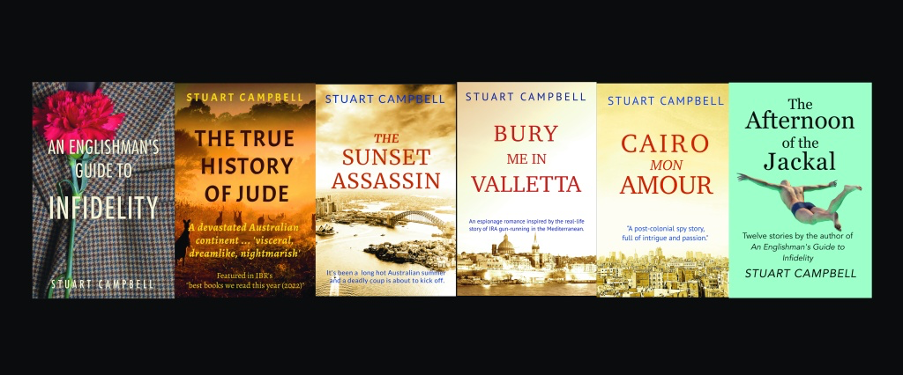
If you enjoyed this story, you can find details of my books here.
Unmasking Mr.French

©2023Stuart Campbell

This short story was written for my Free Shorts project, which culminated in a twelve-story collection entitled The Afternoon of the Jackal. In 2025, I’m releasing one of the stories each month free on my website. Happy reading, and please leave a comment to let me know if you enjoy my work.

***

Vernon the concierge opened the glass entrance doors from the street into the marble foyer. “Good evening, Ma’am. It’s a warm one.”

I asked after his daughter – she’d been unwell – and turned into the mail room.

There was a man with his back to me, busy with his letters. My phone beeped. I looked down to check a message I’d been expecting. When I looked up, the man was leaving. He glanced back briefly and nodded. Elegant, good-looking, around my age.

But there was a letter on the floor. He must have dropped it. I picked it up and read the return address: J. P. French, Apartment 22W1. My new neighbour. The return address was a fine art dealer. I slipped the letter into J. P. French’s mailbox and took the lift to Level 22. I needed to say hello to my cat, get out of my dress and office shoes, and pour myself a cold prosecco.

In the apartment, all signs of Martin were gone: The jacket on the hallstand, the leather one he’d bought when we went to Marseille; his books, toothbrush and after-shave, clothes. And his presence was gone – always bigger than his person, a Martin who filled the room with his pacing, his intricately expressive hand gestures, and the constant cross-currents of opinions and proposals: An exhausting man, who sucked everybody into his orbit until they spun like tiny moons around his radiance.

Of course, the students adored him: A professor and department head, still bookishly good-looking at fifty, a virtuoso of the enigmatic smile. He’d been my partner for the past six years, during which time he’d apparently screwed half the Political Science department. Gone three days now, on extended leave after an enquiry into his conduct. I’d kicked him out on my fortieth birthday.

And I’d kicked myself out of his orbit.

I took the glass of prosecco onto the balcony. A cruise ship in the harbour glowed bone-white, and the ferries bobbed and twinkled in the dusk. A clinking sound made me look around: A pair of hands resting on the rail of the next balcony holding a glass of red wine, the fingers of one delicately caressing the stem of the glass in the other. A man’s hands.

My new neighbour, J.P. French. What are you like, I wondered? I thought back to the mail room encounter. Had I sensed a diffidence – or perhaps vulnerability – in that quick nod?

I fetched the prosecco and poured myself another glass.

James Patrick French stood on the balcony and read the letter again. He’d accept the invitation of course, but fretted about how he’d get through the evening. He’d never been good at socialising. Clubs, groups, societies, dinner parties, gallery cocktail parties like this one – he’d never felt right making small talk with strangers. And it was worse when the people you met at such places were so effortlessly gregarious. It wasn’t as if he were short of ideas or things to chat about. He had subscriptions to the opera and to a couple of theatres, read The Guardian online, travelled to Europe for a month each year. He could ‘work a room’ as his fellow art dealers put it, as long as the conversation was about provenance, Chinese porcelain, or the Heidelberg school of painting. But put him at a dinner table with a stranger on each side, and James French was as much company as an Art Deco vase.

These social events had been tolerable when his wife was still with him. She’d cajole him to the point where he could stitch on a smile and embroider some clever remarks to keep the chitchat going. But there were so many ways in which they were incompatible. “You’re a good man, James,” she’d said on the day he moved out. “There’s a woman out there somewhere who’ll chime with you. I can’t picture her, to be honest, but it surely isn’t me.”

With these thoughts in mind, he poured himself another glass of Shiraz and stood gazing at the stream of cars crossing the harbour twenty stories below. He didn’t miss his ex-wife, but after two years on his own he still missed the presence of another human being in his home. His new apartment building, he’d been told before he bought it, was ‘sociable but not too chummy’. The residents all knew each other. There were social activities, but ‘no pressure to join in’. It had sounded like an improvement on the inner-city terrace where, for two years, he’d spied his neighbours three or four times without exchanging a word.

This was the time of day – six or seven in the evening – when his social predicament turned to a nagging ache, the time of day when he sought company, but not too much.

He picked up a paperback, took the lift to the marble lobby and nodded to the concierge.

“Out for dinner, Sir?”

“Yes, I am. It’s Vernon, isn’t it? Any suggestions?”

“Well, Sir. If you’re happy with something casual, there’s the Casa Venezia just along to the left. Then there’s the pub on the corner.”

“How’s the food at the Casa Venezia?”

“Very good, I’m told. Actually, if you prefer not to dine alone, a group of our gentlemen have just headed there. If you tell them you’re new to the building, they’ll be very welcoming. They’re always looking for tennis partners, by the way.”

“Really?” James suppressed a squirm of mental discomfort at the thought of coping with a group of strangers. But it had to be faced. It was that or share dinner with his paperback.

The evening air was warm, heavy with an impending summer storm. James walked past the Casa Venezia and made for the pub. It was a gastro-type establishment selling craft beers, but there wasn’t a square foot of space among the yelling office workers letting off corporate steam.

Back at the Casa Venezia, he peered inside without crossing the threshold. There was nobody he recognised except a couple in their sixties who he vaguely recalled from the apartment building. They almost certainly spotted him but made a show of being exclusively engrossed in their conversation. In the far corner, five or six professional-looking men were studying the menu. James went through a mental calming exercise he had read about on the internet. He rehearsed his opening gambit: Something on the lines of, “Hello, Vernon said you might be looking for a tennis partner.” No, that was senseless. You didn’t walk up to a bunch of strangers in a restaurant and propose a sporting rendezvous. What about, “Evening, gents. I’m new to the building. Mind if I join you?” But ‘gents’ – too jaunty, too casually ironic? Perhaps ‘Hi’. Yes, ‘Hi’, the universal conversation opener. But wait: One of the professional men had given him a casual wave. He’d been recognised. The man with the wave leaned in to make a remark, and his fellows looked up at James with welcoming smiles. He raised his hand to acknowledge them, but hesitated at the sound of a voice behind him.

“Aren’t you my new neighbour?”

He turned. It was a woman. Smart, pretty, around his age. “I’m sorry,” James said. “Have we met?”

“Not exactly, unless you include under water.” He looked at her. Nothing registered.

“Butterfly,” she said. She was attractive, not unlike his ex-wife.

He remembered: The lap swimmers in the pool in the morning. For the last week there had been a lithe woman performing professional-looking butterfly stroke and elegant tumble turns. He’d quickly learned that pool etiquette demanded that unacquainted swimmers acknowledge each other only faintly through their goggles – a nod if two swimmers happened to stop for a rest, a faraway look in the opposite direction when the stranger stepped out of the pool. He hadn’t managed to see her face – just glimpsed the trim body as he turned to breathe between strokes, stole a glance at her when she climbed out of the water.

“Butterfly,” James said. “Of course.” He was trapped between the woman and the expectant faces of the professional men.

“I’m in apartment 22W2. I’m Jane,” she said, offering her hand. She wasn’t like his ex-wife, after all. There seemed to be a depth of warmth and complexity in her expression, and something else that he couldn’t put his finger on.

As he searched for some appropriate words, the street was lit up with a flash of white light followed by a crash of thunder and a sudden blanket of rain. He looked down at the outstretched hand, gently took the fingers in his. He felt a rare confidence.

“James French. Will you join me for dinner, Jane?”

PART II

I laid my business clothes on the bed and put on a kimono. The sky was darkening above the harbour. I massaged my toes on the cool tiles of the balcony. There was a discrete cough from my neighbour. The man’s hands rested on the balustrade, the fingers interlaced but tightening and loosening. A phone rang and the hands were gone. If not a diffident art specialist, then …

John Phillip French was sick of divorce lawyers. He flung the phone onto the sofa.

“Cheapskates!” The letter lay scrunched on the carpet. He’d paid a fortune for the painting by one of the ’emerging artists’ his ex-wife patronised, but the young genius had receded along with his market value before completely emerging. He’d never liked the ugly abstract picture anyway. Proper paintings had things in them you could recognise – horses, women, mountains. He’d call the bastards in the morning and insist he got half of the purchase price in the divorce settlement.

The phone rang again. He ignored it. Let them stew.

A bank of three laptops glowed in the third bedroom, the screens flickering with updates from the markets. A backdrop of office lights filled the vista from the window. There was a cruise ship on the water with a deck full of boneheads waving at bloody nobody.

He needed to focus. London would be opening soon, New York four hours later. A night’s work to do. He needed sustenance, brain food, protein, no alcohol.

Phone. Where’s the house phone? After a week in the building, he still hadn’t located the basics. There it was. Square thing, two buttons.

“Front desk, Vernon speaking. How may I help you, Mr. French?”

“I need to have a quick dinner, something decent.”

“If you like Italian, can I suggest the Casa Venezia? It’s just down the street.”

” Make me a reservation for half an hour from now.”

There was a moment’s hesitation, and then, “Of course, Sir”.

John French bit his lip; a please always helps, his ex-wife was always telling him. Actually, the only sensible thing she’d ever said.

He blasted himself in the shower, first scalding hot, then heart-shocking cold. Towelling himself in front of the mirror, he appraised his body: Still taut, no flab. A woman would be lucky …

The image of the woman in the pool intruded, and he felt a stirring between his thighs. Attractive. The wrong side of thirty but the right bloody side of forty. He refocussed on his immediate needs. She’d keep for now.

Shave. Splash of something – who cared what, but it was expensive. Rip linen shirt from laundry wrapping, choose from six pairs of chinos. Gel hair.

He exited the lobby lift and turned into the mail room, where a woman was shuffling her letters. Quick appraisal: Hot. No, very hot. The pool woman. No question about that rear end. She brushed past him and he caught a draught of something sexy and expensive. She’d dropped a letter. Name: Jane Lestrange. No sender. Apartment next to his. He put it in her box. He followed her out but the guy on the front desk was already closing the glass door as she turned into the street.

The concierge returned to his desk. John French raised an eyebrow and waited. The guy stepped out and swung the glass door, not for him but to admit an elderly lady coming in. Remember your manners, John. The stock market’s not the centre of the universe. Bloody hard to remember, though.

“Good evening, Vincent.”

“It’s Vernon, Sir.” The concierge held the door open for John French. “The Casa Venezia’s just a few steps along the street, Sir.”

It was hot, sweaty hot. He could smell his fresh man smell in the linen shirt mingling with whatever he’d splashed on. Powerful. Bloody intoxicating for a woman.

She was ten metres ahead of him, slowing by the Casa Venezia. She was inside now, and he was almost behind her. The sky cracked and raindrops like hot jellyfish slapped the pavement. The maître was shaking his head. John French heard him say, “Every table is booked, Ma’am”. The woman turned away. John French said, “I’ve got a table. The lady can share with me. Find an extra chair”.

Christ, she was a stunner. He glanced at his watch. An hour and a half before London opened. You could do a lot in an hour and a half.

“Thanks,” she said. “My name’s Jane.”

“Tarzan,” he said, “but you can call me John.”

PART III

Damn Martin. He’d phoned, begging to meet me for lunch. I told him to call up one of his students if he wanted a screw. He left messages in the afternoon. When I got home, I switched my phone to silent. I needed a drink – a big drink. There was no prosecco, but Martin had left half a bottle of Scotch in the pantry. I filled half a tumbler and stepped outside. Nobody next door. I clinked my glass on the balustrade.

The hands appeared, loosely linked at the fingertips. I leaned over the balcony to see better. One of the fingers was stained – blue, black? Or was it just a shadow? If not a frantic stockbroker, perhaps …

Jeremy Preston French stood before the picture window and drank in the view. No, he gulped it, slurped it, savoured its whole and its parts. Toy cars in their thousands in a stream of light and sparkle swept over the harbour. A bone-white cruise ship crouched against a darkening sky of inky greens and burnt apricot.

He’d painted the harbour many times, but this was a new angle. The gravid storm clouds to the north merged into the dusk, and a single dash of tropical rain flicked across the window. Slitting his eyes, Jeremy French considered how he might represent the streaked drops in paint.

He turned away and scanned the instructions his brother had left. Typical of Ken to compile an instruction manual: Lights, heating, air con, kitchen gadgets, carpet spot cleaner, kitty litter … it went on for five pages. The straight-down-the-middle brother, the careful one.

“I’ll see you in three months”, Ken had said with a final worried look at the plush cream carpet.

“Don’t worry. I’ll just be sleeping here. No painting.”

“And looking after Ludwig.”

“Relax, Ken. Cat food in, cat poo out, once a day.”

“You forgot water. When they eat dry food …”

“Enjoy Japan, Ken.”

Three months out of the studio: A holiday from his stale couch and the take-away containers and empties, and an exploratory journey into the world of the people who bought his work. It would be a chance to get under their skins, feel what they felt, understand why everybody wanted a Jeremy French on their wall.

Or used to want a Jeremy French on their wall.

The scrunched letter was in his pocket. The gallery wanted the wall space. Words honed and honeyed: ‘… despite your established reputation … increasing demand for emerging talents … need to curtail your exhibition … regretfully … ‘

He pondered his dilemma: Face the facts, French. You’ve got to find a new direction before you drop off the market altogether. Your work is dated. Derivative, some are saying: A retreat to a comfortable and undemanding abstract expressionism, a vacuous homage to Jules Olitski, the smug reviewer had written. Jeremy French’s face flushed at the memory of the coffee shop interview with the twenty two-year old media studies graduate. “Well, let’s move on, will we?” the primping pipsqueak sneered as Jeremy struggled to recall what an Olitski might look like.

Over the creative hill at forty-five. He cringed. But if he couldn’t fire up the crucible of his youth, he’d put his energy into being entrepreneurial, analytic. Work out what the punters wanted on the walls of their lounge rooms and their corporate HQ foyers. Work it out and paint it.

He poured a glass of Ken’s pricey-looking cabernet sauvignon and took it onto the balcony. There was a sharp smack as something hit the picture window beside him. It was a bird, a black and white thing, dazed on the tiles and gazing up with an unfocussed eye. One scaly foot jerked spastically. Jeremy crouched over the animal, transfixed by the tiny theatre before him: The backdrop of city lights, the leaden air, the struggling bird, Ludwig the cat frozen in orb-eyed alarm.

He was seized by a moment of exquisite connection with his soul, a spiritual charge, a sensual urge, a raw need to hold this moment in his senses. To paint it.

But the bird hopped to its feet and flew into the apartment, hitting an open cabinet of their late mother’s porcelain miniatures that scattered in broken pieces on a glass table. Ludwig leapt at the creature, which released a stream of shit on the carpet and flew out of the window. Jeremy jerked to avoid the bird and toppled over, spilling the wine in a star-shaped splash on top of the ash-coloured shit.

He surveyed the mess: Stuff, objects, things. All cleanable, replaceable. He surveyed the paintings on Ken’s walls: Safe, investment grade, boring. And there! There, nestled beside a picture of rustic farmers, was one of his smaller works: Safe, boring, and probably dropping in value.

No, bollocks to the punters. He was an artist, not a paint-to-order picture maker. He’d do what his heart had been telling him these last few months: Buy a one-way ticket. Go and paint in Turkey or Cambodia or Morocco, far from the café and film festival set who the galleries pandered to. Do something impulsive. Give his unsold works to charity. Learn to swim butterfly. Ask the first good-looking woman he met to come away with him.

But in the meantime, he was famished. There was a place down the street that Ken had taken him to. Italian, Spanish?

In the lobby, a woman was chatting to the concierge. Jeremy took in the scene: The woman gesticulating with long fingers, giving the old man an ironic grin as if they had shared an old joke one time too many. And the concierge, leaning back with his belly straining under the uniform waistcoat, artless wisdom in his crinkled smile.

The woman turned to face Jeremy.

“Aren’t you my new neighbour?” Her expression was a meld of humour, intelligence and daring. She was what? Thirty-five, forty? A woman who’d seen a thing or two and was ready for a tad more.

“Jeremy French. Good to meet you.”

“Jeremy French the painter. Yes, of course. I’m Jane Lestrange. I bought one of your pieces for our chambers. “

“You’re a lawyer?”

“Ex-lawyer. I told them where to stick their job today.”

“Well, good on you, Jane Lestrange,” Jeremy said. “Look, are you heading out for dinner? I’ve got a proposition for you.”

PART IV

I had an arrangement on Thursday evenings to meet a group of friends at a tapas bar nearby. A couple of them were lawyers like me, one was in commercial real estate, another in media. It was a low-key place where a quintet of professional women could take a booth and chat without having to shout over a roomful of men downing beers. I might entertain them with my musings about the mysterious J.P. French.

Our usual spot was empty, and I slid onto the bench seat to wait. The waiter brought a bottle of sauvignon blanc and five glasses.

After ten minutes there was no sign of my friends. I began to message one of them, but then remembered – we’d arranged to meet on Friday this week. Not like me at all: Perhaps I’d spent too much time thinking about my neighbour.

 I was immediately self-conscious: A lone woman with a bottle of wine in front of her. I topped myself up and struck an ‘I’m waiting for friends’ attitude; five minutes, and I’d go to the ladies and quietly leave on the way out.

A couple had taken the booth behind me and began whispering hoarsely. I bent over and fiddled with my phone. Their voices became louder and more urgent, the whispering abandoned, their words just audible above the mood music in the background. Almost against my will, my attention was drawn to the unseen drama, and I stared harder at the phone.

“I want you back,” the man was saying.

“What right do you have to follow me here?”

“I’m your husband, that’s what right I have.”

“I want you to keep away. Just go. Now.”

“Not until you say you’ll come back, Miriam.”

Silence.

“It won’t happen again, Miriam.”

“You’re not supposed to come near me.”

“I’m just looking for a last chance. I’m telling you, it won’t happen again.”

“Really? You’ve changed, have you? You’re scaring me. Don’t make me call for help.”

“I can change. I know I can. I’m getting advice. I’ve joined a group. Other men.”

“Please just go or I’ll phone the police.”

Silence.

“Are you listening, Jack? You broke two of my fingers last time.”

Silence.

“I’m getting up now. If you move, I’ll call for help. Don’t follow me.”

“Miriam, I love you.”

“I’m going.”

“I know where you live, Miriam.”

I sensed shuffling behind me, and then saw a woman walk swiftly past and out of the door. I leaned deeper over my phone and stabbed nonsense into the buttons. His presence in the booth behind was solid, palpable. Then he was walking past me, leaving a wake of cologne with a sharp edge of perspiration. I looked up. He turned, stopped, took a step towards my booth, thrust out his hand, and said, “I think we’re neighbours. I’m Jack French.”

If you enjoyed this story, you can find details of my books here.

An Afternoon under the Paperbark: A short story by Stuart Campbell

©2023Stuart Campbell

This short story was written for my Free Shorts project, which culminated in a twelve-story collection entitled The Afternoon of the Jackal. In 2025, I’m releasing one of the stories each month free on my website. Happy reading, and please leave a comment to let me know if you enjoy my work.

***

The sun’s arc moves another fraction. Under the big paperbark tree, dappled pools of shadow escape its burning eye. I move deeper into the shade as the sunlight creeps over my foot. The groundcover of lemony leaves and grass is warm and aromatic. I close my eyes. I’m not going anywhere.

A car crunches to a halt on the gravel drive. Clunk of doors, irritated voices.

“Go to hell.”

Sounds like the boss to me.

“Pete, stop, just listen.”

That’s her who lives with him.

“I’m sick of listening, Julia. Just drop it.”

“I’ll tell Lucy. I’ll tell her everything, Pete.”

“You wouldn’t dare.”

“Who says I wouldn’t? How would you like to be stuck in a wheelchair for the rest of your life knowing your brother in law’s borrowed your compensation money? What if you can’t pay it back?”

“Julia, just give me a bit more time and you’ll realise…”

The voices fade as the footsteps grind up the gravel drive to the house. The front door opens and slams shut. A fly walks across my nose. I shuffle deeper into the shade.

I always liked the boss’s woman. But she can have a nasty side, and you need to watch your step. As for the boss, he wouldn’t give you a sniff of his arse.

A leaf flutters down in an untidy spiral, landing next to my nose. An ant marches up to the leaf, sniffs it, marches away. I like being invisible here in the bushes between the tree and the house. You hear a lot. And smell a lot too.

Another car crunches into the drive. One door clunks shut. I hear a man talking loudly to himself. Oh, yes, it’s that one, Stinky. Comes here from time to time. Usually when the boss isn’t here.

“I ran out of smokes. What? On the sofa? Oh, geez, right. I mustn’t have seen them. What? The bank called? Sorry, Lucy, say again. Gone? What do you mean ‘gone’?”

Big silence. He’s smoking. Can’t stand the stench of it. I have a stretch. The sun’s over the roof now and I’m all in shade.

He starts yabbering again. “Whaddya mean Pete took it? Lucy, don’t hang up. Shit, shit, shit.” I can smell his angry sweat mixed up with the smoke. Come on, buddy, we’ve all got to breathe this air.

Ringing noise. Stinky talks again. “Zac here. Who’s this? No, I don’t want to donate to cancer. Get lost.”

I open an eye and slide sideways into a gap in the bushes. The front door of the house opens. It’s the boss’s woman, really pissed off judging by the way her feet are churning up the gravel. But what’s this? Stinky’s dived into my hiding place and he’s crouching near me watching the woman. Don’t mind me, mate. I’m just an old retainer trying to have forty winks.

The boss has come outside the house now. Also highly ropable.

“Julia, wait.”

“No, that’s it. I’m out of here, Pete. I’m going straight over to Lucy’s.”

“Yeah, well, how are you going to get there?”

He’s dangling something in his hand. Typical boss behaviour.

“You bastard, give me those keys.”

She runs towards him but he’s already inside. The front door crashes shut.

It’s quiet for a bit. I close my eye. Maybe they’ll let me get back to my siesta.

Almighty smashing of glass. I give up, open both eyes. She’s holding something like she’s going to throw it. It’s not a ball.

“Come on out Pete or I’ll smash all the bloody windows.”

No sound from the boss.

“I’m calling her right now, Pete. Hi Lucy. Lucy? Bloody answering machine. Yeah, Lucy, Julia here, I’ve got something important… Never mind, just call me back.”

She’s looking down into her hand.

“Zac, Zac. Where’s Zac’s number?  X, Y, Z, got it.”

There’s a ringing noise just behind me. It stops. Stinky starts talking.

“Is that you, Julia?”

“Hey, this is weird. You sound echoey, like you’re close by. Wait, I can see you. What on earth are you doing here?”

Stinky steps out onto the lawn taking his pong with him. “We were supposed to meet up down at the boatsheds before Pete got back.”

“Oh, God, I forgot, Zac. Something terrible’s happened. Pete’s taken Julia’s compo money.”

“I know. She just called me. Nearly three mil.”

She pulls him behind the bush. “Give me one of those, Zac.”

“You don’t smoke.”

“I do now.”

It’s enough to suffocate a possum. Worse still, when the smoking’s all over they start whispering and then there’s some grunting. I keep my eyes tight shut. It’s not pretty.

Stinky’s the first to speak afterwards. “What are we going to do, hon?”

“Let’s dob him in. What’s stopping us?”

“He’s too smart. You’d risk losing everything. The house, the kid.”

“Our kid, Zac. Not his. I’m not losing Rosie.”

They go silent for a while.

“He still hasn’t worked it out?”

“I don’t know. We’d have to tell Lucy.”

“Tell Lucy about Rosie? Ha, you’re crazy, Julia! Why tell her?”

More ringing. That noise is beginning to get on my nerves.

“Lucy? Yes, Zac’s here at our place. Do you want to speak to him? No? OK. Hang on, it’s a rotten line. I’ll put you on speaker.”

“OK, that’s better. What the hell is Zac doing at your house, Julia?”

“He just popped in on the off chance of seeing Pete, but that’s not happening.”

“Why?”

“Because Pete’s in the house and he’s locked me out without my keys.”

“Why’s he done that?”

“Because I said I was going to tell you that he took your money.”

“But I know he took it. I’m gonna kill him.”

“Oh dear, I just wanted to say I’m sorry, Lucy, so sorry. For everything. It’s appalling. Look, I have to go.”

“Sorry for everything? What everything? What aren’t you saying? Look, I’m heading over to your place now.”

Beep.

I open one eye. Stinky and the boss’s woman are walking up to the house. Let them get on with it. I can’t make head nor tail of any of it. The boss comes out of the front door. A wasp nest in the branch above me is abuzz with busy creatures. A lizard blinks. My stomach growls when I catch a whiff of cooking meat.

They’re shouting up at the house. All three are leaping around on the lawn now.

“We had an agreement, Pete.”

“It’s off, Zac.”

“What are you talking about, an agreement? Zac, Pete? What is this?”

“Keep out of this, Julia.”

“Pete. Don’t be a prick. there’s plenty to go around. You can’t just…”

“Sorry Zac, there’s not enough. Time for you to butt out. I’ve made arrangements. Lucy will get half her money back tomorrow morning—the million and a half you thought you were getting. She can live on that, maybe make a few economies. The bank transfer’s all set up.”

“You bastard. If it wasn’t for me, you couldn’t have got access to the account. I’m gonna…”

“What, Zac? What are you ‘gonna’? Go home, mate. We’re out of here tonight. Me, Julia and Rosie, to Byron Bay, for good.”

The woman makes a horrible shrieky noise. “Out of here? Byron Bay? I hate Byron Bay. We live here in Sydney. What are you on about, Pete?”

Stinky waves his arms. “You can’t take Rosie, Pete.”

“Why not?”

“I thought you knew, you dopey bastard.”

“Knew what?”

“I’m Rosie’s dad, that’s what.”

The boss’s face goes ugly. “Julia, what’s he talking about?”

There’s a trundling noise in the gravel. I get up to look. That other woman’s just got the little cart thing out of her car, and she’s slid into it. She heads towards the house. She comes here sometimes, and Stinky usually pushes from behind. The other three are still waving arms and shouting. The boss goes to the shed and comes back holding something long. Then they’re all on the ground, shouting even more. The cart thing hits a rock and overturns. The cart woman’s lying still on the gravel.

Boring. I sniff my balls. Not much else to do. It’s still warm under the tree.

Phwoooarrr! What’s that on the breeze? Oh, joy, oh bliss, it’s that strumpet of an Australian Kelpie from opposite and she’s off the leash for the first bloody time in history, and heading to next door’s driveway with her tail up, practically begging for romance.

When I come back home I’m a bit wobbly in the withers. What a gal!

 I could eat a bucket of kibble but nobody’s filled up my bowl. I take a little trot around the garden amongst the cars and the vans with the flashing lights. Some possibly interesting stuff on the lawn. I roll around in some of it, but I’m not keen on the smell.

Now, who’s gonna fix my dinner?

###

If you enjoyed this story, you can find details of my books here.

Your Own Luck: A short story by Stuart Campbell

©2023Stuart Campbell

This short story was written for my Free Shorts project, which culminated in a twelve-story collection entitled The Afternoon of the Jackal. In 2025, I’m releasing one of the stories each month free on my website. Happy reading, and please leave a comment to let me know if you enjoy my work.

***

On the last day of the cruise, Perky made his mind up not to get off at Sydney. He’d bought the ticket – Sydney to Darwin and back – on a whim, walked straight out of the betting shop into the travel agency and paid cash, all the cash he had in the world. There was nothing to go home to; strictly speaking there was no actual home now that his drinking buddy Jason wanted his couch back. And the job: You could pick up cash-in-hand removalist work anytime you wanted if you liked earning peanuts for breaking your back.

The gang at the smokers’ corner came up with the name Perky. They were a good lot on the whole, with all the time in the world for a yarn over the ashtrays outside the Pirates Bar. Generous too: You could always bum a smoke, which was somewhat convenient in Perky’s case since he’d puffed his last cigarette on the morning they sailed out of Darwin. The gang reckoned smokers had rights, and if the people running the ship had stuck the smoking area next to the walking track, that was tough shit on the joggers in Lycra tutting and eyerolling when they ran past. He struck up a special friendship with a bloke called Pinky so it was a no-brainer that they called him Perky, which suited him because he generally liked to go by something other than his real name.

He’d sort of planned it, sneaking around the decks to work out where he’d leave the note. It was windy up top where he’d jump overboard (‘not’ he chuckled to himself), so he wrote the note on a flattened take-away cup, bored a hole in it, and threaded his cruise pass lanyard through so he could tie the whole lot to a handrail. IM ENDING IT ALL he wrote on the cup, then added IT WAS THE POKIES.

That night Perky hid in a toilet up near the basketball court with a bottle of water and a bread roll. Someone locked the outside door around midnight, but next morning he found it unlocked. He snuck outside at midday. By coincidence, his blue shorts and white T shirt were similar to the cleaners’ outfits. The discarded rag he found the day before now became his disguise as he made his way along the deck polishing handrails. The rag came in super handy to hide the lanyard and cup when he tied them to a bracket. Head down, don’t look up: It wasn’t the first time Perky had had to look out for a CCTV camera.

Still, he wasn’t feeling so clever by now. Where was he going to sleep? The toilet? ‘Needs to control his impulses,’ one of his school reports had said. ‘Rash decisions will lead to trouble in later life,’ the next year’s report said.

Too right.

“Hey, you looking for something?”

It was a bloke in white overalls, some sort of foreigner like all the ship’s crew. Another one the same appeared and they started pointing at him and yakking in Indian or whatever.

“No mate, I’m good.” He walked away, casual, watching out of the corner of his eye whether they’d spotted the lanyard and cup.

It was open bloody season out on the decks, with crew everywhere stacking deckchairs, cleaning the pool, checking off lists. Where was it quiet on the ship, somewhere he could hang around until the next bunch of passengers got on?

Perky took the six flights of stairs down to the casino, chin down, avoiding eye contact with the odd crew coming up. One look at the rows of pokie machines flashing silently in front of empty chairs, and he was out of there – too many security cameras. So much for that stupid idea.

The glass lifts were beginning to fill up with new passengers heading for their cabins. This meant there’d be people in the corridors; he could blend in rather than hide while he worked out what to do.

It was bedlam in the gangways, with staff lugging suitcases and white-haired couples streaming from the lifts. A bloody geriatric home on water. Once he got settled somewhere, he’d find the new bunch of smokers.

A bloke in a security uniform was coming his way so he turned to a cabin door and started polishing. He jumped back when the door opened.

“There you are. Come in.”

When Lionel died, Janet’s friend Rhonda said, “You’ll miss all those cruises,” as if a widow of eighty was incapable of getting on a ship without a man. Truth was that Lionel hated cruise ships. He agreed to one a year and “that’s all you’re getting me on,” whereas she’d spend the whole summer cruising if she could. So when Rhonda made the comment, the idea came to her: Back-to-back cruises. You could spend months on the same boat: All around Australia, across to New Zealand, up to Fiji. She hadn’t been off the Pacific Reverie for eight weeks. Ruslan, the concierge on her deck, had adopted her like his auntie, arranging little treats and kindnesses: A cup of tea and a cookie each morning, superior pillows from the penthouse cabins four decks above.

The young man with the polishing cloth didn’t look as smart as the other crew members. Maybe maintenance people who worked more outside the public areas had different dress standards. “It’s the TV. I rang down because the sound’s not working.”

Perky looked around the tiny cabin. At least it had a balcony. His had been windowless right inside the hull, with rumbling and whirring all night. He was good with TVs and gadgets, a bit of a bush technician if that was an actual word. “Got the remote?”

Janet’s first doubts about the technician’s appearance faded when, with some poking inside the remote, a football commentary suddenly boomed from the TV. The lad – she guessed he was about thirty – shrugged and grinned, not making any sign of leaving.

“Well thanks for fixing it.” More nervous grinning.

“Is there anything wrong?” She sensed something familiar, an instinct born of forty years of teaching. “You’re not really a technician, are you?”

Perky turned, jaw open, grasping for an answer that wouldn’t come. The old lady asked, “Are you hungry?” He nodded. He was bloody starving.

She used to call them ‘lost boys’, lads whose life chances were erased by neglectful mothers, violent fathers, grog, drugs and God knew what else. The good hearts they were each born with corroded as the lost boys learned to survive on the margins: How to be rash, furtive, boastful, servile, threatening, depending on what immediate need had to be satisfied.

“What’s your name lad?”

“Shane, er Perky.”

“I’m Janet.”

Yes, this one was truly lost. “Hide in the ensuite while I ask Ruslan to get some food sent up.”

Perky sat obediently on the tiny toilet. The bathroom shelf held six or seven packets of drugs, but he couldn’t read beyond the first few letters of their names. Outside, the old lady was talking to somebody. His time was up. They’d arrest him. What was the bloody point?

“Don’t come out yet.”

Moments like this when he was up shit creek always sparked bad memories. His old man’s pitbull crosses that could take your arm off, the scrubby paddock at the back of the house, his mum with a broken jaw. What was it all about, this crap life? He might as well sit here on the shitter and let fate take its course.

Janet knocked on the ensuite door. “Come on out then.” Good Lord, he ate like a starving puppy, bolting down the sandwiches, eyes flicking sideways. When he finished, he looked at her with a ‘what’s the deal then’ expression.

“Listen lad, apparently someone staged a man overboard. Ruslan says they think it’s a hoax. Don’t worry, I’m not going to report you. You must have had a proper reason to do it. You look exhausted. Why don’t you take that spare pillow and have a nap on the carpet. We’ll have a proper chat when you wake up.”

She was a weirdo for sure. Anyway, if she didn’t mind having a complete stranger on her floor, so be it. Perky slept till mid-afternoon, but Janet didn’t seem up for a chat when he woke up. She told him to get a feed in the self-service cafeteria now the ship was under way. He asked if he should bring something down for her.

“No dear, I don’t have much of an appetite these days.”

That was nice of him to offer, anyway. He obviously had a good soul. Actually, she’d be grateful for some company for a few days. By now Janet had realised how lonely solo cruising was, especially for an old woman with a serious heart condition. Dinners were a trial: She’d wait in line at the big dining room with the chandeliers and seating for a thousand. Share or single? they’d ask. Share, please, she’d answer and get stuck on a round table for ten with a snobby group to her left and a bunch of yahoos to her right. The single dining option was marginally worse, perched at a table for two, with the phantom companion’s cutlery and glasses whipped away. She didn’t have the energy for the boot scooting and ballroom dance classes. And the stage shows: She’d seen them all three times over. No, the juggler just once, that was enough.

Perky’s plan was to eat some decent tucker without anybody asking who he was. The self-service cafeteria was full of busy folk criss-crossing from one bank of food displays to another, bearing piled up plates. He felt a bit more relaxed; just needed to blend in. The ship was rolling with the swell so he braced himself as he made his way along the Mexican section, loading up on tacos and chili stew: Easy on the avo, bit more salad, start loading up another plate. He traversed to the soft drink stand holding the two plates, manoeuvred one to balance on his forearm while he filled a glass with cola with his free hand. As he swung sideways to counter the swell, his right foot gave way on something slippery. The last thing he saw before he blacked out was a gobbet of guacamole heading for his face.

“Sir, wake up please.” A waiter’s face came into focus. Another one was scraping food off the floor. The back of his head hurt like hell. “Sir, I will help you to the medical centre. What is your stateroom number?” A crowd of gawkers had formed around him. Stateroom number? The game was up. But a tattooed arm hovered in front of Perky’s eyes. An Aussie voice: “He’ll be right, mate. I’ll look after him.” The meaty hand on the end of the arm grasped his shoulder and brought him to his feet. The waiter shrugged and turned away, the crowd dispersed. His new pal was missing his other arm, and had jailbird written all over him.

The hairy bloke snarled, “Long Bay, that’s where I’ve seen you, on remand. You were there for ….” Perky brushed the man off and headed for the toilets, where he scraped and dabbed the worst of the Mexican tucker off his T shirt and shorts.

Bloody hell, he needed a ciggie.

With the ship ploughing up the coast, a new gang of smokers was huddled out of the wind outside the Pirates Bar. “Mate, I left me smokes in the cabin,” scored his first cigarette of the day. By late afternoon as new members came and went, he bummed half a dozen more, as well as a couple of sucks on a woman’s vape. The crowd was thinning out when the one-armed bloke rolled up. He took one look at Perky and gave him the two fingers in the eye sign with his good arm. Fuck this, Perky thought, and scuttled back to Janet’s cabin.

She was relieved when he came back. Cruise ships were full of eyes. They’d catch him before long, but he might as well enjoy his freedom for a bit. They sat on the little balcony watching the sunset.

“Help yourself from the minibar, dear.” The prices were daylight robbery, but it was worth it for the companionship. Perky came back out with beers and corn chips, and they chatted into the evening. When the corn chips were all gone, she ordered him a room service burger.

Janet would have been happy to quietly watch the white foam rushing past on the black swells, but the food and beer had put Perky in a mood for storytelling. It was as she might have suspected: When he was small, his mum injured her back at work. Dad came and went but eventually stopped coming, leaving Mum in a wheelchair struggling with four kids. Perky wagged school, couldn’t sit still, never learned to read properly. Foster homes, run-ins with the cops, fights over money and women; he told his story without emotion, as if the fates had ordained his scrappy biography from the day of his birth. At one point he said, “You make your own luck in this life. That’s what Mum used to say”. When he’d finished, he yawned and stood up.

“I could teach you to read properly, you know when we get back to Sydney.”

Perky sat down again, an eyebrow raised in curiosity. She told him how she’d kept in touch with her lost boys years after they left school. Well, to be honest with herself, there was just that Finian who she had to take out an AVO against.

“Lost boys.” Perky repeated the phrase. “Yeah, I suppose I’m a lost boy. Never really thought about it that way. Did any of them, you know, come good?”

She hesitated before lying. “Yes, lots of them. Good jobs, children, nice houses.”

“Jeez,” Perky said, gazing out at the dark ocean. “Good jobs, you say?”

“My word. Managers, doctors, a judge.”

“A judge. Get away!”

A party mob stumbled past the cabin door, the men guffawing about getting it up and the women shrieking about putting it away. The voices faded. There was a last “Get that hand off my arse, Jim,” then the slam of a cabin door, the low throb of the engines and the hiss of the sea.

“Another drink, dear? There’s some miniatures.”

“‘Preciate your generousness missus, but I’m full as a brickie’s singlet. Think I’ll get my head down.”

“God bless,” she said when they turned out the light, and the ship rolled and hissed through the black waves towards Brisbane.

Bright light pierced the gap in the cabin blinds in the morning. The old lady was still asleep. Perky used the bathroom and tiptoed onto the balcony, taking care to close the blinds again. The ship was tied up at an ugly wharf.

“Bris Vegas,” Perky said. He’d been there once, gone up on the Greyhound to see a mate who owed him three hundred dollars, but the mate had buggered off to Toowoomba leaving his girlfriend to explain. She turned out to be a good sort, and after a quickie on the sofa followed by a feed, he was back on the bus to Sydney with fifty bucks on account in his pocket. Funny how something always turned up, like the old lady.

He slipped back inside. She was lying a bit funny on the bed. “Wake up, missis.” Her mouth was open but he couldn’t hear any breathing. He touched her wrinkly arm.

“Shit!” He touched the arm again. Cold.

He hadn’t undressed the night before, just had to slip on his thongs. Fuck’s sake, you couldn’t win a trick. He remembered a teacher he’d had, a bit like the dead lady. Miss Hampton, that was it. She offered him extra help before school, but he only turned up once. She said she was disappointed he didn’t want to make something of himself. Well, so am I disappointed he thought, seeing as my dad knocked Mum out of the wheelchair this morning and broke her wrist. Maybe the dead lady would have turned out like Miss Hampton. Nah, she was different, willing to give him a proper chance.

He found her purse in the bedside drawer, took the two hundred bucks wrapped in a plastic sandwich bag, and stuffed it in his shorts pocket. She’d want him to have it.

There was no way Perky was going to jump off the top deck, but he remembered a spot he’d seen when was scouting the ship where you could hop over a railing and hide behind a lifeboat. Head down, polishing handrails, down the carpeted staircases. The only staff around were busy with room service breakfasts. A security guy popped out of a lift but didn’t spot him. There was nobody around at the lifeboats on the outward side of the ship. It wasn’t far down. He reckoned he could swim to a wharf where there were some trucks to hide behind. He stepped off, hit the water heels first, shot to the surface and swam like buggery.

###

If you enjoyed this story, you can find details of my books here.

So who’s Mr. French, and why is he unmasked?

Like most writers I know, I have voluminous files of old drafts, abandoned chapters and even abandoned novels. It’s all part of learning the craft – knowing when to let go of something that just isn’t working.

Last year, I began writing a complicated dystopian novel. My writing critique group at the New South Wales Writers’ Centre (I couldn’t live without them) gave it a big thumbs down.

Undeterred, I brought it back a few weeks ago with a new beginning. Thumbs down again.

Another beginning. Another thumbs down.

But last week, with beginning #3, I got the seal of literary approval. The corpse has risen from the dead. It is walking. A twisted future world is under construction.

To celebrate, I dusted off a short story I wrote a while ago, did some more work on it, gave it a new title Unmasking Mr. French, and posted it on this site as the prize for signing up to my newsletter. I even invested in a Shutterstock image and made a ‘cover’. (My regular professional cover designer is  busy right now, and will probably shriek in horror when she sees my work!)

Because I’m still in celebratory mood,  I’m giving you the story  without making you sign up since you managed to find my website. Just click here and pop in the password FREE.

Have a read and let me know what you think.

Stu