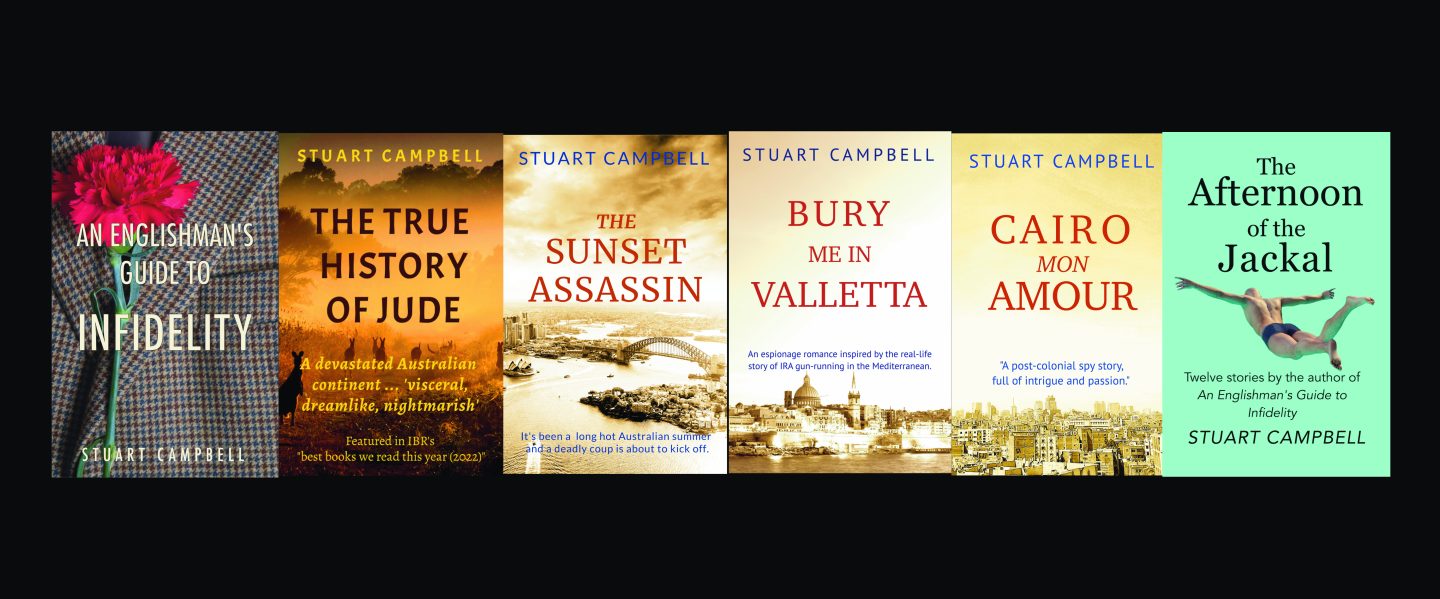
Somehow I missed the 1955 movie Our Best Days (Ayamna Al Helwa). Catching up with it this week I was catapulted back to my days studying Arabic at Cairo University. It’s a gentle charmer of a movie – an orphan girl moves into a flat and is wooed by three friends who compete for her love until the grim hand of fate intrudes. In between the romance scenes between Omar Sharif and superstar Faten Hamama, dreamboat singer Abdel Halim Hafez croons songs that have qalbi (my heart) in almost every line. It was a massive hit in Egypt.
I saw other Egyptian movies in the open-air Rio cinema in Bab El Luq, where we ate cold fried aubergine sandwiches packed by my wife’s granny. We snacked on chickpeas wrapped in recycled exam papers and drank flat local cola. When the Yom Kippur War broke out in 1973, the Rio started showing Russian war movies, I guess in sympathy with the massive Soviet arms airlift. Not the best days.
Those days in Cairo later provided the setting for my debut novel Cairo Mon Amour, which came out under a traditional publishing contract in 2017. I parted amicably from agent and publisher a few years later, and independently published a new edition in 2022, which has sold steadily (if modestly) with barely any promotion. A recent very modest uptick in sales got me wondering why people keep buying this book.
Alain Resnais should take some of the credit: I adapted the title from his 1959 movie masterpiece Hiroshima Mon Amour. It’s an apt title: Cairo Mon Amour is a romance embedded in an espionage tale in which the key characters are forced into exile from the city they love. In the book cover I tried to convey the wistfulness of a city remembered, using the faded sepia cityscape to suggest an old postcard, a forgotten love letter to the Cairo of Our Best Days.
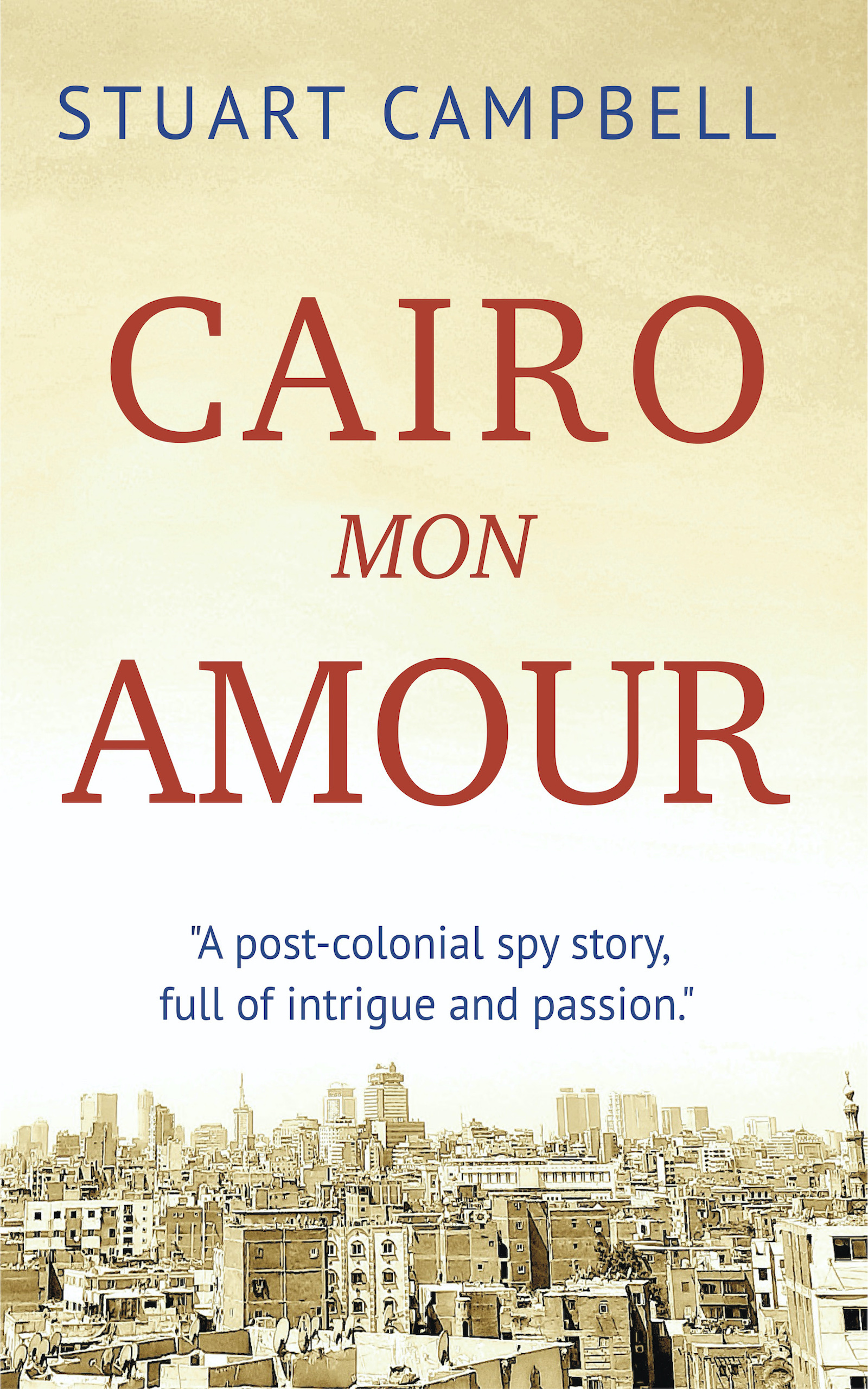
I wonder too whether the cover quote ‘post-colonial spy story’ holds some allure. It’s taken from a thoughtful review, and I think the phrase sets off a train of associations that are evocative but not especially clear. The reviewer was spot on: At the time of writing I was immersed in postcolonial literature, influenced especially by the writings of Edward Said. Indeed the book was a reaction to espionage fiction tropes about Bad Arabs; I had been researching Arabophobia and wanted to write a story from the other side of the fence.
Of all my books, Cairo Mon Amour is the most solidly researched; you can tell I’m an ex-academic from the reference list at the end. In essence I used President Sadat’s secret deception campaign against Israel as the core plot element, following the events leading to the Yom Kippur War day by day. I blended the painstaking research with my own experience of the Cairo streets as war broke out.
It’s also a book about the frailty of the male psyche, conveyed through two protagonists. One, a translator and private detective of Armenian and Coptic heritage, is ‘closed in on himself’ as a defence against a world of betrayal and chicanery; he is brought into the daylight by a notorious actress with a price on her head. The other is a British sleeper agent who slips into depression waiting for a spy swap after being kidnapped from Cairo to Moscow; his pregnant girlfriend keeps a level head amid the privations of Soviet life. The women are the real heroes.
My Egyptian actress was inspired in part by Faten Hamama, whose steadfast and generous character is the real hero of Our Best Days. Director Helmy Halim resists a predictable melodramatic ending, instead opting for a wistful and fatalistic closing scene that resonates so strongly with what I tried to achieve in my own story.
Find out more about my writing here.


