Young people don’t read novels by old blokes!

There’s nothing like selling your books at an arts market to learn about your readership demographic. I was quickly able to spot a potential buyer browsing at the stall. Amazingly they looked like me – over sixty, fashionably crumpled, and likely to visit an arts market! So this gave me some insights when I put some time this year into freshening up my backlist of five novels with new cover designs and updated manuscripts.
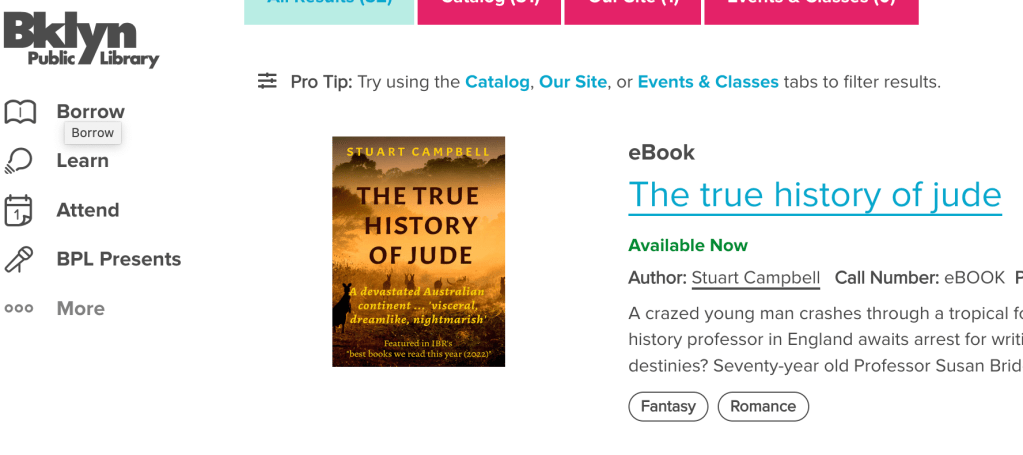
While Kindle, Apple and Kobo remain my main sales channels, I’ve produced new paperback editions that are available through an international distributor, making them readily available for libraries and booksellers to purchase. I was ridiculously excited the other day to see my latest book in the Brooklyn Public Library in the US.
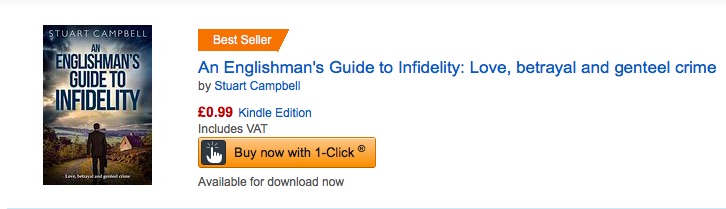
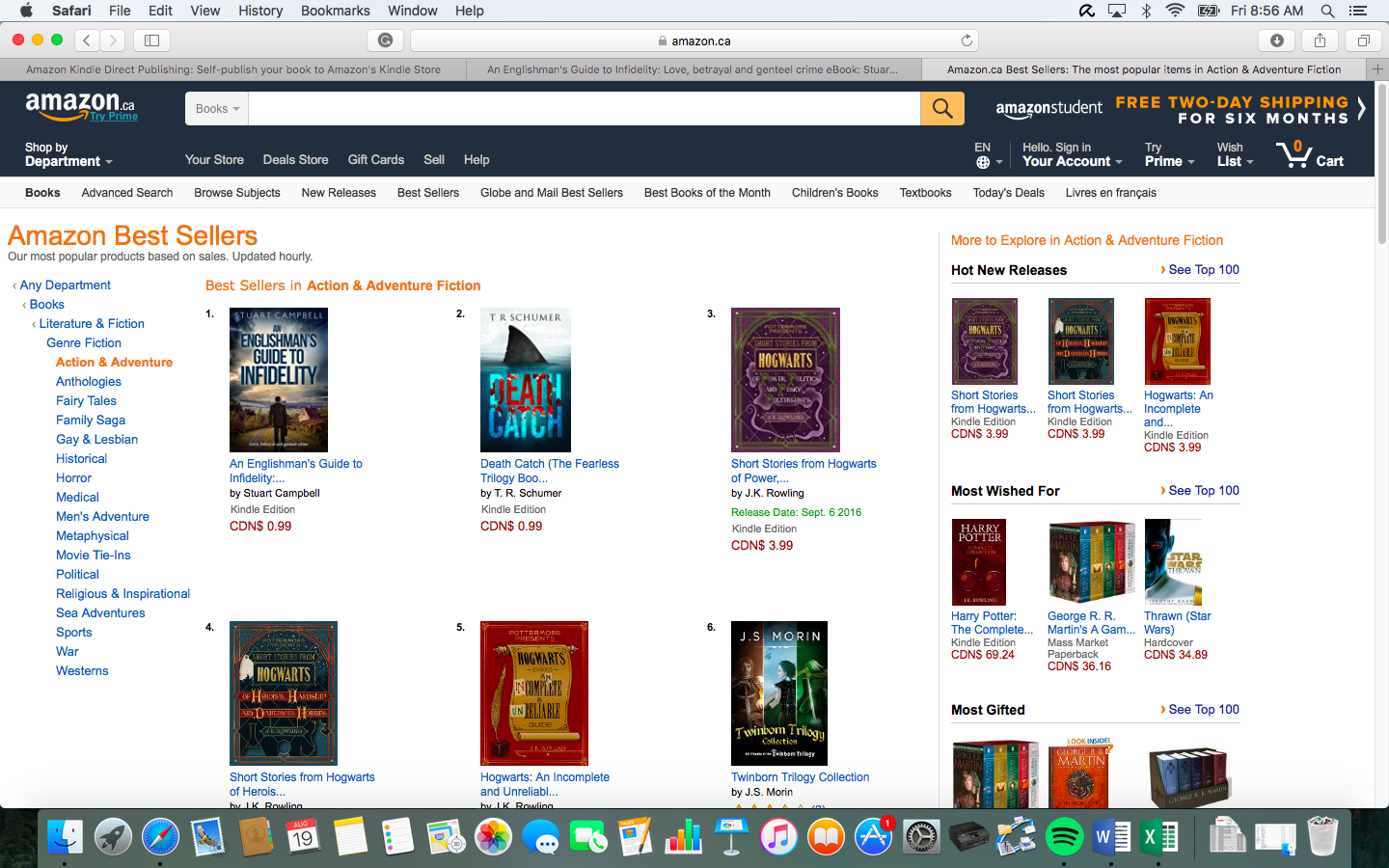
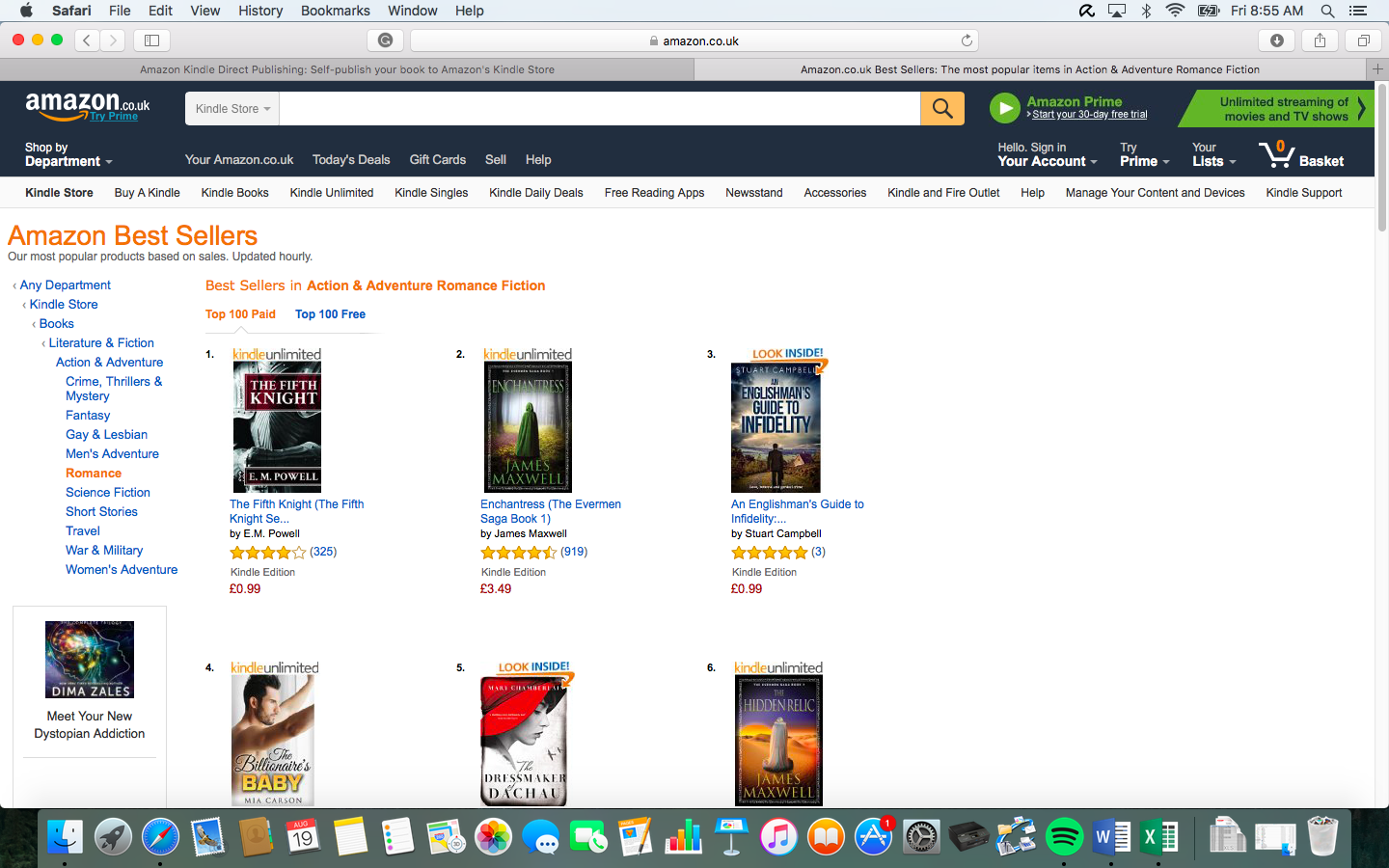
Sometimes I’m asked which of my novels is my favourite. Silly question – I love all my children. But if I’m pushed, my favourite is An Englishman’s Guide to Infidelity, which I first published in 2014. It’s my top seller with 2000+ Kindle downloads and sales, and it won a coveted Amazon Best Seller badge in 2016 – not bad for an independently published book. I should add that I have been exclusively self-publishing since parting (amicably) with my agent and publisher some years ago.

Here’s the blurb: Jack, the owner of a failing bookshop, is embezzling from a client. Thea is a philosophy lecturer with a taste for pinching cash. There’s something amiss with their marriage, but an occasional spot of larceny provides the frisson to keep it going, as well as the funds for the kids’ school fees. But things start to go badly wrong when an old lover turns up demanding a slice of the action. Could you live with a would-be murderer? This is the question for Thea and Jack in this fast-moving psychological drama with an undercurrent of black comedy.

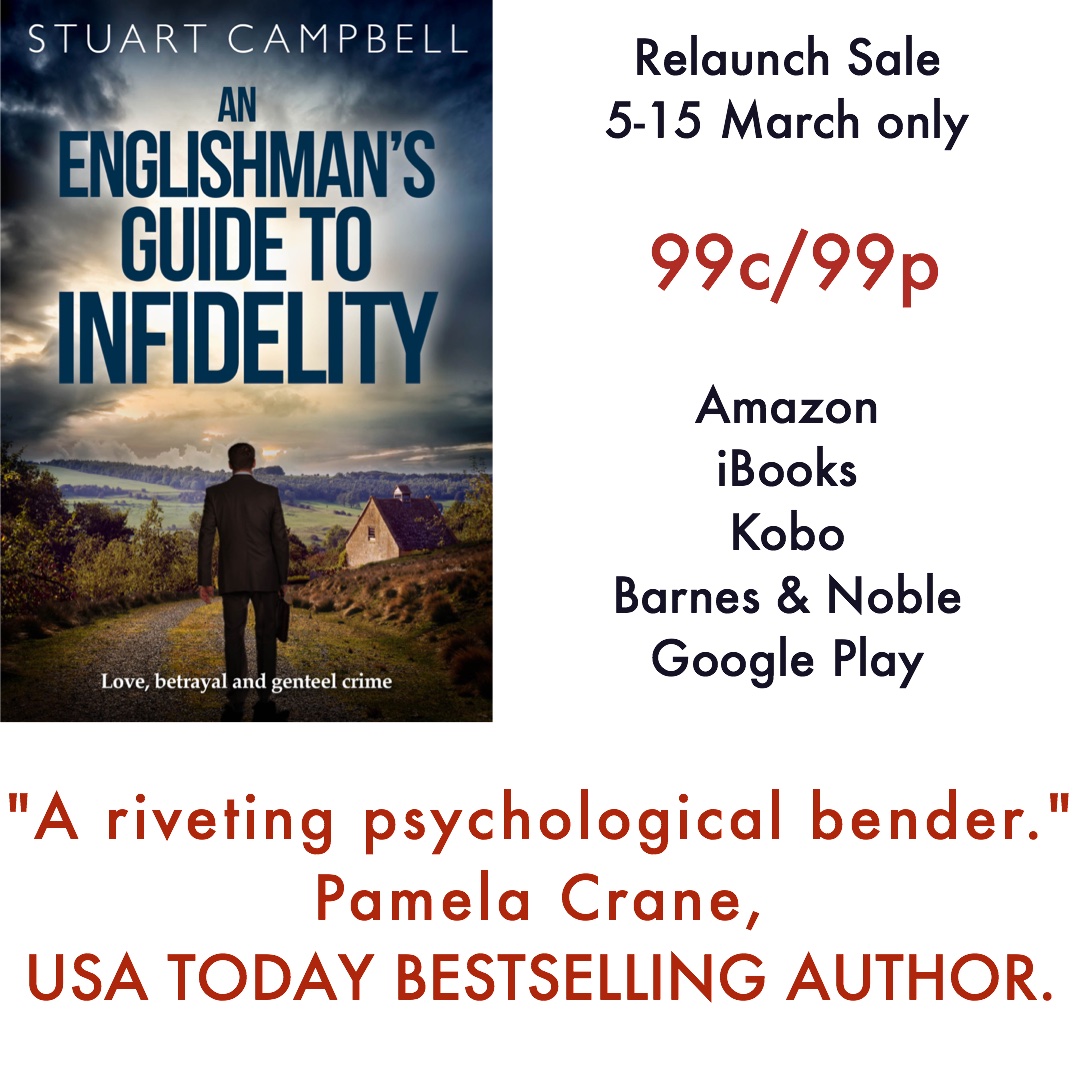
This book’s now on its third cover. For the 2014 version my designer compressed the main story elements into a romcom-style image with nail polish and fun fonts. The moody 2016 cover ditched the plot and tried to capture the essence of the male protagonist, as well as tying in with covers in the same style for two other novels. The 2023 cover makes no direct reference to plot or character, but unashamedly appeals to an older demographic, the key readership of this book. If I’ve learned one lesson in promoting An Englishman’s Guide to Infidelity, it’s that novels by old blokes aren’t read by young people.

Here are some lovely things people have said about this book on Amazon and Goodreads:

‘A fascinating tale I couldn’t put down. Told from three very unique points of view. Two deaths. Murders? Or accidents? It depends on who’s talking.’

‘I was engaged from start to finish, relishing the descent of ordinary people into the seamier side of life that slips beyond their control into unimagined complications and implications with surprising consequences.’

‘… realistically, funny portrait of a man struggling to do the right thing by his wife and family’

‘… a riveting psychological bender touched with wit and imperfectly charming characters.’

‘A thoroughly enjoyable read, a mystery that unfurls with just enough twists and turns to keep readers guessing right to the closing pages.’

‘… funny, irreverent, witty read. A brilliant story, fast paced and fun, told from three different points of view, with an element of mystery thrown in. Couldn’t put it down.’

‘… it has that intangible ingredient that forces the reader to read one more chapter in the hope that all will be revealed.’

And here’s me on a literary research trip back to the UK, the Raven Inn at Bath to be exact.

Find out more about my books here – especially if you’re an older reader!
My nightmare (satirical) projection for the future of the university

In his Guardian article on the encroachment of artificial intelligence into university essay writing, Jeff Sparrow suggests—with faint hope—that tackling the AI challenge might ‘spur us to recognise genuine knowledge’.

As I leave higher education this month after a forty-year run, I despair of the kind of scenario mentioned by Sparrow, where an AI-generated essay could be marked by an AI assessment program, bypassing learning and knowledge altogether. This scenario fails at least two of the five challenges that Luciano Floridi poses for AI in his Full-on robot writing’: the artificial intelligence challenge facing universities (1), i.e. that ‘we should make AI’s stupidity work for human intelligence’ and that ‘we should make AI make us more human’.

I fervently hope that scholars like Floridi and Professor Dagmar Monett (2) will help avert the potential damage to higher education by a misplaced faith in the ‘I’ part of AI.

My way of blowing off intellectual steam is through writing fiction, and it’s no coincidence that my latest novel The True History of Jude includes a satirical swipe at an industry that I am about to exit. I leave with deep worries for the future—the role of AI in academic writing being one of them.

The book combines a coming-of-age-tale, a time-shifting love story, and a reimagining of a Thomas Hardy novel—all embedded in a dystopian setting. And as a fantasy, it gave me the power to project a set of contemporary themes to their potential extremes: I predicted a climate-ravaged and depopulated Australia leased to the world community for uranium mining, a corporatised global authoritarian system controlled by an Australian royal dynasty, and the destruction of artistic creativity under the crushing conformity of an information monopoly. And of course there’s a university.

Could it happen?

When I was studying Russian in the USSR in 1974, could I have imagined the fall of the Soviet empire? When we basked in the Australian summer of 2019, could we have imagined a pandemic that would upend the world?

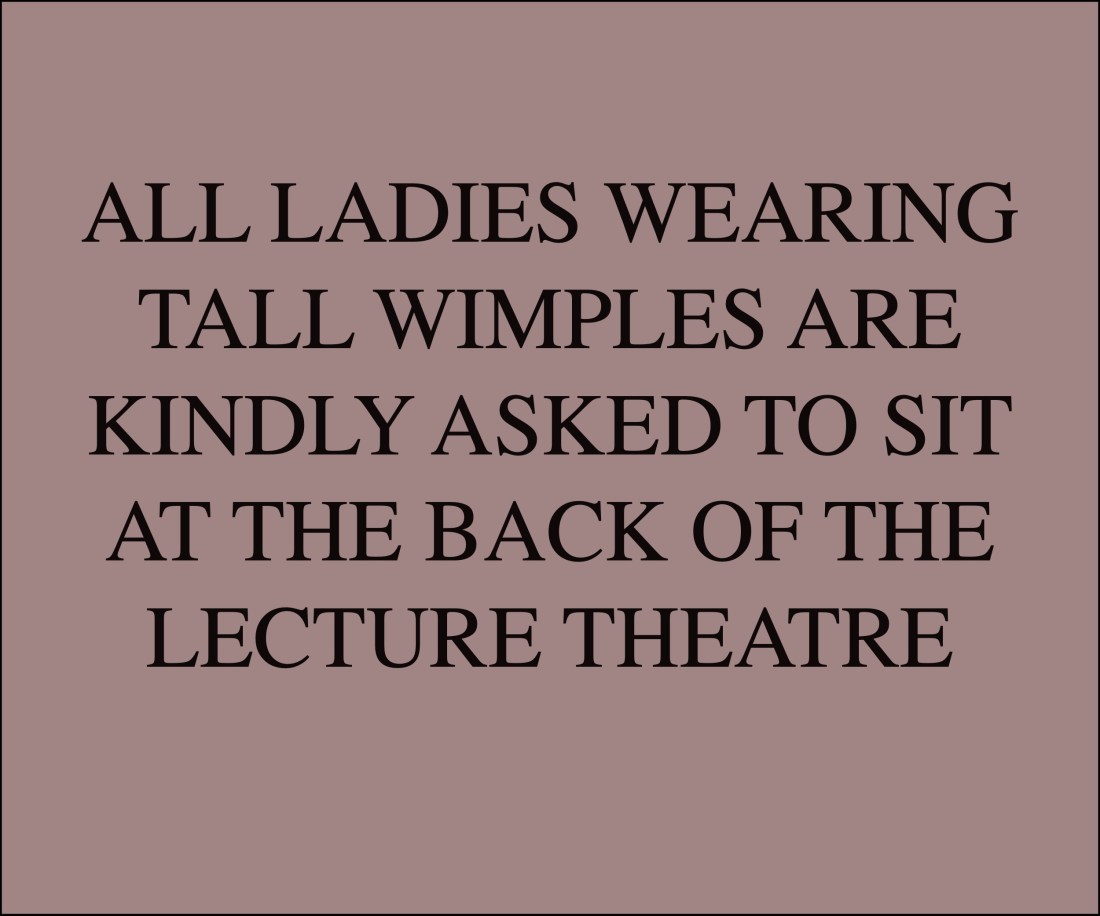
In my version of the future, the Australian monarchy is the world’s first virtual state, having excised itself from its own territory(3). The Palace operates from leased premises at Oxford University. Across the city is the exiled campus of an Australian university (you’ll have to buy the book to find which one). It’s from here that the elderly Professor Susan Bridehead writes fawning hagiographies of the Australian royals, and teaches history to their offspring and aristocratic cronies whose royal stipends make it unnecessary for them to get jobs. The students return year after year to take the same courses, some even passing away from old age during lectures. Cosplay is a campus obsession: This year’s theme is Medieval, and Susan has to ask all the ladies wearing tall wimples to sit at the back to avoid blocking the lecture hall sightlines.

And last but definitely not least, under the ‘Standardised Study for Success Strategy’, students are obliged to produce their essays with the university’s in-house AI text generator. All grades are randomly generated.

It’s satire of course, but I’m certain that many academics will identify the threads I’ve pulled to weave scenarios such as: The banning of paper and handwriting; proscription of works of fiction; the training of professionals not at the university but in online polytechnics run by a consortium of three global consulting companies.

Could it happen? Could our current students imagine the kind of degree I took in the UK in the seventies? No internet, no credit point system, no fees, no assignment mills, no student surveys.

And all run by humans.

Notes

1. Floridi, Luciano, Ultraintelligent Machines, Singularity, and Other Sci-fi Distractions about AI (September 18, 2022). Lavoro, Diritti, Europa – https://www.lavorodirittieuropa.it/, Available at SSRN: https://ssrn.com/abstract=4222347

2. Prof Monett tweets at @dmonett a well-informed commentary on the hype surrounding AI.

3. The Australian Parliament excised the mainland from Australia’s migration zone in 2013.

© 2022 Stuart Campbell

My nightmare (satirical) projection for the future of the university

‘At my first lecture this year, I had to ask all the ladies wearing tall wimples to sit at the back,’ writes Professor Susan Bridehead in my genre-defying novel The True History of Jude.

The book combines a coming-of-age-tale, a time-shifting love story, and a reimagining of a Thomas Hardy novel—all embedded in a dystopian setting.

And as a fantasy, it gave me the power to project a set of contemporary themes to their potential extremes: I predicted a climate-ravaged and depopulated Australia leased to the world community for uranium mining, a corporatised global authoritarian system controlled by an Australian royal dynasty, and the destruction of artistic creativity under the crushing conformity of an information monopoly.

Could it happen?

When I was studying Russian in the USSR in 1974, could I have imagined the fall of the Soviet empire? When we basked in the Australian summer of 2019, could we have imagined a pandemic that would upend the world?

Back to the wimples: The Australian monarchy is the world’s first virtual state, having excised itself from its own territory*. The Palace operates from leased premises at Oxford University. Across the city is the exiled campus of my alma mater The University of Sydney. It’s from here that the elderly Susan writes fawning hagiographies of the Australian royals and teaches history to their offspring and aristocratic cronies whose royal stipends make it unnecessary for them to get jobs. The students return year after year to take the same courses, some even passing away from old age during lectures. Cosplay is a campus obsession: This year’s theme is Medieval, thus the tall wimples blocking the lecture hall sightlines.

It’s satire of course, but I’m certain that many academics will identify the threads I’ve pulled to weave scenarios like these: The banning of paper and handwriting so that all student work is created and archived online; the obligatory use of AI text generators to write assignments that result in randomly generated grades; works of fiction proscribed; professionals trained not at the university but in online polytechnics run by a consortium of three global consulting companies.

I’ve spent decades of my professional life helping create Australia’s higher education system. What I observe today is a quantum leap away from the undergraduate degree I took in the UK in the seventies—no internet, no credit point system, no fees, no student support service, no assignment mills, no student surveys, no casual lecturers. My future scenario for the university in The True History of Jude may seem outlandish, but the threads are clear to see today.

*The Australian Parliament excised the mainland from Australia’s migration zone in 2013.

Copyright 2022 Stuart Campbell

To check out The True History of Jude and my other books click here.

Image used under license from Shutterstock.com

The best or the worst novel I’ve written?

This question has dogged me since I brought the first pages to my writing critique group six years ago. The True History of Jude endured restructures, abandoned endings, a complete change of tense, and deep puzzlement from some of those who read drafts along the way.

The question is perhaps irrelevant. This was a novel I wrote for myself, ignoring advice to cram it into a genre box. I categorise it as ‘coming of age tale’ and ‘dystopian thriller’. I could just as well say ‘epistolatory confession’ and ‘satire on Australia’s elites’. Or even ‘reimagining of a nineteenth century English novel’.

The True History of Jude is now out in ebook and paperback. I’m nervous.

I’m planning six or seven blog posts over the next few months, talking about various themes and motifs in the novel. These are some of the topics I’ll cover:

  • The potential for a tsunami that renders Australia’s east coast uninhabitable.
  • The Macfarlane family, who lease Australia to the international community as the exclusive supplier of uranium for a thousand years.
  • The development of a new creole language among climate change refugees abandoned in Australia.
  • The secession of the southern states of the USA.
  • The community of religious fundamentalists who have taken over the North Queensland town of Kuranda.
  • The fate of a royal historian in the post-truth era in England, where computer generated language technology has eliminated fiction.
  • A main character who believes he is Jude in Thomas Hardy’s Jude the Obscure.

If that hasn’t convinced you that The True History of Jude doesn’t fit a genre straitjacket, then I’ll try a little harder: Most of the book is supposedly written on an old typewriter, which is fine in the paperback edition where a suitable font replicates typing; but the robotic flowing text of the ebook neuters the aesthetic effect—technology eliminating art!

The True History of Jude is available here at a promotional discount of $0.99 until the end of July 2022.

‘An Englishman’s Guide to Infidelity’ discounted this week only

It hit the Amazon best seller ranks in 2016. Help me hit those dizzy heights again!

Here’s the short blurb:

The Walsinghams dabble in petty crime as they try to enliven a failing marriage. But a figure from the past tips them into a double murder plot. Could this respectable Home Counties couple really be killers?

And here’s where you can buy it for 99c/99p between 5 and 15 March 2018:

Amazon US

Amazon UK

Amazon Australia

Kobo

iBooks

Barnes & Noble

Google Play

‘An Englishman’s Guide to Infidelity’ relaunching soon!

No, it’s not a how-to-do-it manual! It’s my second novel, which hit the Amazon best-seller ranks in 2016. I’ve left it unattended and unpromoted through 2017, when I was busy with the publication of Cairo Mon Amour.

As with all my novels, I set myself a special challenge: This time, I’d write a thriller with three points of view, two of them female. If the Amazon reviews are anything to go by, I pulled it off (with the help of my friends in the Write On! group at the NSW Writers’ Centre, who put me back on track when I wandered into  blokiness).

Here’s the short blurb:

The Walsinghams dabble in petty crime as they try to enliven a failing marriage. But a figure from the past tips them into a double murder plot. Could this respectable Home Counties couple really be killers?

And here’s where you can buy it for 99c/99p between 5 and 15 March 2018:

Amazon US

Amazon UK

Amazon Australia

Kobo

iBooks

Barnes & Noble

Google Play

Martin F. Mooney – your perfect literary companion in the Trump-Brexit era.

MMFM 2016 coverProfessor Martin F. Mooney is a fading poster boy of the inner-city elites: Left-leaning, middle-aged and too frisky with his female students, he’s looking for a way out of the university before he’s pushed. Politics seems the obvious next step. This contemporary satire set in Sydney, Australia is your perfect literary companion in the Trump-Brexit era.

Now available at iBooks, Amazon, Kobo, Barnes & Noble, and Smashwords.

Find out more about Stuart Campbell’s books here.


Confirmed: ‘An Englishman’s Guide to Infidelity’ Amazon bestseller in UK, Oz & Canada


AEGTI best seller
Here’s the coveted yellow ‘Best Seller’ sticker, now adorning the Amazon catalogue entry in the UK, Canada and Australia! Thank you to all who contributed to this success.

‘An Englishman’s Guide to Infidelity’ hits Amazon bestseller ranks in UK, Oz and Canada

canada sales 19:8:16A huge thank-you to my  readers and reviewers for helping to catapult An Englishman’s Guide to Infidelity up the Amazon UK, Australia and Canada charts. I couldn’t have done it without you!

I hope I can reward your enthusiasm with my next novel Cairo Mon Amour, which will be released on 31 August. There’s a swish website here where you can read about it and even pre-order a copy for the promotional price of 99c.UK sales 19:8:16

Sydney novelist pledges to vote wearing Hi Vis vest

Hi Vis vestSydney novelist Stuart Campbell took a break from writing today to try on the Hi Vis vest he plans to wear when he casts his vote in Australia’s Federal Election on 2 July 2016.

Interviewed this morning by emerging social commentator Lesley Latte*, Campbell said, “Like the Prime Minister and the Leader of the Opposition on the campaign trail, I like to slip on the Hi Vis when the going gets tough. I’ve come up with some of my best stories wearing this outfit”.


You can read more about books written by a man in a Hi Vis vest here.

*Lesley Latte reserves the right not to disclose h** gender.