Blog

Australia and the plight of the Armenians

AAVicken Babkenian, co-author of Armenia, Australia and the Great War, gave an excellent presentation at the Sydney Institute this week on a new work that details the efforts of Australians to provide relief to the thousands of Armenian refugees following the massacres of 1915.

Even with a reasonably good knowledge of the plight of the Armenians, I was completely unaware of this Australian-Armenian connection. Babkenian and historian Peter Stanley have  done extraordinary work in uncovering this slice of social history, using a vast and comprehensive body of resources ranging from soldiers’ diaries, memoirs, parish newspapers and the archives of forgotten charities.

Highly recommended.

#

Click here to receive my newsletter.

Learn about Stuart Campbell’s novels here.


My very short career as a playwright

AEGTI 2016 coverJust for fun, I wrote the opening scenes of a  play based on my novel An Englishman’s Guide to Infidelity .  Although I spent years in community theatre, it was a weird experience because none of the conventions of prose writing apply. See what you think. You can compare it with the book by looking at the free sample here.

Scene 1: A well appointed eat-in kitchen in a middle class British home. Offstage, the sound of children leaving the house for school.

Thea    [offstage] Now, no squabbling on the way to school. And mind that crossing.

Jack     [wearing a dressing gown and speaking on the telephone] Look, I’m sorry. I just don’t need you in the shop today. Yes, I know you need the job. Yes. Yes. I do understand. What? You don’t need to take that sort of line. What? Stuff you too, Susan. [he slams the phone down.]

Thea enters, wearing conservative work clothes and fixing her hair. She is carrying a grey and magenta cocktail dress, which she tosses over a chair.

Thea    I’m not sure they’re old enough to walk to school on their own. I wish we still had the au pair. Who were you talking to, by the way?

Jack     Nobody.

Thea    Nobody talks to nobody, unless they’re mad. Are you mad, Jack? After last night, I’m wondering if either of us is in our right mind.

Jack     It was just the book wholesalers. There’s a delivery this morning. God, I feel like my eyeballs have been boiled in toilet cleaner.

Thea    I’ve had worse anniversary dinner hangovers. Do you remember that filthy Spanish stuff we drank on our – what – fifth, was it?

Jack     Rioja with notes of blackberry and kerosene … and you spewed all the way down Kensington High Street …

Thea    No, that’s enough! I’ve changed my mind. I don’t want to remember it. Look, I’ve got to give a lecture at ten. Can you drop the dress into the dry cleaners on the way to the shop? Ask them to repair the seam under the arm while they’re at it. But tell them to take care. It’s not Marks & Spencer.

Jack     Thea, just sit down for a minute.

Thea    I haven’t got a minute.

Jack     You always have precisely five minutes up your sleeve for unforeseen circumstances. Give me one of them. It’s important.

Thea looks at her watch and sits down stiffly with her briefcase on her lap.

Jack     Thea, darling. Did I imagine what you told me last night?

Thea    Let’s talk about it after dinner tonight.

Jack     No, Thea. Now. Did you tell me that you found the Chancellor’s wallet by the Memorial Lake at the university?

Thea nods

Jack     And did you tell me that you relieved Sir Percy of nine hundred pounds, and threw his wallet in the lake?

Thea nods. Jack cradles his head in his hands.

Thea    Nobody saw me.

Jack     Thea, my sweet. You have a PhD in Ethics. In an hour from now you’re going to be teaching the flower of England’s youth about the difference between right and wrong.

Thea    That’s not really what ethics is about, not in an academic context.

Jack grips Thea’s wrists

Jack     Thea, I may be a simple bookseller, but I know a crime when I see one. You can’t rationalise it away with ‘nobody saw me’!

Thea    I’ve got to go.

Jack     And you spent the money on that dress? To wear for our wedding anniversary dinner?

Thea    And your eyes were popping out when you were watching me put it on. And when you peeled it off me – well, that was after you half tore it off me in the taxi home – I didn’t know where to put my face when the baby sitter let us in.

Jack     Thea, this isn’t you. You’re not like this. Is that what you meant – neither of us being in our right minds last night? Oh God. I remember, in bed. Did we …? Oh God. It was like we were twenty year olds, like wild animals. I need an Aspirin.

Thea    Jack, pull yourself together. We’ll sort this out.

Jack     Sort this out? Sort it out like a little misunderstanding? Sorry, officer, the money just sort of jumped out of the jolly old Chancellor’s wallet?

Thea    Jack, shut up.

Jack     What?

Thea    Shut up.

[Thea stands up and hugs herself, walks up and down staring at the floor]

Thea    Shall I tell you something, Jack? Something that bloody well shook me to the core? I finished a lecture the other day, and a student put her hand up to ask a question.

Jack     What did she say?

Thea    She asked me if I actually believed in anything. I stood there like an idiot, and then I switched to autopilot. Said it wasn’t relevant what I or anybody else actually believed in. What was important was that the question be asked.

Jack     And what did the student say?

Thea    She rolled her eyes up and gave me the finger.

Jack     The rude cow.

Thea    Not a whole finger, just the slightest gesture, but as clear as daylight. The whole episode left me in a spin. I haven’t been right since – not about anything, about who I am, about why a lecturer in philosophy suddenly doesn’t appear to believe in anything.  So Jack, I’m not in the mood for moralising about right and wrong right now.

Thea picks up her briefcase and walks out. Jack picks up the dress and holds it to his face, breathing its scent, then tosses it to the floor. He sits at the table and dials a number on the telephone.

Jack     Major Handwell! Yes, it’s me, Jack.

Very well. Very well indeed. And how’s the leg, Major? … Oh dear, sorry to hear that. Well, the medicos do marvels these days, you know… I beg your pardon? No, Major, not marbles. Just turn up that hearing aid a touch, if you will…

[becoming more patronising] Yes, lovely. Now, Major, I’ve tracked down that book. I talked to one of my contacts – just between ourselves of course – and they have a very tidy signed first edition… How much? Well, a few bob more than I’d hoped. I could do you a hundred and fifty quid. How does that sound? … Marvelous. What if I pop round this afternoon? … I beg your pardon, Major? … No, this is Jack, not Francis. I don’t know any Francis… I’m afraid I don’t quite understand. You’re saying that you’ll call me Francis from now on? … I see. And it’s just our secret, you say? I’ll be your nephew? … How much a month?

[aside] Bloody hell. Give me an allowance? He has lost his marbles. [To the Major:] Very generous of you indeed. Now, shall we say three o’clock? … Yes, a first edition, signed. See you anon, Major.

Jack takes a fountain pen and practices writing signatures on a sheet of paper. At last, satisfied with his work, he opens an old book and writes inside the front cover. He picks up the book and closely examines the signature, then puts it down, and rubs his hands.


Scene 2: The same kitchen, late in the evening. There are wine bottles and two glasses on the table.

Jack     They’re asleep. They seemed a bit disturbed tonight.

Thea    Pour me another glass, darling.

Jack     Steady on, Thea. You usually stick at one. Is there something wrong?

Thea    Nothing’s wrong. Just pour.

Jack     [Making a foolish face] Not even the smallest something? The teeniest?

Thea    Jack, can we have a serious talk? I mean a really serious talk?

Jack     Should I put on a special serious face. Like this perhaps? [grimaces]

Thea    No, and I don’t want to hear any of the other delaying tactics that you drag out whenever there’s something important to discuss. Don’t go all philosophical on me, either. You’re an amateur in that department.

Jack     Fair enough. What’s the topic of this serious talk?

Thea    It’s money, Jack. I got a phone call from the school, the bursar in fact. He told me that the cheque for the children’s fees had bounced. What’s going on, Jack? Is the bookshop in trouble?

Jack     Trouble? Oh no! What an idiot I am! I must have got the wrong cheque book out of the drawer. Actually, now I think of it, I did have a feeling I’d done something wrong when …

Thea    Jack, are we in trouble?

Jack     We? This is from the ethics lecturer who pinched nine hundred juicy smackers from a wallet. I’m not sure about the ‘we’.

Thea    Jack, that’s a lousy thing to say. I explained what happened.

Jack     Did you? Well, I must have missed it. Here, I’ll write a new cheque straight away. [He writes a cheque] There, all done, no trouble.

[They silently drink their wine, Thea looking slightly tipsy. She sighs deeply.]

Jack     Why the big sigh?

Thea    I hardly dare tell you, Jack.

Jack     Thea, what’s it been? Ten years? Do we have secrets? Come on, tell me the worst.

Thea    I paid the school fees myself, in cash.

[Jack leaps to his feet, spilling his wine]

Jack     Cash? What cash? We don’t have any cash!

Thea    It was Freda’s money.

Jack     Who’s Freda?

Thea    The lecturer I shared a filing cabinet with. The one who died. From Denmark.

Jack     Died? Dead? From Denmark?

Thea    Departed. Deceased. On the ferry from Dover.

[Jack refills their glasses]

 Thea    Her cheque book was among her things in the filing cabinet. I – borrowed it. Well, I suppose I took it really.

Jack     And you wrote a cash cheque? Where did you present it?

Thea    At the bank by the industrial estate. I wore a headscarf and dark glasses. I practised copying her signature from a letter I found.

Jack     Forging’s the more accurate word. How much, may I ask?

Thea    Five hundred pounds.

Jack     Did you ask for a balance?

Thea    Ask for a balance? Do you think I’m a crook? What, you think I’d planned to milk the account until it was empty?

Jack     Just checking, covering all the angles. So, where’s the chequebook now?

Thea    In the Memorial Lake at the university.

Jack     Keeping company with the Chancellor’s empty wallet? Bobbing up and down together having a chat, are they? ‘Hello, you don’t happen to have seen nine hundred pounds, my good man?’ ‘Sorry guv, some lady just had it away wiv five undred quid so I’m a bit short meself’.

[They refill their glasses and drink. Thea sniggers and Jack joins in. They burst into laughter.]

Jack     [composes himself] Since it seems to be time for confessions, I’ve got one of my own.

Thea    Don’t tell me. You short changed an old age pensioner by 20p.

Jack     It’s a bit more serious than that.

Thea    You mean … Chancellor serious? Freda serious?

Jack     More or less. More, actually.

Thea    [Thea gets to her feet unsteadily] You too, Jack? So we’re partners in crime? The Bonnie and Clyde of suburbia? That’s rather exciting, don’t you think? In fact, that’s the most exciting thing that’s happened to us in years.

Jack     [Takes the bottle and wraps his arm round Thea’s waist] I’ve never been to bed with a criminal. I’ll tell you the details upstairs.

[Curtain]

@ Stuart Campbell 2016

Click here to receive my newsletter.

You can read about my novels here.
Government arts funding: Slow-motion slaughterhouse

This week saw a wave of criticism of the Australian Government’s funding cuts for small to medium arts projects, although the real wash-up is a perhaps a little more nuanced than the disaster scenarios painted in some reports in the Sydney Morning Herald. But the defunding of entities like the literary magazine Meanjin and the Centre for Contemporary Photography was a shock. Eliza Sarlos argues in The Guardian that arts workers will bear the brunt of the cuts by having to do more unpaid work.

The implicit back-story in much of this discussion is that governments have a responsibility to support the arts for the benefit of society’s broader good. I think there might have been some truth in this decades ago, but the neoliberal project (I’m feeling really cynical this week) has weakened this back story to a fading myth. Understanding the falsity behind this ‘truth’ might provide some consolation to shocked administrators wondering how they will survive the loss of grants: Arts funding is a slow-motion slaughterhouse.

What arts supporters may have missed in the media is the final cut to the Office of Learning and Teaching. During my tenure as Pro-Vice Chancellor (Learning and Teaching) between 2006 and 2011, my team at Western Sydney University leveraged small grants from the OLT and its predecessors to put our university in the top echelon for teaching. We proudly saw Associate Professor Roy Tasker awarded the Prime Minister’s Award for Australian University Teacher of the Year at the Sydney Opera House in 2011.

The 2016 budget cuts the last $20 million dollars of funding from the OLT, demolishing the naïve dream that government ‘cares’ about improving university teaching. To put that $20 million in perspective, a private sector college has been ordered to repay $44 million to the government because of its enrolment practices, and the Australian Competition and Consumer Commission is pursuing $460 million of taxpayers’ money from a number of private colleges. Ironic?

The arts community aren’t the only ones in the slaughterhouse.

#

Stuart Campbell is nowadays a novelist and higher education consultant. You can read about his novels at www.stuartcampbellauthor.com .

Why I tore up my book cover

I’ve relaunched An Englishman’s Guide to Infidelity on Kindle with a new cover. The evolution of the cover is a story in itself.

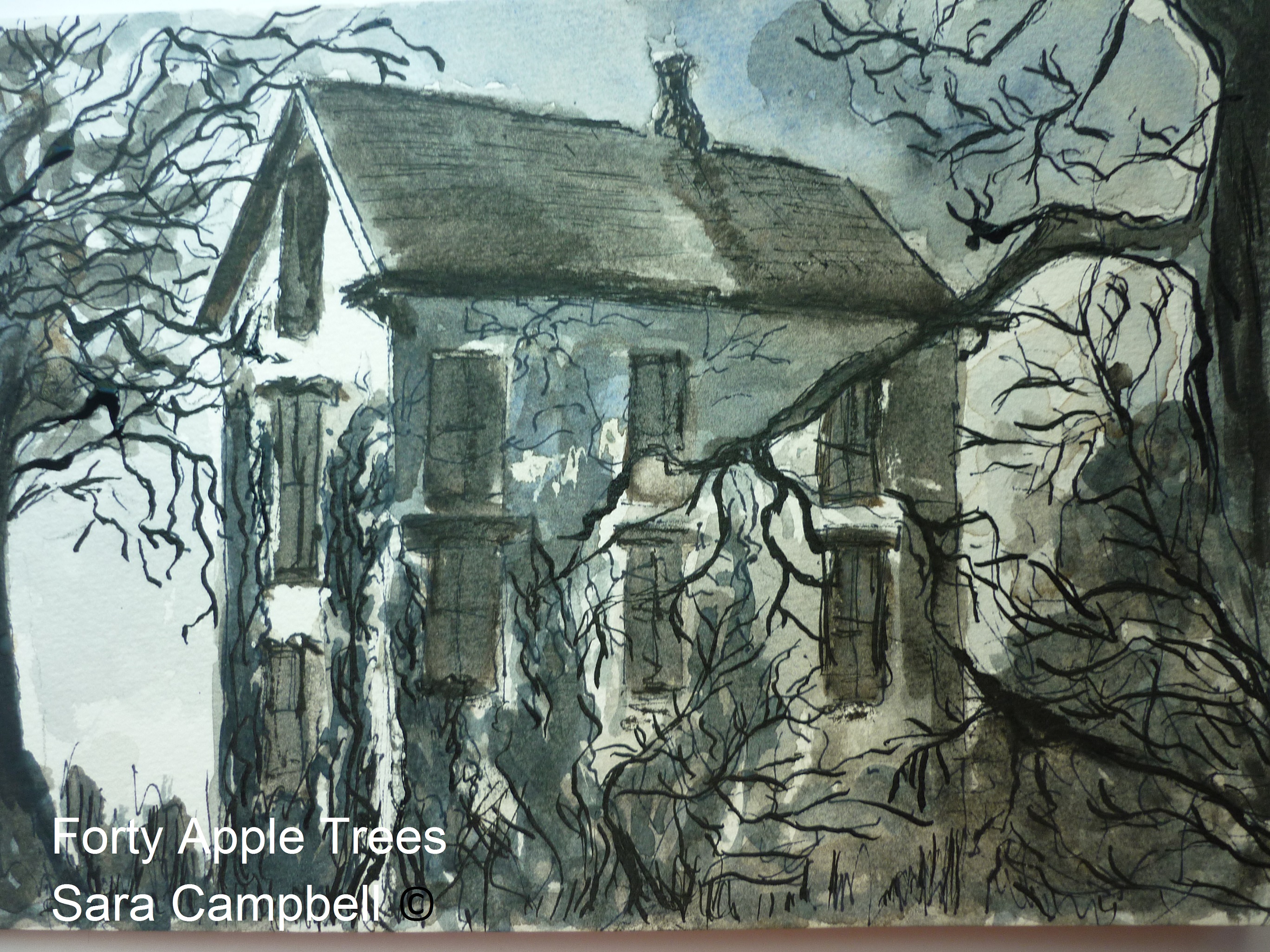
My working title for the book was Forty Apple Trees, the name of the house in the West of England where most of the third part takes place. The nameForty Apple Trees small hung around for so long that it stuck, and I asked my wife to paint the imagined cottage to incorporate into the cover. The version on the left was my favourite.

But some of my beta readers and writing friends thought the title was meaningless. I had to agree, and I spent a month throwing ideas around until I settled on Magenta Falling. They threw this one out too.  An Englishman’s Guide to Infidelity hit me like a brick when I was out walking one day. It references a book written by one of my characters, An Englishman’s Guide to Fidelity. He’s a complete swine, by the way.

Being an expert on everything, I roughed up a sketch and asked my cover designer to see what she could do. Here’s the before and after:

original infidelity coverInfidelity website cover


But I’d miscalculated. First, the cuckold hand gesture seemed unknown to most people. I was asked a few times if the book was about heavy metal . Secondly, the subtitle a novel was a wasted opportunity to add a hook; it obviously wasn’t a cookbook! And despite it being a lovely cover, it lacked impact compared to others in the marketplace.

AEGTI 2016 coverA year or so later I went back to my designer and asked for the blockbuster treatment. She gave me two bits of advice: (1) Don’t try to tell the story on the cover, (2) Leave everything to me this time.

So here it is, and I think it’s brilliant. I love the way the title punches out of the centre, and I love the sense of anticipation as the figure walks into a landscape that is both bright and forbidding.  And best of all, the cottage is back!

###

Find out more about my books here.

My covers are designed by Rachel Ainge at Tribe Creative Co.


Heart ripped out of Marseille

Moody StuNetflix’s Marseille promised to be a treat – a French political drama series with big stars and big production values.

Could this be, I wondered, an experience to parallel the superb police/legal drama series Spiral? Settled into couch with drink in hand, I press the button: Big opening, Gerard Depardieu enters a vast stadium, thousands of fans yell in excitement  I’m in Marseille.

The actors deliver their opening lines. What comes out?

American English. Dubbed. Voices that don’t fit bodies. Sentences that don’t go with lips. Ventilated corpses. The essence of Frenchness eliminated.

What was Netflix thinking? That its audiences  might get tired lips from reading subtitles?

I am thankful that my late friend Raymond Saucisson did not live to see this day.


You can find out about my novels here and sign up for my newsletter here.


New scholarly book evokes warm memories

New-Insights-into-Arabic-Translation-and-InterpretingI took time out from writing fiction last year to contribute the introduction to this new book, edited by Associate Professor Mustafa Taibi from Western Sydney University. In writing the introduction I took the opportunity to honour the memory of the Iraqi scholar Dr. Safa Khulusi, whose  Arabic classes I attended at the Polytechnic of Central London in the seventies.

The invitation to write the introduction evoked warm memories of academic colleagues, teachers, and students from the Arab World.

You can read a sample of the book by clicking the  Look Inside button here.

###

Learn about Stuart Campbell’s novels here.

Great read from Kerry J Donovan even with the American coffee

On Lucky Shores - Cover

What does a Sydneysider do when they get back from the US? Get a cup of decent coffee, what else? No, I shouldn’t be so cruel – I’ve had espresso in New York and San Francisco that approaches the refined drop we enjoy in Sydney, city of a million coffee snobs. But spare me the  warmed-up filtered stuff they serve in US diners! Kerry J Donovan serves gallons of it in this lively novel about Chet Walker, a young itinerant musician whose past is tantalisingly hinted at. Finding himself in the lakeside town of Lucky Shores, he is quickly embroiled in a festering scandal and instantly attracted to Josie, the minx in the diner with the coffee pot and an interesting past of her own. I loved the whole thing, even the sweet ending (I would have preferred a bit of angst, but that’s the kind of writer I am). Chet’s music and lyrics  are woven into the plot, but because they are original I couldn’t play them in my head: Hey, Kerry, what’s the chance of getting them recorded on Youtube and embedding the links in the e-book?

I had some questions for Kerry:

Q – I think that On Lucky Shores was your first novel set in the US. What sort of reaction have you had, especially from American readers? After all, you’re an Irishman living in France!

Kerry_J_Donovan
Kerry J Donovan

A – Agreed, OLS is my first US-set novel and will come as a bit of a change of pace for my readers. I mostly write UK-based police procedurals, although in one of my books, I did send my hero, DCI David Jones to France to catch a paedophile killer.

Setting OLS in the Colorado Rockies was a bit of a gamble for me and required a heck of a lot of research. Although the resort town of Lucky Shores is totally fictitious, I did want the setting to feel authentic. As for dialogue, narration, and ‘feel’, that was equally as tricky. I considered making my leading man, traveling musician Chet Walker, a British ex-pat, a sort of Crocodile Dundee character, but that would have been a bit of a cheat and I didn’t want to write a ‘fish out of water’ comedy. Instead, I tried hard to find a realistic American voice for the narrator and the characters, and hired an editor from Colorado, PC Zick, to help me with the settings, US grammar, and colloquialisms. She did a wonderful job and so far, reader responses have been incredibly supportive.

Basically, no one’s called me out on my misuse of the lingo. Not yet, anyway.

Q – If you found yourself in the diner in Lucky Shores, who would you most want to have lunch with?

A – Great question and a difficult one. The easy answer would be Chet, or Josephine (the diner’s owner and female lead character), but they’d be pretty much lost in each other and I wouldn’t have much of a chance in the conversation. Young love, eh?

Apart from the two leads, my favourite character is ‘The Ghost’, Sheriff Casper Boyd. He has his own agenda and, like Chet, is a recent addition to the Lucky Shores community. As an outsider, he has a different perspective from Lucky Shores’ other residents. Apart from everything else, he’s more my age than the youngsters, and we’d have slightly more in common. One question I’d like to ask him is why he’s being so tough on Chet. After all, the poor guy only wants to find a gig, earn some money, and move on with his life. Yeah. “What’s your game, Sheriff? Why are you being such a hard-ass?”

Q – People drink an awful lot of coffee in Lucky Shores. Are you willing to share your true feelings about the coffee they serve in US diners?

A – Couldn’t possibly comment. I don’t drink coffee. Never have, never will. I’m old school, a tea drinker through and through. I’m sure all US diners serve delicious coffee all the time, but I’m not an expert and will leave that discussion to others. And by the way, in Chet’s defense, he’d been out in the cold and the rain most of the night and needed the coffee as much for its warmth as its caffeine.  And anyway, he’s a big guy and the coffee cups are small. Give the guy a break, will ya?

###

Find out about Stuart Campbell’s novels here.

Author Ann Massey – deft touch, deep concerns

ann
Ann Massey

I came across Australian indie author Ann Massey last year when I picked up her novel The White Amah. Looking at her diverse output, I’m tempted to ask ‘what’s her angle?’ And where does her latest novel The Little Dog Laughed fit into her body of work? In fact, Ann Massey is a conviction novelist, producing work that barracks for the powerless. If this sounds like the work of a humourless ideologue, it isn’t.

Her latest work The Little Dog Cover of The Little Dog LaughedLaughed is a sparkling time-travel fantasy that showcases her wit, her deep knowledge of Britain in Roman times, and for good measure her love of dogs. And woven into the whole nutty tale is a deeper theme about the travails of people caring for sick or disabled relatives. I never realised what hilarity could be found in a  mobility scooter!

Here’s Ann Massey answering a few searching questions I put to her:

Q – The Little Dog Laughed is impossible to place in a genre. Is this a help or a hindrance in finding readers?
A – I’ve been a square-peg all my life and this is reflected in my writing. I know smart marketeers stick to one genre and write series, but I can’t change who I am. I like hopping all over the place, and writing in many very different genres. The reader I’d like to attract is someone like me who reads everything by authors on my shortlist of favourites, and impatiently wishes they would increase their productivity.

Q – Like me, you’re a Pom who has spent the larger part of your life in Australia. Do you think that having a foot in each culture has influenced your writing?

A – I was born in Bolton and grew up in the tough environment of a council estate in post-war Britain. Both my parents left school at fourteen but I was I was fortunate enough to win a scholarship to a Grammar school. The majority of my contemporaries were first generation grammar school pupils, most of them with parents who by economic circumstance had been deprived of an academic education. I believe the justice for all themes that run through my books sprang from the opportunity to receive an education that had previously been restricted to a privileged minority. The plots and their backgrounds, however, are the offspring of a lifetime spent in Australia
None of my books are autobiographical, but in each I have used my personal knowledge of its unique world to give the story a genuine authenticity. For instance, I was marketing manager of the Daily News when Perth’s afternoon newspaper went the way of afternoon newspapers worldwide. Uncertain what I wanted to do, I applied for the position of governess on Minilya, a sheep and cattle station in the Australian outback. The station was located close to the Carnarvon Tracking Station built for the Gemini Space Program. To entertain my pupils, I invented a story about the International Space Station crash landing on a station very like Minilya. Mo, tbedhe jackeroo who found the wreckage in my debut novel, The Biocide Conspiracy, slept on a bed very like the one that was provided for me, pictured here
 

Q – A Little Dog Laughed and Salvation Jane have strong social justice themes but you manage this with a light touch. What’s the trick?

A – Several readers categorised Salvation Jane as chick lit albeit with a message. This was exactly the reaction I was after.  I  confess that when I began the tone was darker and more serious. But as the story progressed I thought about my readers. I wanted my book to be read by the masses and if they’re anything like me they don’t want to be preached at. So how do you get readers to read a serious commentary on homelessness in Australia? Take it from me it’s very tricky. In the end, I wrote a plot driven story— funny, a bit sad, a little deep and (I hope) inspiring. The ‘up in the air’ ending I considered—the type that always disappoints me— was dropped in favour of a much more satisfying one.

When it comes to the light touch, I might have succeeded too well  in The Little Dog Laughed because all its reviews mention that its unique, refreshing, funny, and wildly creative, none mention its dark theme of carer abuse.

###

Being British in Australia: No joking matter

Arthur or Martha? © Sara Campbell 2015
Arthur or Martha?
© Sara Campbell 2015

What happens when a planeload of Poms lands at Sydney airport? What I’ve always found intriguing about this Australian joke is that it only seems to have one punch line: When the engines stop, you can still hear the whining. It’s a model joke: Concise, based on a neat double meaning, and it delivers an ethnic slur with devastatingly effective understatement. Even better, it isn’t offensive. You can quickly test this proposition at your next dinner party: Replace ‘Pom’ with ‘ Chinese’ and watch the eyebrows shoot up in alarm and confusion.

I was prompted to think about this by a Guardian article[1] that proposes that British jokes about Australians are more to do with the Poms’ attitudes towards their own class system than about Australia itself. But back to my airport joke: The reason that this potentially productive joke stem only has one ending may be that British Australians (as opposed to British visitors) occupy an indistinct zone in the Australian ethnic spectrum, and putting aside the standard stereotypes about whinging and personal hygiene, aren’t particularly joke worthy.

I felt a twinge of doubt when I threw in the term ‘ethnic slur’ just now. I’ve lived permanently in Australia since 1977, or for more than half of my life, and I’ve never been described as belonging to an ethnic group in the way that Armenians, Thais and Somalis might be categorised. So, what kind of insult is it that the Poms are supposed to suffer if the airport joke isn’t an ethnic one? I’ll come back to that in a moment, but I’ll firstly make some remarks on the nature of being a British Australian … or is it an Australian Brit?

The essence of being British in Britain is the negotiation of social diversity along class and geographical lines. Like exotic beetles, the Brits develop – metaphorically speaking – huge antennae, which they wave around when they meet a new acquaintance, sniffing for clues about where this person was born, where they are in the pecking order, and what they are worth. To complicate things, the class signalling system has been subverted over the decades, so that the British are happy to accept the irony of concert pianists who sound like scrap metal dealers. Britain revels in all of this, egged on by a comedy industry that is supercharged by the exploitation of class differences.

Fresh Poms arrive in Australia with antennae flapping, but can’t tune into the signals. The huge things are as much use as an extra pair of nipples, and they soon shrivel. Adrift, the recent arrivals resort to crude judgments linked to their memories of Britain; when I arrived in 1977 I soon decided that Australians were very much like people from British council estates – just about the most damning class slur available to someone whose childhood was spent in such places. Homesick and disoriented, I immersed myself in the novels of Thomas Hardy for a few months, bathing my violated sensibilities in the bucolic balm of an invented rural England. I was saved by Australian literature; authors like David Ireland, Hal Porter and Patrick White helped me draw the social blueprint of my new home. At the same time I was writing the grammar of an Aboriginal language for a Masters thesis at the Australian National University, getting the first real clues about another way of seeing Australia. Like my fellow migrants I was gradually absorbed into the land of Arthur and Martha that is Australian Britishness.

So back to that joke. It’s obvious that a British ethnicity in Australia is difficult to pin down: A common language softens the definitional edges; millions of Australians have British forebears just a  generation or two away; the UK is still on the pilgrimage route for Australian travellers; and the ABC often seems to function as a southern branch office of the UK TV drama industry. There isn’t really a clear ethnic target at all, so there’s no incentive to make jokes.

I’m inclined to think that the airport joke survives simply because it’s very well-constructed and therefore worth retelling. I spent some time trying to create some alternative punch lines such as ‘The soap factory goes onto overtime’ and  ‘Australia’s average IQ goes down ten points’.

You’re right – they are lame, and you might also agree that they look much more like ethnic slurs than the original, because of course they could be applied to any ethnic group. There’s a fondness about the whining joke, a self-deprecating acceptance of British cultural roots, an irony in the joke’s lack of sting.

Now I wonder what colour socks go with these sandals?

[1] http://www.theguardian.com/commentisfree/2013/jul/08/what-british-jokes-australians-mean . Downloaded 29 May 2014.

John M W Smith: A writer who bothers

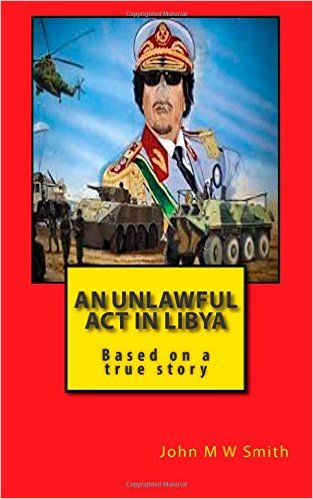
libya coverI’ve thought a lot about the reasons that John M.W. Smith’s short novel An Unlawful Act in Libya lingers in the mind. It isn’t just the poignant dilemma of the hapless Egyptian bookseller or the horrible fate of the Libyan taxi manager. Nor is it the deft telling storytelling of a born raconteur, or the nimble economy of style. What I think draws me to Smith is that this little book leaves the reader a little closer to understanding their own humanity: What if I had been Gamal? What if I had been Hamid?

Isn’t this the hallmark of enduring writing? In the days when we all read books made from paper, there was a simple test: When you finished a paperback on a train, you had two choices: Slip it between the seats, or put it in your bag. An Unlawful Act in Libya is the sort of book that you wouldn’t leave on the train. Read it and you’ll come away just a little changed.

Self new 1I put some questions to Smith, and he was generous enough to provide these very insightful responses:

 Stuart – Your main characters in An Unlawful Act in Libya are more complex and more sympathetically drawn than the standard ‘bad Arabs’ that we see in a lot of fiction and movies these days. How did this come about?

John – Our perceptions are determined entirely by the source through which they are channelled. Depending on a particular time in history when incomprehensible events have taken place, the public mood is suggestible and therefore willing to accept the most uncomplicated answer; there is a lot of fighting and killing that is going on in the Middle East where the Arabs live, so much so that it is spilling over to the West, and this obviously means that the Arabs are bad people, even primitive and bloodthirsty, right? Wrong! You cannot condemn an entire people for the misdeeds of a minority within them. Secondly, people will believe what they want to believe. Sadly, that is human nature. Blame has to be placed at a location which is convenient and will not be a constant and niggling irritation to our conscience. And also sadly, we happily accept the views of the media of our own country, which in turn reflect the needs and demands of the society in which we live. So how are we expected to arrive at the real truth about anything, let alone the truth about the nature of an entire people? Simple. We go and take a look for ourselves.

I worked for a big American publisher as an expatriate in Cairo for over a year. I met taxi drivers, and I met university professors, and just about everyone in between. I visited their homes and witnessed them at ease, with their guards down after a few drinks. I had their children crawling all over me and I had their smiling wives force food on me until I could barely struggle to my feet. I listened to their family problems. Their ambitions, hopes and aspirations. Saw the love in their family units. The thoughts and prejudices that shaped their attitudes. And what did I do? I yawned! There were no surprises. These people were no different from all the people I was used to back home. They were utterly and boringly the same. They wanted the same things, they laughed and cried at the same things…… and surprise, surprise, their set of moral principles were the same as ours. This was my experience. How could I then, in all conscience, portray these people whom I had lived with for over a year as caricatures of the devil so frequently found in certain sections of the Western media?

Stuart – You’ve mastered the art of the novella form, and I’m jealous! What’s the secret ingredient?

John – The secret ingredients are meticulous research and a lot of planning. Also the ability to be ruthless–to abandon a project even if a lot of work has already gone into it, simply because it doesn’t “feel” right. Because it fails to find that magical eureka moment similar to that experienced by Professor Higgins when Eliza Doolittle perfectly enunciated “the rain in Spain stays mainly in the plains!”

I do not consciously set out to write a novella. I am unmindful of how many words are produced in the end. I just try my best to sound interesting and simply come to a stop and I’m exhausted from the effort of doing so. There has to be a remarkable central event, the kind a reader would be unlikely to encounter in his or her 9-to-5 job and visiting the in-laws at the weekend. The ways in which each character in the story responds to that central event have to be very different. I need to focus keenly and make every sentence count, because in that lies the secret of a page-turner. I often do not know how the story will end. I only know that the end has to be utterly convincing. Perfectly reasonable. Wholly possible without too great a leap of faith being demanded of the reader. All I ever need is utter silence. A comfortable room. No interruption by a living creature. Yes, all of this in doses of 6 to 8 hours at a time.

Stuart – What are the cultural influences behind your writing? I can spot traces of Spike Milligan.

John – As for the cultural influences behind my writing, I am flattered to be even remotely compared to Spike Milligan. Even if his heyday was a bit before my time, I still remember being transfixed to the TV during the rare interview he gave in later life. I didn’t want to miss a word of what he was saying because every word came from his heart. He did not care what people would think of him after what he had said. Image-conscious? Forget it! He would not know what you were talking about.

Writers observe closely and often struggle to keep a sense of balance and proportion when arriving at their conclusions. In the end many find it so difficult that they simply home in on prevailing views and anxieties in society and end up saying what they think the readers would like to hear. What the reader can easily identify with, and quickly decide whether they love or hate it. But there are also many writers who observe closely and form their very own “take” based on what they have seen, and they do not care if the conclusions they have come to are in harmony with the prevailing zeitgeist. They are obsessed with telling it as they see it. They do not care who hates it or who loves it. They have not consciously set out to be commercial. They only want you to listen, and they do not want your attention to wander for even a second. Most of all, while you are listening they want you to be entertained and intrigued, for if you are not then how can you be expected to keep listening? My advice to any writer would be to forget trying to cater to a huge market. Concentrate on the market which is most in tune with your thoughts. It may not turn out to be a huge market but you will find it to be a fiercely loyal one…and it may well grow of its own accord if you are good at communicating what you have in your heart. I have been fortunate enough to have travelled a lot, which has given me more than a passing familiarity with many cultures. I really couldn’t ask for anything more. I would like to think that Spike Milligan would have been proud of me.

#

Read a free sample of An Englishman’s Guide to Infidelity  here. Buy Stuart Campbell’s books in paperback and ebook on Amazon by clicking on these title links:An Englishman’s Guide to Infidelity and The Play’s the Thing . Stuart Campbell’s covers are designed by Rachel Ainge .