Aeroflot ticket, 1974. Lost aesthetic or Communist kitsch? (author’s collection)
When I was studying Russian in Moscow in 1974, it was unthinkable that in less that twenty years, the Soviet Union and the Warsaw Pact would be no more.
For my literary invention Ivan Zlotnik, the flawed Soviet diplomat in Cairo Mon Amour, the USSR was there to stay. Zlotnik gambled his freedom on the date of the outbreak of the Yom Kippur war. Did he win or lose? That’s for the reader to judge.
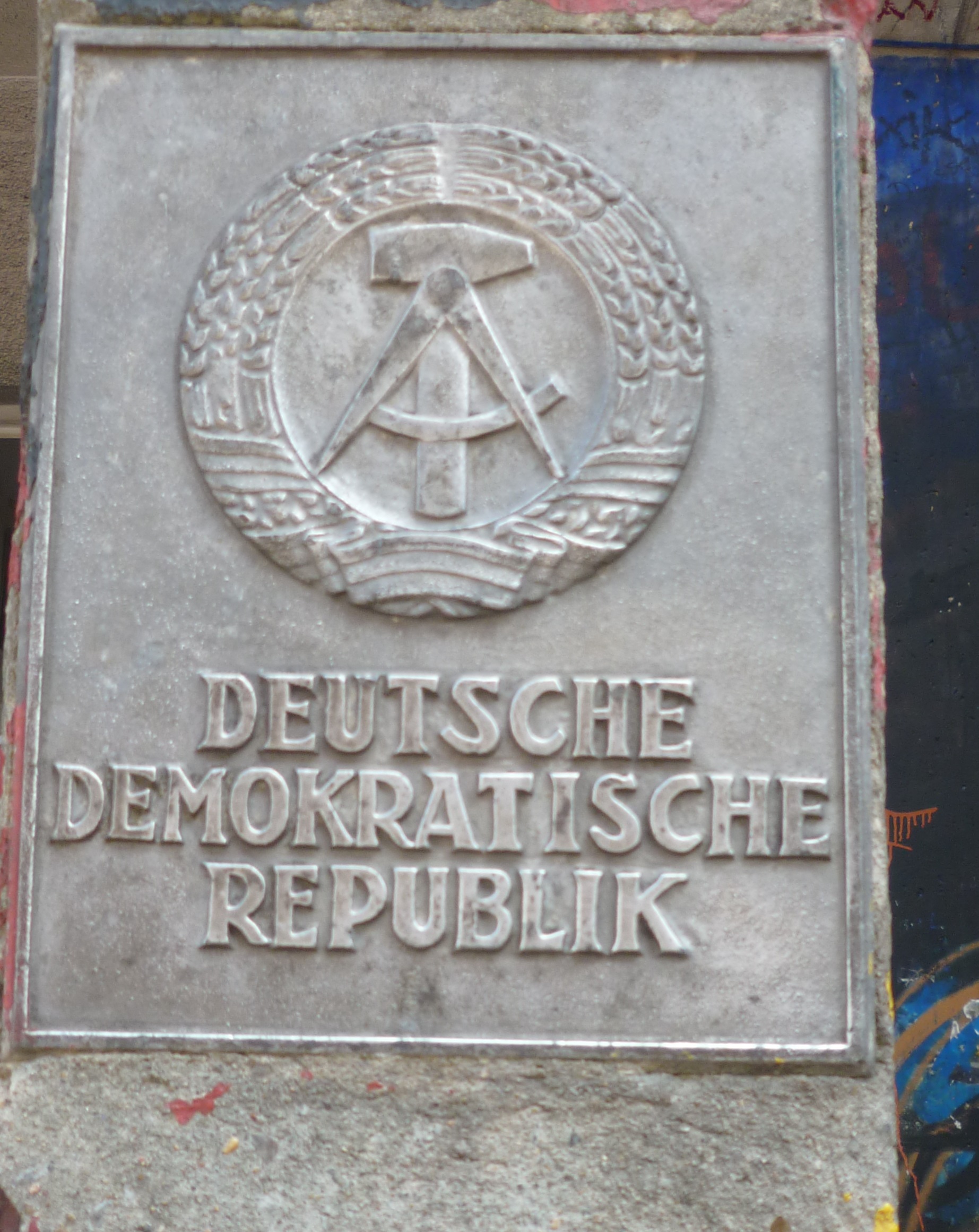
Forty-three years later, tourists buy up Communist kitsch in nostalgic homage to regimes whose harsh outlines soften over the decades. But more permanent traces of the Soviet era remain, as this small gallery shows:
Remnant plaque, Berlin (photo: Stuart Campbell)Symbols of communist industry and military power, Prague (photo: Stuart Campbell)Vintage URAL motorcycle spotted in a Budapest street (photo: Stuart Campbell)Soviet Memorial, Budapest. The Russian reads ‘In honour of the liberating Soviet heroes’. (photo: Stuart Campbell)
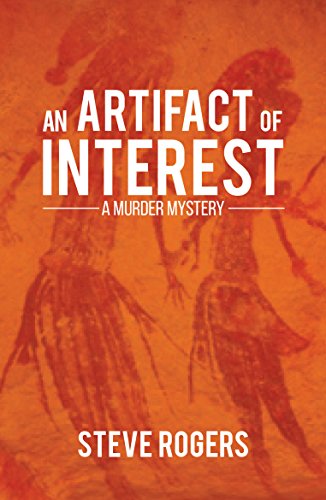
Western Australian author Steve Rogers’ novel An Artifact* of Interest is so filmic in character that you’ll excuse me for referencing some Australian movies in this review. It’s a murder mystery set in the Kimberleys with the little-known Bradshaw cave paintings at the heart of the plot – but no spoilers here. As a thoroughly urban Australian who rarely ventures fifty clicks from the coast, I relish the novels and films that transport me to the bush: The terrifying petty brutality of Ted Kotcheff’s film Wake in Fright; Ellen Roxburgh’s ordeal in Patrick White’s novel A Fringe of Leaves; the mystical film version of Picnic at Hanging Rock.
Rogers’ novel is another retelling of the bush: A young city man on a rural adventure; a mysterious death; an anthropological mystery; an unlikely romance. It’s the style that conveys the mood, with Rogers employing present tense and a relaxed regard for point of view, which results in a feel of spontaneity and authenticity of place. Short chapters, suggestions rather than conclusions – these yield a laconic and fluent narrative that leads us through the plot rather than shoving and dragging us. You can almost spot the dissolve between chapters. I loved the imagery of the bush, and my mind kept returning to Margaret Preston’s painting of Western Australian gum blossoms
*Yes, it’s spelt with i for a good reason: Check out the definitions of artefact and artifact.
#
Find out about Stuart Campbell’s latest novel here.
Anthony Carilla’s debut novel Convergence takes on the core question of our existence. This audaciously ambitious book builds on physics, biology, pharmacology, brain science and theology to create a complex thriller that goes way beyond the mundane. That’s not to say that that the conventional elements are missing: There are dashes of romance and action to balance the slow-burn plot, and the settings are seductive – the jungles of Cambodia, high-tech laboratories in Europe, and the super-luxury playgrounds of a billionaire businessman.
Carilla takes some big risks with this book: A large cast of characters, attention to detail that can sometimes overwhelm, and a lot of science. But the gamble pays off, with compelling portraits of the main protagonists, and a sense of inexorable progress towards an ending that promises to blow the reader’s spiritual socks off. I confess I didn’t see the simple one-sentence conclusion coming, even though the hints – in retrospect – were there along.
Convergence is a book that will provoke a plethora of questions across the spectrum of readers from the faithful to the faithless. Some will question the science, especially the claims for quantum mechanics (but then it is set in 2038), and some will have reservations about the beneficence of big business and the US government in these days of the Trump ascendancy. But the sublime central message of the book will have universal resonance.
Convergence will be published by Austin Macauley Publishers Ltd. in the very near future.
I was given an ARC by the author and asked to provide an honest review.
Two of my favourite thriller novelists snuck into my Kindle last month with Dying for the Highlife and Blood Gold in the Congo . I’m a fan of both US author Dave Stanton and Australian Peter Ralph, and I’ve watched their work develop over the last few years.
Peter Ralph’s forte is financial/political thrillers ranging from riches-to-rags story The CEO to the almost epic environmental saga Dirty Fracking Business. When you read a Peter Ralph thriller, there’s always the suspicion that the plot is over the top. Could the corporate world be quite as poisonous as Ralph portrays it? Well, have a look at his background on his author profile; this is a guy with a serious knowledge of the seamier side of business.
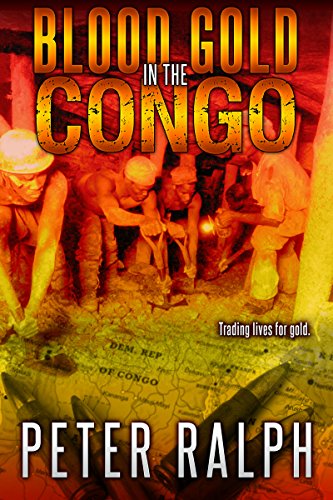
Blood Gold in the Congo take us into literally new territory – Africa – and again the plot feels eerily authentic. Joseph Muamba , illegally adopted as a child, becomes a top US athlete and returns to the Congo to smash the international corruption rackets that are robbing the Congolese of their mineral wealth. The hallmark Ralph denouement is there, with the chief villain meeting his just desserts. With Blood Gold in the Congo Peter Ralph’s writing is getting tighter and more economical, with the story allowed to flow unimpeded. I raced through it.
Stateline was my last Dave Stanton novel. I loved the winter setting of this Dan Reno story, but in Dying For The Highlife, things hot up as private eye Reno (‘as in no problemo’) hooks up again with his buddy Cody Gibbons. This time, Dan’s South Lake Tahoe PI business is on its knees until the ‘nearly beautiful’ Sheila Marjorie propositions him in a casino. Her stepson has won $43 million in a lottery, and now the jackals are circling.
I’m not a great fan of book series, but the Dave Reno formula works so well that I go back for more. Dave Stanton achieves a consistent mix of complex plotting, characters that grow with each new book, and – number one for me – California-Nevada setting. Keep it up, Dave!
***
Stuart Campbell’s new novel Cairo Mon Amour will be published in July 2017.
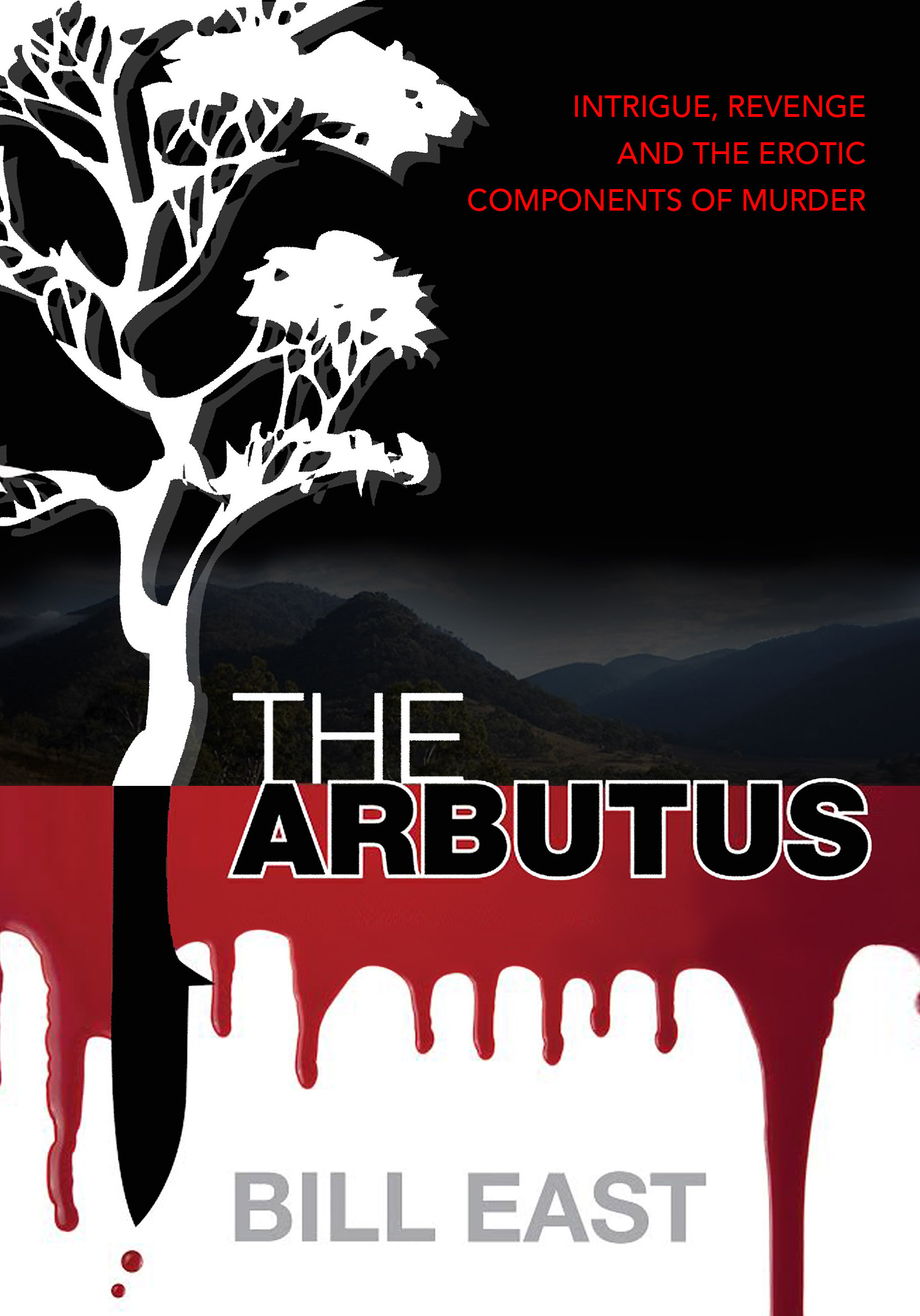
Bill East’s The Arbutus is a dark and challenging novel that delivers a potent dose of madness, violence and erotic tension with the deliberation of a cannula. Maddie, a woman approaching middle age, returns from England to Peter, the Australian lover she fled many years before. Apparently unhinged and obsessive, Peter confesses to a series of murders at his wooded estate on the outskirts of Sydney. An intricate psychological game of revenge follows: The characters’ psyches are built layer by contorted layer; truths are offered and then undermined; the reader teeters on the edge of resolution, only to be pulled back into the game. Plausibility is often stretched to the limit (if the bizarre plot can be called plausible in any way): Is Maddie’s androgyny credible? Would Peter really have planned such a spooky endgame? On both counts, the author builds a convincing case for Maddie’s weird erotomania and Peter’s convoluted creepiness, and in the end, both their fates were easy to believe in. I rummaged in my reading history to find some novels that The Arbutus might echo. For the blending of the macabre and the world of nature (Peter has a thing about trees), I came up with Patrick Süsskind’s Perfume. For the exploration of twisted emotions, John Fowles’ The Collector and Sebastian Faulks’ Engleby came to mind. For gore, Jeffery Deaver’s The Bone Collector resonated. In the end, though, Bill East has created his own monsters. Crime thriller? Black comedy? Erotic mystery? Homage to trees? I didn’t care as I raced at top speed through The Arbutus.
You can find Bill East’s website here and buy The Arbutushere.
Cleopatra cigarettes: One of the stars of my novel Cairo Mon Amour
It’s been decades since I smoked, but I haven’t quite given up the habit. Having no desire to inhale burning vegetation these days, I still enjoy a vicarious smoke using the lungs of my fictional characters. In fact, smoking is a remarkably useful literary tool.
I identify four ways to exploit tobacco in fiction, but there are undoubtedly more.
But let me first offer a caveat: If you’ve never smoked, the remainder of this post might not hit that sweet spot: The hit you didn’t get from the first slim, black Balkan Sobranie outside a club in Soho; the hit you missed from the first gorgeous, toasted lungful of a Gitane outside Gare du Nord; the hit you could never experience from a mean-spirited little Players No. 6 after a meat pie and a pint in the Lawnmowers Arms somewhere west of Croydon.
Whoops, I slipped into nicotine reverie. Anyway, here are the four ways I use tobacco without actually smoking the stuff:
Historical setting: When I was a student at London University in the seventies, there were still ashtrays in tutorial rooms. Smoking wasn’t taboo. It wasn’t stigmatised. It was perfectly OK to inflict second-hand fumes on your tutor, or sit at the back of a plane filling the armrest ashtray with dog ends. But nowadays, only bad people smoke, and the best way to cast a negative shadow over a character is to have them light up. But good characters can reminisce about the Good Old Smoking Days. The shortest sex scene I ever wrote, set in 2011, goes, ‘Thea sat up, flushed and tousled, and pulled the covers around her. I lay back and mentally smoked a Gauloise’.
Social gradation: If you’re working in seventies England, as I am with my current work in progress, smoking is a wonderful index for where your characters fit into society: Working class characters smoke roll-ups and cheap fags (the Players No.6 is the epitome of poverty smoking, especially with a packet of ten rather than twenty). Better class smokers are more of your Benson and Hedges types, and homosexual men puff effetely on menthols. Elderly men in tweeds suck on pipes, and posh old geezers smoke cigars. Lesbians haven’t been invented yet.
Filling in a pensive pause: Want to fill a pause while your characters need to have a think? Let them have a smoke. You can tell that smokers are thinkers when you watch those wretched outcasts having a gasper outside the office block and pretending that they are pondering a takeover bid for CitiBank. The key to blowing a tobacco-induced thought bubble is to exploit the physical and psychological details of smoking: Tapping the packet, finding the lighter, the first delicious puff, the sixth puff when you realise how much you hate being addicted, loathing the stinking ashtray. But what a boon for the writer, when a bit of internal monologue can be slipped into the moments of mental vacuum.
Male bonding: What did two blokes do in the Good Old Smoking Days when, left alone, they could find no words? They had a fag, and busied themselves with tapping the packet, finding the lighter, inhaling manfully, etc. Saves on dialogue!
Time for a Scotch, I think.
I write quirky novels about love, betrayal and redemption. Have a look here.
Professor Martin F. Mooney is a fading poster boy of the inner-city elites: Left-leaning, middle-aged and too frisky with his female students, he’s looking for a way out of the university before he’s pushed. Politics seems the obvious next step. This contemporary satire set in Sydney, Australia is your perfect literary companion in the Trump-Brexit era.
I left home with a packed Kindle last month for my first ever cruise. My eclectic reading tally was as follows:
Peter Ralph’s The CEO: White Collar Crime took me up the Eastern seaboard from Sydney to Cairns. Mr Ralph specialises in corporate thrillers that are apparently based on extensive experience of the business world. I’d read his Dirty Fracking Business previously and been struck by his profound knowledge of the fracking industry in Australia. The CEO: White Collar Crime is a madcap morality tale of how not to do business: Protagonist Douglas Aspine is a monster, intent on gobbling up profits, women, cars, and anything else that falls onto his plate in his quest to be a top CEO. Alas, the trail of damage lengthens until there is only one way out. In Australia, we have an old-fashioned expression ‘Ya wouldn’t read about it!’ as a reaction to something implausible. Alas, I have a horrible feeling that Australia has more than a few Douglas Aspines, and here’s where you’ll read about it.
After Cairns, we were solidly in the tropics and on course for Darwin. Our ship’s ultimate destination was Singapore, after which we were to fly to Penang, and then return to Sydney via Singapore. So what better book to read next, but Tan Twan Eng’s award-winning The Gift of Rain, set in George Town, Penang, a city I hadn’t visited in more than twenty years. This sinuous novel is the tale of a half-English and half-Chinese son of the powerful Hutton trading family during the Japanese occupation of Penang. It’s a big, ambitious novel that often veers towards the mystical. The star of the book was the Eastern and Oriental Hotel, where we were booked to stay, and I finished the book the day we checked into the
Record-breaking Armenian moustaches
dear old thing, with its white shutters and lovely banquet rooms, and photographs of the Sarkies brothers. These gentlemen, bearing record-breaking moustaches, were the very same Armenian brothers who founded Raffles in Singapore.
I wandered George Town, summoning up Tan Twan Eng’s images of the Japanese occupation, but in the meantime I’d started on his The Garden of Evening Mists, an exquisite novel set in the years after WWII, and dealing with the pain of guilt and betrayal as a former prisoner of the Japanese in Malaya rebuilds a Japanese garden in memory of her dead sister. I finished it on the last night of a stopover in Singapore, and after a pre-departure dinner at the venerable Zam Zam Restaurant, I was ready for Kerry J. Donovan’s Cryer’s View, the latest in his The DCI Jones Casebook series.
I’m a big fan of Kerry Donovan, who matures as a writer with every book, and now works in a range of genres: Note his experimental The Transition of Johnny Swift, and his American small town debut On Lucky Shores. In Cryer’s View, we see a strengthening of Donovan’s skill in building complex characters, so that what is at face value a police procedural is a more profound piece of work. I knocked off Cryer’s View just before BA15 touched down at 6am in Sydney, well chuffed, as I think Detective Sergeant Phil Cryer might have put it.
Overall, a great reading experience, and the cruise wasn’t bad either. I’ll award 20 out of stars for the lot.








 Stuart Campbell author