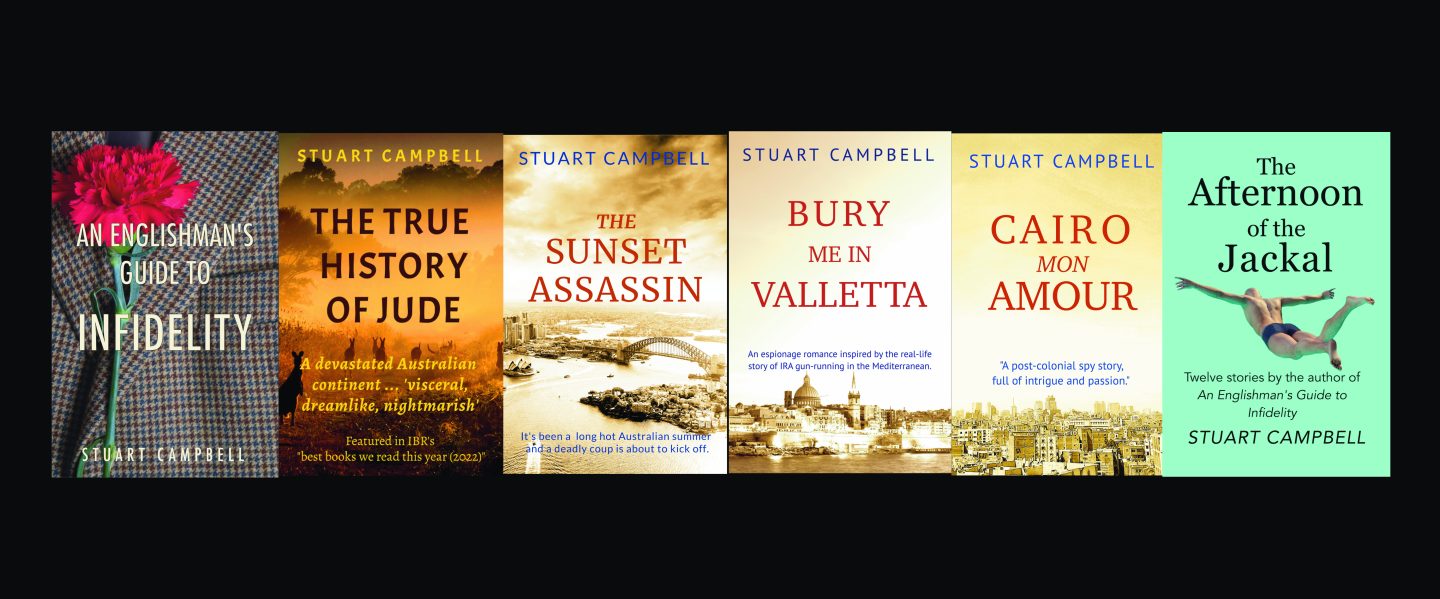
Review of Rebirth: A Love Story from the Depths of War by Antoun Issa

“Are your family Lebanese?” I asked the young glazier working in my house. “Yeah, I’m second generation,” he said.

I told him I’d been in Beirut in 1973.

“Ah, the good old days,” he replied.

In the Epilogue to Rebirth, Lebanese-Australian journalist Antoun Issa notes the yearning among many Lebanese for a Lebanon ‘untainted by war’. My glazier had clearly inherited this yearning from his parents.

Rebirth tells the story of a poor Beirut family torn apart by the 1975 civil war, who eventually migrate to the inhospitable northern suburbs of Melbourne. The story is told through Antoun Issa’s mother’s eyes in a remarkable feat of fictionalised biography. Laila’s family live in dire poverty in Jisr El Bacha, a Maronite Christian suburb squeezed up against two Palestinian refugee camps. Her father Fares struggles to provide for the family, but Laila has to leave school at fourteen to work as a tailor. As the civil war erupts, Fares insists that the family remain isolated from politics, but the vicious conflict between the PLO and the Phalangists shatters their home, their family and their friendships.

In the late seventies I taught many adult migrant Lebanese in Sydney who’d fled the aftermath of the civil war. With Egypt as my own point of reference for the Arab World, I was intrigued by these people with their curious Arabic dialects, French given names, and fiercely protective attitude to their culture. I met students from Christian villages whose families had spoken Aramaic a few generations past, others from Sunni towns. I met refined intellectuals, poets, preachers, schoolteachers. Cognisant of their confessional government system and clan loyalties, I trod carefully. They formed a cultural kaleidoscope whose colours I could barely distinguish. The students never spoke of the war. I never asked.

Antoun Issa’s Rebirth lays bare the reality of the shootings, the betrayals, the checkpoints, the revenge, the hunger. The emotional impact is supercharged through the family’s fierce instinct to maintain their values despite the vileness of their circumstances. Food – or the lack of it – is a central concern as Laila’s mother makes scraps into meals during the long siege as shells and bullets fly around their house. In the latter part of the book Laila is astonished by the huge quantities of food served in Australia; when in Jisr El Bacha a few pine nuts were a treat, here they were piled on in pointless abundance.

Rebirth gave me a clue about the lives of those students in the faraway seventies, and I thank Antoun Issa for filling this gap.

The author does a skilful job of creating a voice for Laila – rich in noble sentiment, heavily larded with metaphor, and drenched in pathos. I found this approach entirely appropriate for a story that conveys the tragic history of a family, a culture and a country. There is the deft hand of the journalist in this work, especially in Antoun Issa’s handling of politics in a text driven by voices that claim to be apolitical; when necessary, he discreetly stands back from the action to seamlessly explain a point about who is slaughtering who and why.

I was interested to observe how he peppers the dialogue with Arabic to convey the foreignness of the setting and characters (a special interest of mine). In much the same fashion as Michael Mohammed Ahmad’s The Tribe, we see find untranslated easy to guess words like finjen ‘cup’; others like tfaddal, untranslated but clearly a welcoming utterance from the context; and expressions with translations such as Leik ya hala – welcome! Overall the foreignisms do their job of exoticising the setting without clogging the text.

Alf shukr (a thousand thank yous) to Antoun Issa for this deeply affecting and intellectually satisfying novel.
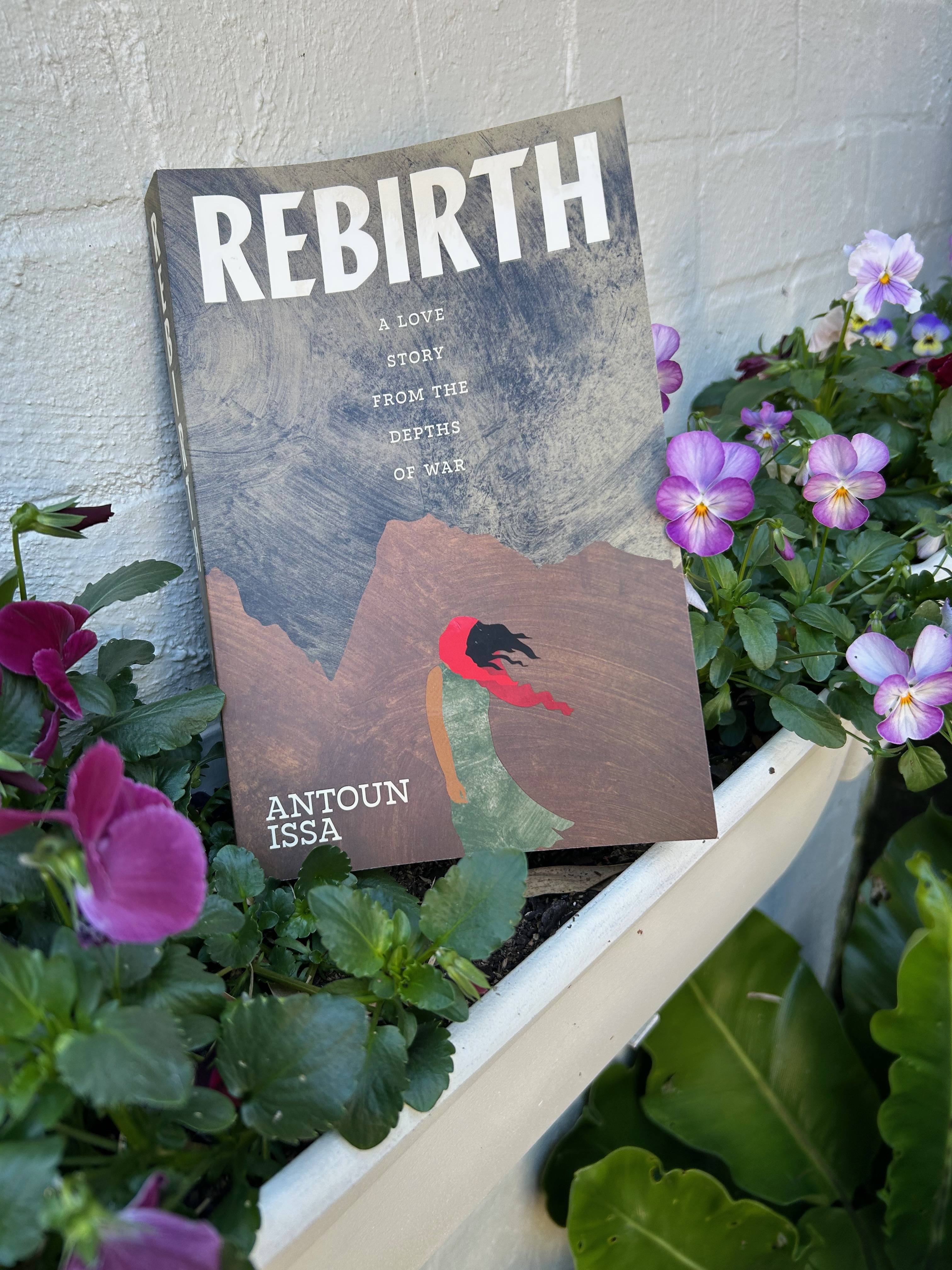
The Sunset Assassin gets a cover makeover

I’ve just updated the cover for The Sunset Assassin using an image licensed by Shutterstock. Instead of editing the image with a graphics program, I used Shutterstock’s built-in editor, which is terrific for simple jobs involving a single image.

I’ve used a consistent format for all of the Siranoush Trilogy novels: A bleached sepia image of the city where the novel is set (Cairo, Valletta and Sydney) with the title in a russet serif font, and a dark sans serif font for the author and the text at the foot of the cover.

Here’s the back cover blurb:

Sydney, New Year’s Day, 1978. While the beaches teem and the cold beers flow, a clandestine syndicate is planning to overthrow the Australian government. They’ve commissioned dodgy businessman Kerry Rich to detonate a bomb at the Opera House on Anzac Day. He’s passed the job on to Pierre Farag, a reluctant British sleeper agent dumped in Australia. But Pierre and his wife Zouzou want out — out of Sydney and out of doing other people’s dirty jobs. Meanwhile investigative journalist Liz Lanzoni has got a sniff of the bomb plot and sees the chance to break the story of the decade. As the day of the blast looms the operation unravels, and Pierre, Zouzou, Liz and Kerry find themselves on the run to a hideout in the northern tropics of Queensland. Soaked in the hedonism and corruption of late seventies Sydney, The Sunset Assassin traces the fine line between loyalty and betrayal.

Let me know what you think of the cover. And check out my books here.

Cairo Mon Amour discounted to FREE on Kindle 1-3 September

‘A post-colonial spy story, full of intrigue and passion.’

Kindle UK

Kindle Australia

Kindle US

My new novel is set in Manly, Australia. Find out why.

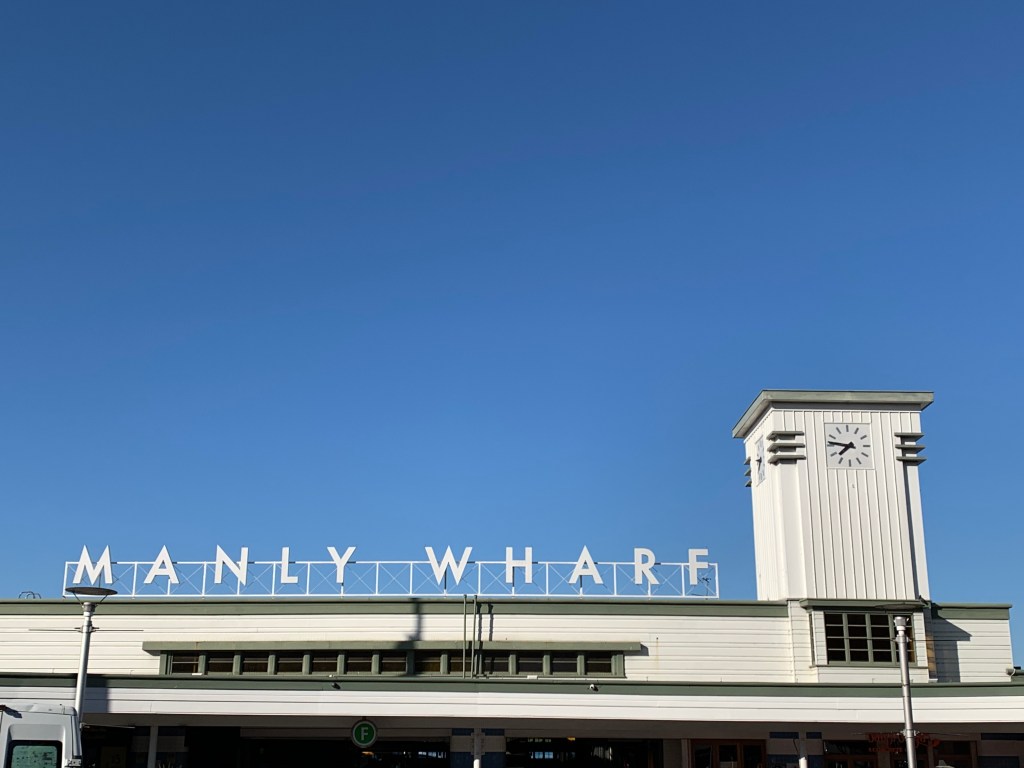
Manly, Australia’s favourite seaside town, is a location spotter’s treasure trove. Sitting on a peninsula overlooked by the neo-gothic pile of St Patricks, the town is an architectural mish-mash of Art Deco shopfronts, Federation era cottages, glitzy apartment blocks, and brown-brick walk-up flats. In normal times, thousands of tourist take the thirty-minute ferry ride from Sydney to Manly wharf and amble down the Corso, the street that bisects the peninsula and leads to the ocean beaches. But behind the beachwear shops and restaurants lies another Manly, unseen by the tourists, that offers an edgy fiction setting.

Australia’s COVID-19 lockdown in April 2020 forced me off the seafront promenade into the empty back streets to avoid hordes of gasping joggers deprived of their gyms. But my walks opened up corners of the town I’d barely noticed. Soon my meditative strolls turned into location spotting for the novel I’m currently writing.

The Impeccables is set in Manly in 1978. Why Manly and why 1978? Well, the previous book in the series ended with the main character Pierre Farag exiled to Australia in 1975. I needed somewhere to settle him down for a few years before he finds himself unwillingly involved with a clandestine right-wing group that aims to blow up the Opera House.

And I love a writing challenge: I couldn’t resist the idea of reconstructing the look and feel of the town where I came to live in 1978 — an era before iPhones and credit cards, when the seafront was lined with pre-war blocks of flats rather than glitzy apartments. I’ve spent hours studying the 1978 Sydney newspapers and browsing the brilliant Lost Manly FB group pages.

To recap the series, the novella Ash on the Tongue, set in 1972 in Cairo, introduces Armenian-Egyptian private eye Pierre Farag and his first incursion into the world of espionage. In the full-length novel Cairo Mon Amour, Pierre and his actress girlfriend Zouzou are drawn into a plot to conceal the launch of the 1973 Yom Kippur War. In Bury me inValletta, we meet Pierre and Zouzou in exile in London in 1975. As sleeper agents they are reactivated by the UK government to sabotage an IRA gun-running plot in Libya and Malta. My current novel in progress The Impeccables, finds Pierre and Zouzou exiled to Sydney, where they are drawn into a plan to stage a coup against the Australian government. The novel ends again in exile, but this time to a remote spot in tropical Far North Queensland. I haven’t decided whether there will be a fifth book in the series; it depends a bit on whether I can find a plausible way to get the pair out of exile. I may have painted myself into a plot corner! In addition, I regain the rights to Cairo Mon Amour from my publisher in August 2021, which will give me the option to publish the series as single edition.

All three novels are based on carefully researched historical scenarios, and each includes what I call a ‘moral core’ for want of a better term: Cairo Mon Amour is in part my personal tribute to the resilience of the Armenians in exile; Bury me in Valletta is about the collapse of the relationship between a father and daughter; The Impeccables deals with the far boundaries of betrayal.

But what has surprised me is the development of the relationship between Pierre and Zouzou as its power balance shifts and the couple find new ways to bridge the growing emotional gulf between each another. I never anticipated this when I first put finger to keyboard. This presents another challenge for a possible sequel; are they headed for the divorce courts, or will the balmy tropical climate of Queensland soothe their angst?

But back to Manly. For The Impeccables I installed Pierre and Zouzou in a run-down rented house. It’s in a made-up street called Rialto Close in a muddle of walk-up brick apartment buildings and the backs of dry cleaners and TV rental shops, four streets away from Manly Beach. The name Rialto harks back to a former cinema in the Corso. The site is now occupied by a small shopping arcade, commemorated by the unglamorous Rialto Lane. My Rialto Close could be in any of half a dozen locations around the town, but wherever it is you might spot a dumped sofa.

Meanwhile, I’ve been honing my skills in book design. Right now, you can get a paperback of Bury me in Valletta through Amazon in the US, but there’s a big freight charge and a long wait for Australian readers. So, I’ve produced an additional paperback version with Ingram Spark, which is now accessible through thousands of bookshops and libraries around the world. I was thrilled to receive the proof copy in November — excellent production values, and the interior all designed by me. I incorporated the lovely cover designed by Rachel Ainge for the ebook. This new print version is now available, and I was delighted to get some US and UK sales immediately after the release date on December 1 2020.

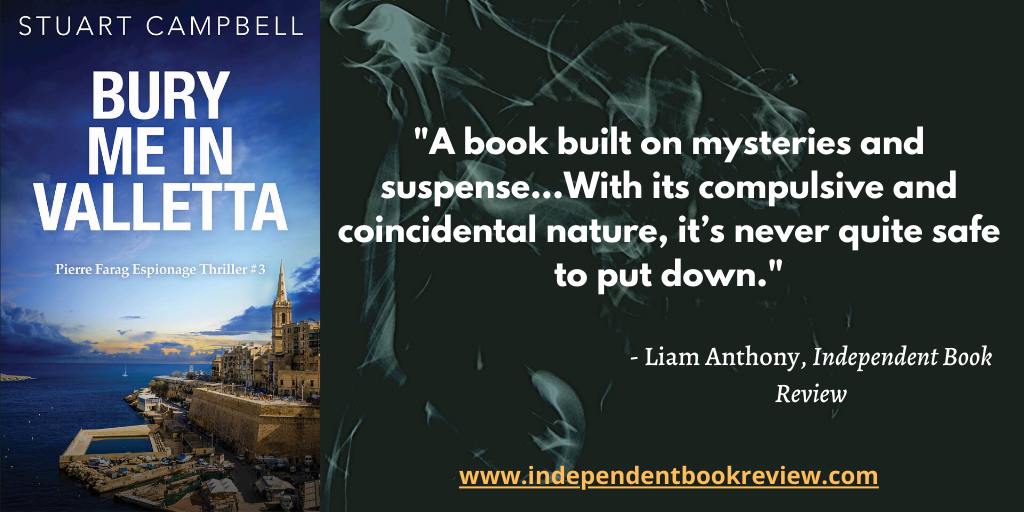
Here’s a great customer review of Bury me in Valletta from a reader in Scotland: ‘Gripping from beginning to the end. Brilliant book and great sequel to Cairo Mon Amour. When is the next book of Pierre Farag, Stuart?’ And for an excellent independent review from IBR, click here.

You can find vendor links for my books here, including for the novella Ash on the Tongue, which is permanently free on Smashwords. The Impeccables will be released some time in 2021.

Tense day working on my latest novel (weak joke alert)

Hard at work today revising my dystopian novel Patria Nullius. It’s a book within a book: The outside shell is in past tense and the kernel is in present tense. Yesterday I made the big decision to rewrite the kernel in past tense.

I’ve got Ladytron on the cans to help me along, so it’s all good so far.

Meanwhile, I’m grinding through the task of promoting my new book Bury me in Valletta. I’m given away some botched copies of the paperback (my botch-up, now fixed), and I’ve had great feedback. The ebook is discounted to 99c on Amazon and $1.99 on Apple. Do yourself a favour and download a copy. Even better, post a review if you like it!

The vendor links are here.

Thanks,

Stu

Bury me in Valletta hits #26 in Amazon Australia Espionage Thrillers

Click here for vendor links – Amazon, Apple, Kobo

Bury me in Valletta novel by Stuart Campbell

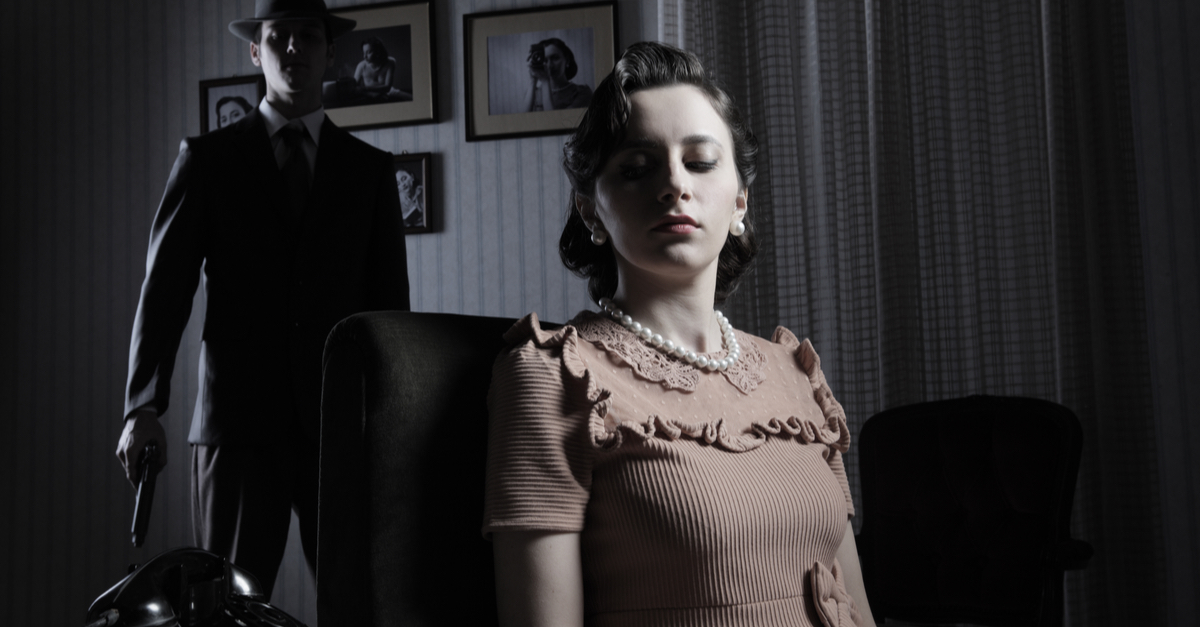
Five ways to create a femme fatale in your novel

noir, romance book, femme fatale, cairoThe Pierre Farag Espionage Thriller series is now a trilogy. Book 1 Ash on the Tongue is free to download here. Book 2 Cairo Mon Amour is published here, and Book 3 Bury me in Valletta will be published in early 2020.

If I were name my favourite character in the trilogy, the prize would go to  femme fatale Zouzou Paris. Here’s how to create your own Zouzou:

Give her a mysterious name

Just as Mata Hari’s real name was Margaretha Geertruida Zelle MacLeod, Zouzou didn’t start life as Zouzou. Her real name was Aziza Faris. Zouzou is an affectionate form of Aziza. It only needed a slight adjustment for Faris to become Paris* when she became a film star and decided to give herself some French mystique.

Give her a tragic past

Zouzou’s parents died in a car crash when she was eighteen. A friend of her father took her under his wing. “A peculiar variety of friend,” she said darkly, describing how the man had helped her into the film industry, where she became a plaything of his business friends. “It was sordid and exciting at the same time. The attention of rich men made me the envy of my fans. But while they envied me, they hated me too. It is the fate of women like me.”

Give her an ambiguous morality

Although she was known in Egypt as ‘the national bitch’, Zouzou’s lascivious reputation concealed a different morality. She remained a virgin until she was thirty-three. “A man may gorge on mango when all he has been given is boiled carrot,” she says, explaining how she tricked the old men.

Give her a quirky view of the world

Zouzou has spent her life negotiating deception and lies. “My whole life was a bargain.” Her instinct is to protect herself through obfuscation: “Why tell the truth when an untruth will suffice?” she often says.

Give her a distinctive speech style

Zouzou’s first language is Arabic, although we learn that she also speaks French and Turkish and probably other languages. When she speaks English, I give her a stilted and slightly florid style, e.g. “I had to go to many parties on yachts in Beirut … So many actresses, so many men with creeping hands. You see, sister, I cannot think of a yacht without remembering the caresses of those old fellows.”

Happy writing!   Stuart

###

*For Arabic speakers: Yes, yes, I l know this is cheating and that the vowels in Faaris and Baariis are different!  Let’s keep it bayni wa baynkum!

CAIRO MON AMOUR PAPERBACKS NOW DISTRIBUTED IN AUSTRALIA

I’m delighted to announce that my publisher is now distributing paperbacks in Australia. You can order Cairo Mon Amour online at the retailers below. The really good news is that you pay local freight rather than copping a big postage bill from the UK!

BOOK DEPOSITORY,  AMAZON AUSTRALIA, AMAZON US,  AMAZON UK,  BOOKTOPIA,  KINOKUNIYA,  ANGUS & ROBERTSON   


Cairo Mon Amour gets big surge from Goodreads


espionage romance thriller cairoAfter Goodreads giveaways in November, December and January 2018, word is spreading about my espionage romance Cairo Mon Amour. In total, 2597 people entered the giveaways, and 547 have the book on their ‘to read’ list.

I’m planning more giveaways this year, but if you want to skip the line, just click here to find out how to buy a copy.

Sincere thanks to publisher Austin Macauley for organising the December and January giveaways.